
US Capital History New Jersey, New Mexico, and New York
The history of Trenton, Santa, Fe, and Albany

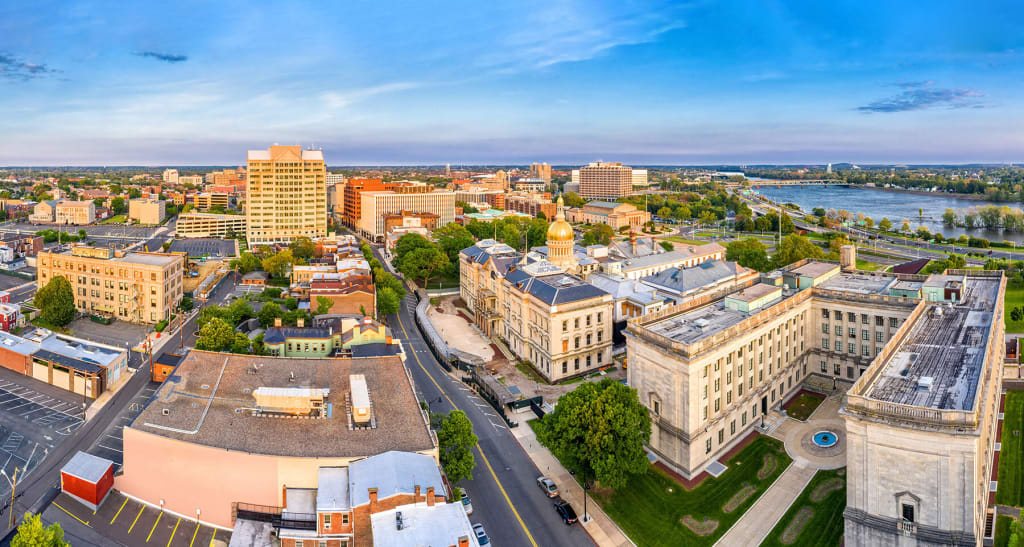
Site of George Washington's First Victory
During the War of Independence, the site where Trenton stands was the place of George Wahington's first victory over the Redcoats. The city is the namesake of William Trent, one of the leading landowners and it was first known as Trent-towne later shortened to Trenton.
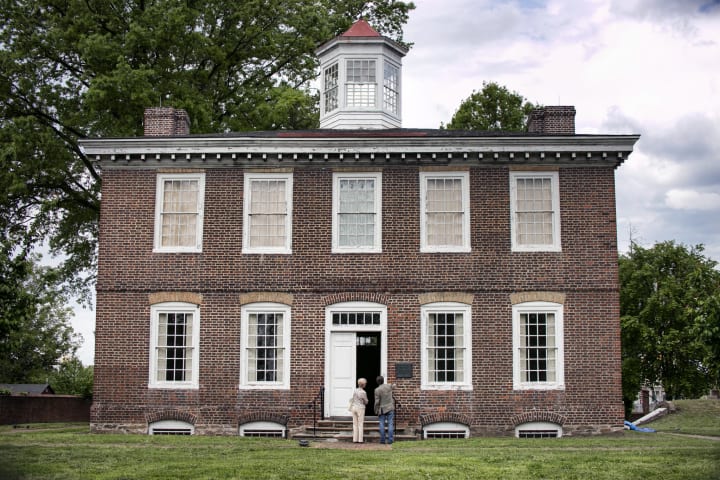
Willam Trent's home is a National Historic Landmark.
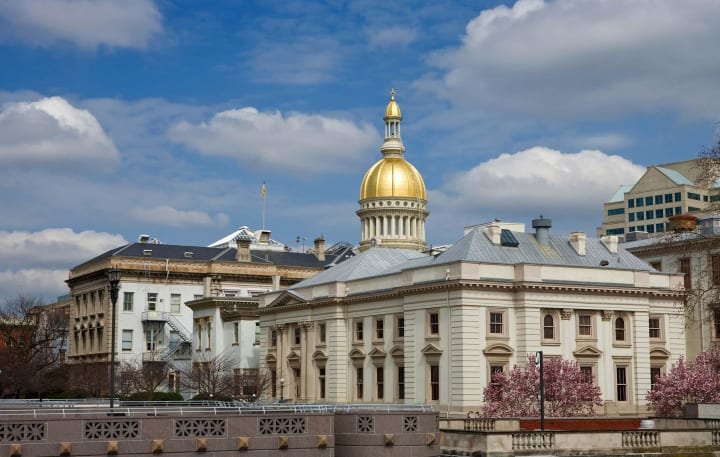
The New Jersey State House is the third-oldest state house originally built in 1792. The building accommodates both the New Jersey Legislature's Senate and General Assembly chambers, Government offices, and other government departments.
The Kingdom of New Mexico
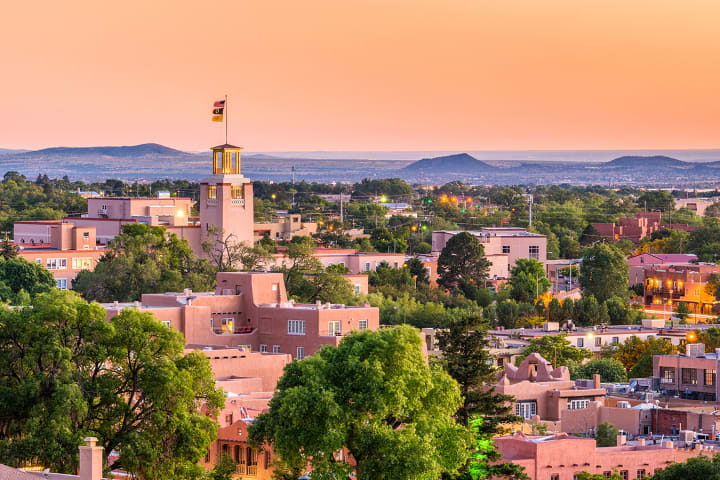
The place where the capital of New Mexico, Santa Fe is now located was once occupied by many Pueblo Indian villages. It was a good place to live since the Santa Fe River provided much-needed water.
In 1540 the “Kingdom of New Mexico” was claimed for the Spanish Crown during the expedition of Francisco Vasquez de Coronado. He established Santa Fe as a province of New Spain. Santa Fe is the third oldest surviving American city that was founded by European colonists. It was in 1912 that New Mexico became the 47th U.S. state and Santa Fe its capital.
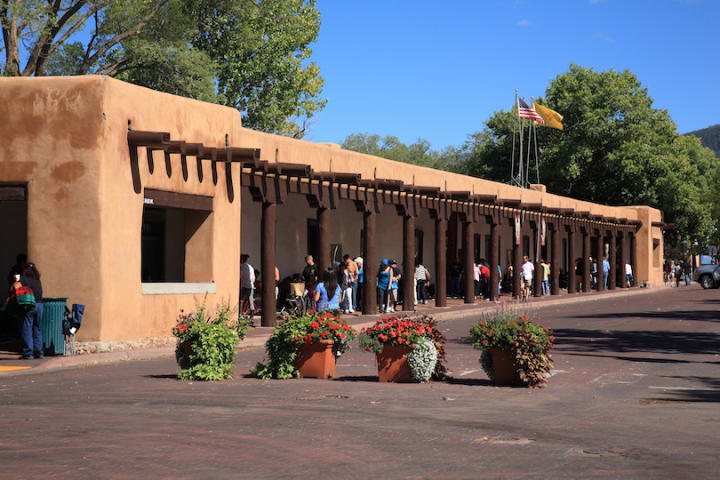
Today Santa Fe is known for its Pueblo-style architecture and has become the place for creative arts. There are many adobe landmarks like the Palace of the Governors which is home today to the New Mexico History Museum.
Oldest Surviving European Settlement
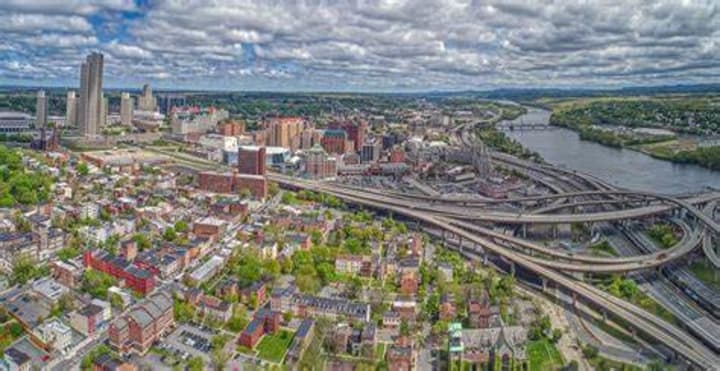
Albany the capital of New York State is the oldest surviving European settlement and the longest continuously chartered city in the U.S. At one time the Algonquian Indian tribes lived here and they gave it their names. The Mohicans called the city Pempotowwuthut-Muhhcanneuw which meant “fireplace of the Mohican nation”. The Iroquois chose to call it Sche-negh-ta-da meaning “through the pine woods”.
The first European structure was a primitive fort on Castle Island that was built by French traders in 1540. The first Englishman in the area was Henry Hudson in 1609 who claimed it for the United Netherlands. Hendrick Christiaensen rebuilt the old fort calling it Fort Nassau. It became the first Dutch fur trading post. When another flood destroyed this fort once again it was rebuilt and called Fort Orange. They were both named in honor of the Royal Dutch House of Orange-Nassau.
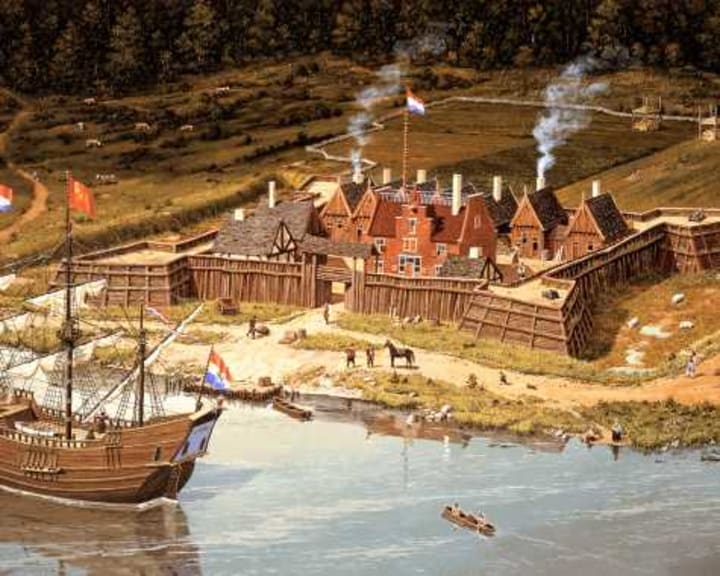
Fort Orange and the area surrounding it were incorporated in the village of Beverwijck or in the English Beaver District in 1652. When the English took over the name became Albany in honor of the Duke of York and Duke of Albany who later became James II of England. Eventually, Albany became the county seat and was chartered as a municipality by Governor Thomas Dongan on July 22, 1686.
In 1754 in the Stadt Huys, Albany’s first city hall, Benjamin Franklin presented the Albany Plan of Union. The city didn’t have time to flourish due to the French and Indian War which ended in 1763. Finally, Albany had a chance to flourish and it officially became the state capital of New York. It is the second oldest capital in the U.S.
Throughout much of its history Albany has been the hub of transportation. A well-developed turnpike and toll road was built and the area was connected to good railway systems.
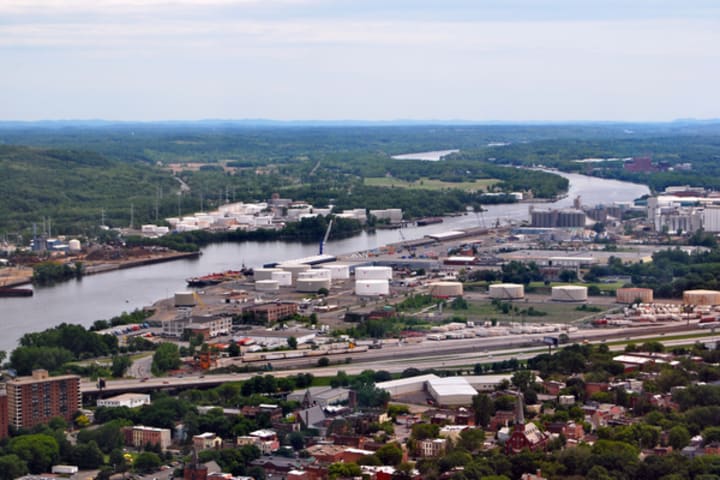
In 1807 Robert Fulton initiated the steamboat line from New York City to Albany and in 1825 the Erie Canal was finished. Now there was a continuous water route from the Great Lakes to New York City. Due to the canal a man-made lagoon formed known as the Albany Basin, becoming the main port until finally, the Port of Albany-Rensselaer opened in 1932.
Albany came in second to Boston, Massachusetts in the number of books produced for most of the 19th century. The city became known for its publishing houses. One of its biggest commodities became beer thanks to Dutch and German settlers. Other major exports were furs, wheat, meat, and lumber during the 18th and 19th centuries. At one time there were about 4,000 sawmills in the area around Albany.
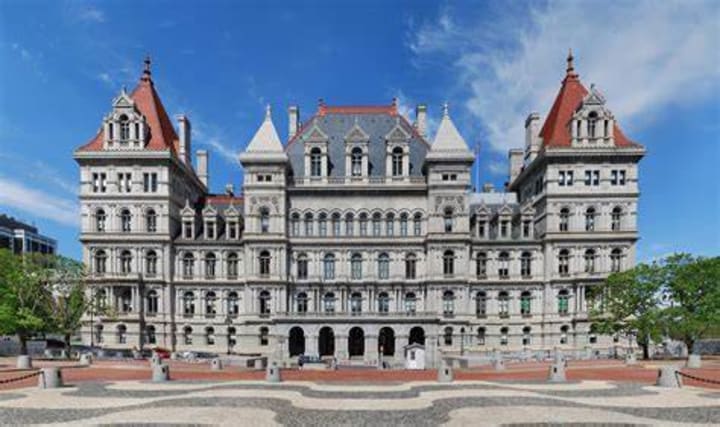
The amazing New York State Capitol Building
As time went on Albany opened one of the first commercial airports in the world and the first municipal airport in the U.S. In 1960 it became known as Albany County Airport and between 1996 and 1998 rechristened as the Albany International Airport.
About the Creator
Rasma Raisters
My passions are writing and creating poetry. I write for several sites online and have four themed blogs on Wordpress. Please follow me on Twitter.
Keep reading
More stories from Rasma Raisters and writers in History and other communities.
US Capital History Nebraska, Nevada, New Hampshire
Capital Almost Named Lancaster Lincoln is the capital and second largest city in Nebraska located in the southeastern part of the state. In the 1850s settlers were drawn to the area by the salt flats. The site was named after Lancaster, a Pennsylvania city by a salt company representative in 1856.
By Rasma Raistersabout a year ago in History
Warfare Through the Ages: How Military History Shaped Human Civilization
Warfare has always been part of human civilization. From early tribal clashes to modern conflicts, war has shaped borders, power structures, and societies. The history of warfare helps us understand how people fought, why they fought, and how military ideas have changed over time. Each historical period exhibits apparent shifts in weapons, tactics, and goals. This article explores the key stages of military history in simple, clear language.
By Matthew Pothoff5 days ago in History


Comments
There are no comments for this story
Be the first to respond and start the conversation.