
Urdu:-The National Language of Pakistan
"The Journey, Importance, and Role of Urdu in Pakistan"

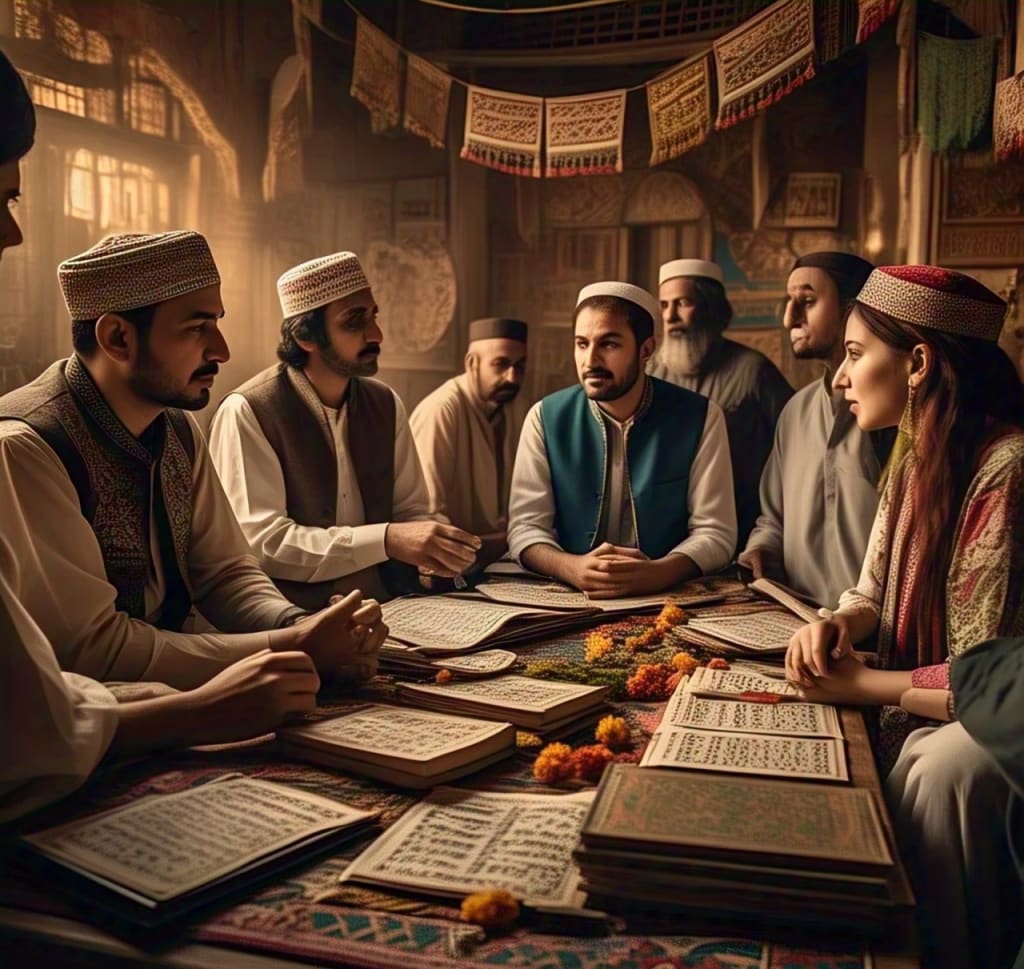
Language is more than a medium of communication; it is the lifeblood of culture, identity, and unity. In Pakistan, Urdu holds the honored stat being the national language, a role that has shaped the nation’s character since its creation in 1947. Though many regional languages are spoken throughout the country, Urdu serves as a unifying force, bridging the linguistic and cultural diversity of the nation.
- Historical Background
The roots of Urdu go back to the 12th century, evolving as a result of cultural exchanges in the Indian subcontinent. It developed from a mix of Persian, Arabic, Turkish, and local Indian languages during the Mughal era. Over time, it became a refined and literary language, heavily influenced by Persian poetry and Islamic scholarship.
By the 19th century, Urdu had already become a powerful symbol for Muslim identity in British India. The Aligarh Movement and other reformist efforts led by Sir Syed Ahmad Khan emphasized Urdu as a language of knowledge, culture, and Muslim nationalism. These efforts played a significant role in shaping the idea of a separate Muslim state, ultimately resulting in the creation of Pakistan.
- Urdu in the Formation of Pakistan
At the time of independence in 1947, Pakistan inherited a linguistically diverse population. The founders of the nation chose Urdu as the national language because of its historical association with the Muslim identity in South Asia and its relatively neutral status among Pakistan’s ethnic groups. Urdu was seen as a way to promote unity and national cohesion.
Although only a small percentage of Pakistanis spoke Urdu as their mother tongue, it was understood and appreciated across different regions. Leaders like Quaid-e-Azam Muhammad Ali Jinnah emphasized the importance of Urdu for national integration and modern state-building.
- A Symbol of Unity
Pakistan is home to various languages, including Punjabi, Sindhi, Pashto, Balochi, and others. While these languages reflect the rich cultural diversity of the nation, Urdu plays a central unifying role. It is the language of communication in government, education, media, and the judicial system. More importantly, it serves as a common cultural thread that binds people from different ethnic and regional backgrounds.
Urdu literature, particularly poetry, has had a profound impact on the collective identity of Pakistan. Poets like Allama Iqbal, Faiz Ahmed Faiz, and Ahmed Faraz used Urdu to inspire thought, resistance, and a sense of belonging. Radio, television, and now digital media continue to carry Urdu content that resonates with a wide audience across Pakistan and beyond.
- Challenges and Preservation
Despite its status as the national language, Urdu faces several challenges. The rise of English as a dominant language in education and official matters has sometimes overshadowed Urdu. In many elite schools, English is the primary medium of instruction, leading to concerns about a disconnect between the younger generation and their national language. Furthermore, regional language advocates have expressed concerns that promoting Urdu might come at the expense of local languages. A balanced approach is needed—one that promotes multilingualism, preserving regional languages while strengthening the role of Urdu as a national glue.Efforts are being made to keep Urdu alive and thriving. Government institutions, universities, and cultural organizations are working to promote Urdu language and literature. Social media platforms and YouTube channels dedicated to Urdu poetry, storytelling, and education have helped reignite interest among youth.
- Conclusion
- Urdu is more than just a language; it is a symbol of Pakistan’s identity, history, and unity. As the national language, it plays a critical role in shaping the cultural and social fabric of the country. While it faces modern-day challenges, Urdu continues to evolve and adapt, maintaining its relevance in a changing world. The promotion and preservation of Urdu is not only a cultural necessity but a vital step toward building a more united and inclusive Pakistan.
About the Creator
aadam khan
I am publishing different stories
Keep reading
More stories from aadam khan and writers in History and other communities.
The founder Of Pakistan
The Founder of Pakistan: Muhammad Ali Jinnah In the early years of the 20th century, as the British Empire ruled over the Indian subcontinent, a visionary leader emerged who would one day change the course of history. His name was Muhammad Ali Jinnah, and he would go on to become the founder of Pakistan, a country created as a homeland for the Muslims of South Asia.
By aadam khan9 months ago in History
Military Strength of Alexander the Great and the Chola Empire: A Historical Comparison
Though separated by more than a thousand years and operating in vastly different geographical and cultural contexts, both forces achieved extraordinary success through discipline, innovation, and strategic brilliance. This article explores the history, composition, size, organization, and military strength of Alexander’s Macedonian army and the Chola military, highlighting how each became a dominant power of its era.
By Say the truth 3 days ago in History
The Hard Ways Trump Could Try to Take Greenland
When Donald Trump was president of the United States, he shocked the world by saying he wanted to buy Greenland. Many people laughed, but others took the idea seriously. Greenland is a huge island in the Arctic. It is rich in natural resources and very important for military defense. Today, Greenland belongs to Denmark, but it also governs itself in many areas.
By sehzeen fatima6 days ago in History


Comments
There are no comments for this story
Be the first to respond and start the conversation.