
Unveiling the Horrors: White Slavery in the Ottoman Empire | Forgotten History Revealed
Unveiling the Horrors: White Slavery in the Ottoman Empire | Forgotten History Revealed

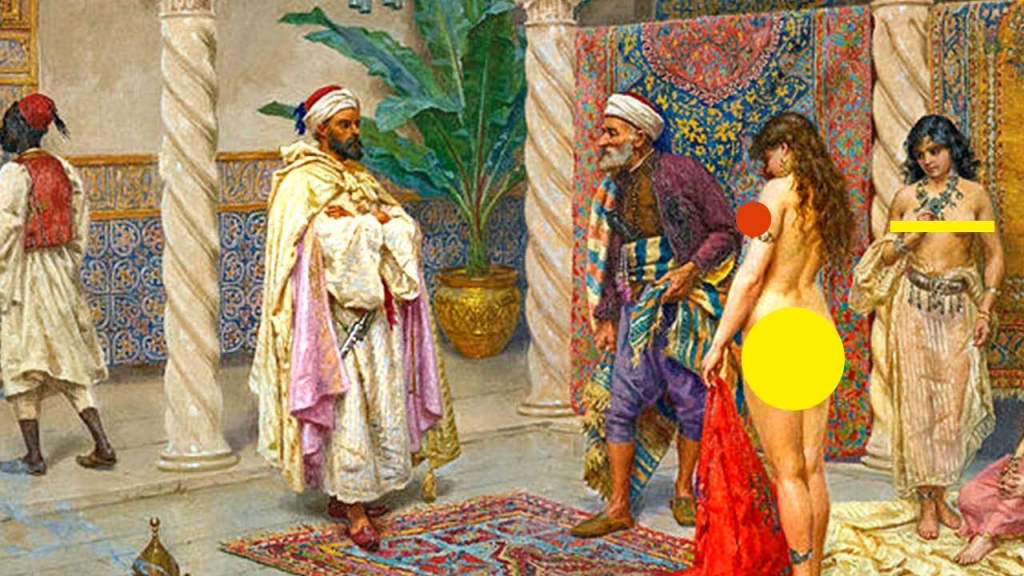
When referring to Europeans who were taken captive, sold into slavery, and occasionally sold again within the Ottoman Empire at various points in its history, the phrase "white slaves" is frequently used. This problem is a part of a larger historical framework that includes the Ottoman Empire and other countries where slavery and human trafficking were prevalent. The Ottoman Empire occasionally used slavery to oppress people from different backgrounds, especially Europeans. The name "white slaves" or "slaves of the White Palace" mainly refers to Christian people who were abducted or seized as prisoners of war and later sold into slavery by the Ottoman Empire. These people were frequently from the Balkans or Eastern Europe. Many of these people were employed in various capacities.
The idea of slavery in the Ottoman Empire was nuanced, and the experiences of people who were held as slaves were quite diverse. While some were treated fairly and given possibilities to develop an Ottoman society, others endured deplorable circumstances and were exploited. There are documented instances of people, including women and children, being taken prisoner and sold into slavery during battles or raids around the borders of the Ottoman Empire. The Barbary Pirates, who were mostly headquartered in North Africa but frequently collaborated with the Ottoman Empire, were also involved in the capture and slavery of people from coastal areas of Europe.
Even though white slavery was a real issue in the Ottoman Empire, it is important to approach historical accounts carefully and steer clear of generalizations. Throughout history, slavery had many different forms in many civilizations, and the experiences of those who were held as slaves were influenced by a variety of elements, including the time period, social class, location, and personal circumstances.
Let us explore the subject of white slaves under the Ottoman Empire a little more, shall we?
1. Slavery and the Origins of Slaves: Multiple factors contributed to the practice of enslaving members of Europe's Christian communities. These sources included combat, where prisoners of war were occasionally made into slaves, as well as attacks and battles on the Ottoman Empire's borders with European nations. The Ottoman Empire also had a system of tribute called the devshirma, where Christian boys were conscripted, converted to Islam, and trained for various positions within the Ottoman administrative and military machinery.
2. Roles and Approach within the Ottoman Empire: Slaves performed a range of jobs. Some ended up working for the Ottoman courts as concubines, eunuchs, administrators, or warriors. An elite group of infantry troops known as the janissaries frequently drew recruits from Christian slave communities. Although some people had opportunities, others battled arduous and terrible conditions to achieve upward mobility and advancement.
3. Origins in a Certain Region: The "white slaves," as they were widely known, came primarily from Southeastern European countries, including the Balkans and areas of Eastern Europe. Due to their proximity to the Ottoman Empire and the various battles that occurred there, these areas were frequently targeted.
4. Slavery and Barbary Pirates: The Barbary Pirates stationed in North Africa, namely the cities of Algiers, Tunis, and Tripoli, engaged in the capture and enslavement of individuals from European coastal areas, including the Mediterranean. While not being directly under the sovereignty of the Ottoman Empire, the Ottoman government frequently gave these pirates their implicit approval.
5. Effect and Abolishing the Practice of Enslavement: As the Ottoman Empire went through different changes over the centuries, including reforms and adjustments to its societal structure, as economic, social, and political conditions changed over time, slavery in the Ottoman Empire started to disappear. The 19th century witnessed attempts to end slavery and progressively free those who were held in shackles.
6. Historical Sources: Travelogues, official records, correspondence, and chronicles from the time period are among the primary sources that describe the experiences of slaves in the Ottoman Empire. These sources shed light on the existence, treatment, and functions of slaves.
7. Modern Scholarship and Consciousness: Modern academics and historians are more interested in studying white slavery in the Ottoman Empire as they try to comprehend this period of history. But it is crucial to approach the subject delicately and critically, taking into account the complexity of historical narratives and the wide range of experiences.
In conclusion, the practice of enslaving members of the Christian communities in Europe within the Ottoman Empire was a historical reality that took place over time. This practice was a part of a larger global framework that included human trafficking and slavery. People who were enslaved had a variety of experiences and were influenced by things like their jobs, where they lived, and shifting historical conditions.
About the Creator
Rid Castañeda
Sharing my thoughts coz why won't I?
Keep reading
More stories from Rid Castañeda and writers in History and other communities.
Lyudmila Pavlichenko: The Most Lethal Female Sniper Who Defeated the Nazi Regime
During the height of World War II, when the eastern front was engulfed in bloodshed and brutality, a legend emerged with unparalleled skills and unwavering determination to put an end to the violence. The relentless Nazi war machine clashed with the steadfast resilience of the Soviet Union, resulting in the loss of countless innocent lives. This was a dark period in the 1940s when high officials were uncertain if the bloodshed would escalate or decrease. However, a young woman from Ukraine, Lyudmila Pavlichenko, stepped forward to embark on a journey to eliminate the Nazi threat from its roots.
By Rid Castañeda2 years ago in History
3 Historical Events That Were Ruined by One Incredibly Small Detail
History is shaped by big ideas, brave leaders, and sweeping movements—but sometimes, the tiniest, most overlooked detail changes everything. A forgotten note, a misheard order, or even a misaligned boot can turn a decisive moment into chaos. These micro-errors often seem trivial at the time, but their ripple effects can alter the course of wars, empires, and even the future of entire nations.
By Enoch Sagini7 days ago in History



Comments (1)
Are there some solid proofs and evidences that can explain the reality of the slavery in Ottoman Empire? I would like to know more and deeply about this topic.