
Unveiling Stonehenge Secrets
A Journey into the Mysterious Past Reveals Astonishing Discoveries
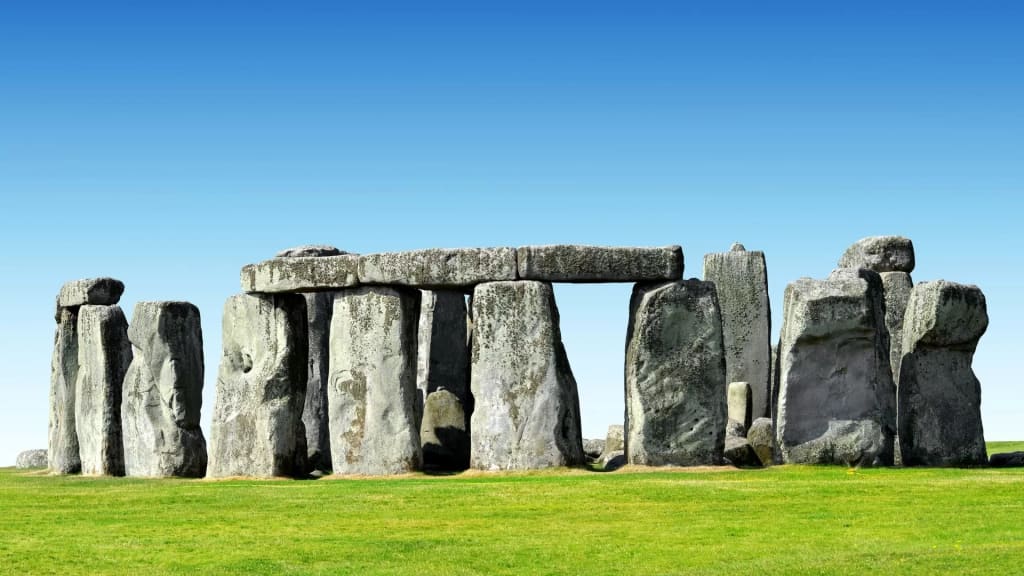
In the heart of Southern England stands Stonehenge, a structure that has baffled scientists for centuries. It serves as a testament to our ancestors' brilliance. Theories about its purpose range from a celestial observatory to a sacred burial ground, a healing site, or even a venue for social gatherings. The construction process, involving stones as heavy as 75 tons, is a marvel considering the lack of modern tools. Despite extensive research, the mystery of Stonehenge persists, leaving us with more questions than answers.
Welcome to mysterious history, where we explore enigmas of the past. Several theories have been proposed over the years, but some have been debunked or fallen out of favor. One of the oldest theories, dating back to the 17th century, is the Druid theory, suggesting Stonehenge was built by ancient Druids for religious ceremonies. However, radiocarbon dating places Stonehenge's construction around 3,000 years before the existence of Druids, dismissing this theory.
Another theory suggests Stonehenge was an ancient healing site, pointing to numerous burials in the area with signs of illness or injury. Yet, this theory doesn't hold up under scrutiny, as many ancient burial sites also show similar characteristics. The astronomer theory, proposing Stonehenge as an ancient observatory for predicting celestial events, has lost favor due to inconsistent alignments. Lastly, the theory that Stonehenge was a site for social gatherings or unity remains plausible but challenging to prove or disprove conclusively due to its long usage span.
In a groundbreaking discovery, scientists claim to have unraveled the mystery of Stonehenge. This enigmatic structure, which has puzzled historians and archaeologists for centuries, is finally revealing its secrets. The monumental stones were not sourced locally but brought from The Preli Hills, over 150 miles away in Western Wales. This raises intriguing questions about how the builders transported stones, each weighing an average of 25 tons, across such a vast distance.
The most plausible theory involves a combination of human and natural forces. Builders likely moved the stones overland during frozen winters, exploiting the ground's frozen state to slide the heavy rocks. Subsequently, river networks were utilized to float the stones closer to their final destination. This engineering feat not only showcases the builders' understanding of the landscape and seasons but also suggests a highly organized society capable of monumental projects. Stonehenge reflects not the work of a primitive people but a sophisticated society with advanced knowledge in astronomy, engineering, and architecture.
Moreover, the choice of The Preli Hills as the stone source implies a spiritual or symbolic significance. The builders opted for a location not based on convenience but one likely holding special meaning. This adds a deeper layer to Stonehenge's understanding as a sacred site rather than just a monument. The mystery of Stonehenge is beginning to unravel.
This breakthrough significantly advances our understanding of prehistoric Britain, challenging previous perceptions. It reveals a society with advanced skills and a profound connection to its environment. Stonehenge, once a knot in the fabric of history, now unveils a story of strength, determination, and ingenuity.
As we unravel this knot, we see a story emerging—a tale of human capability, a monument speaking of our past, present, and potential future. Stonehenge changes our comprehension of history, reminding us of our roots and the remarkable journey as a species. It signifies that our ancestors were capable of incredible feats, shaping the world with their bare hands and primitive tools. Stonehenge's mystery, once a question mark, now paints a picture of a resilient and ingenious human civilization. What are your thoughts on these new findings? Is there more to stonehenge than meets the eye?
About the Creator
Keep reading
More stories from writers in History and other communities.
3 Times the Wrong Person Was in Charge at the Worst Possible Moment
Leadership matters most when things go wrong. In calm times, almost anyone can appear competent. Meetings happen. Papers get signed. Coffee is consumed with confidence. But crises are different. Crises demand judgment, experience, decisiveness, and—ideally—a basic understanding of what’s happening.
By Enoch Sagini5 days ago in History


Comments (1)
This writing was Fabulous. I liked it a lot and couldn't find any flaws. You're welcome! on vocal May you have a day full of smiles, always!