
Unexplained History A Portal To Mysteries Part 2
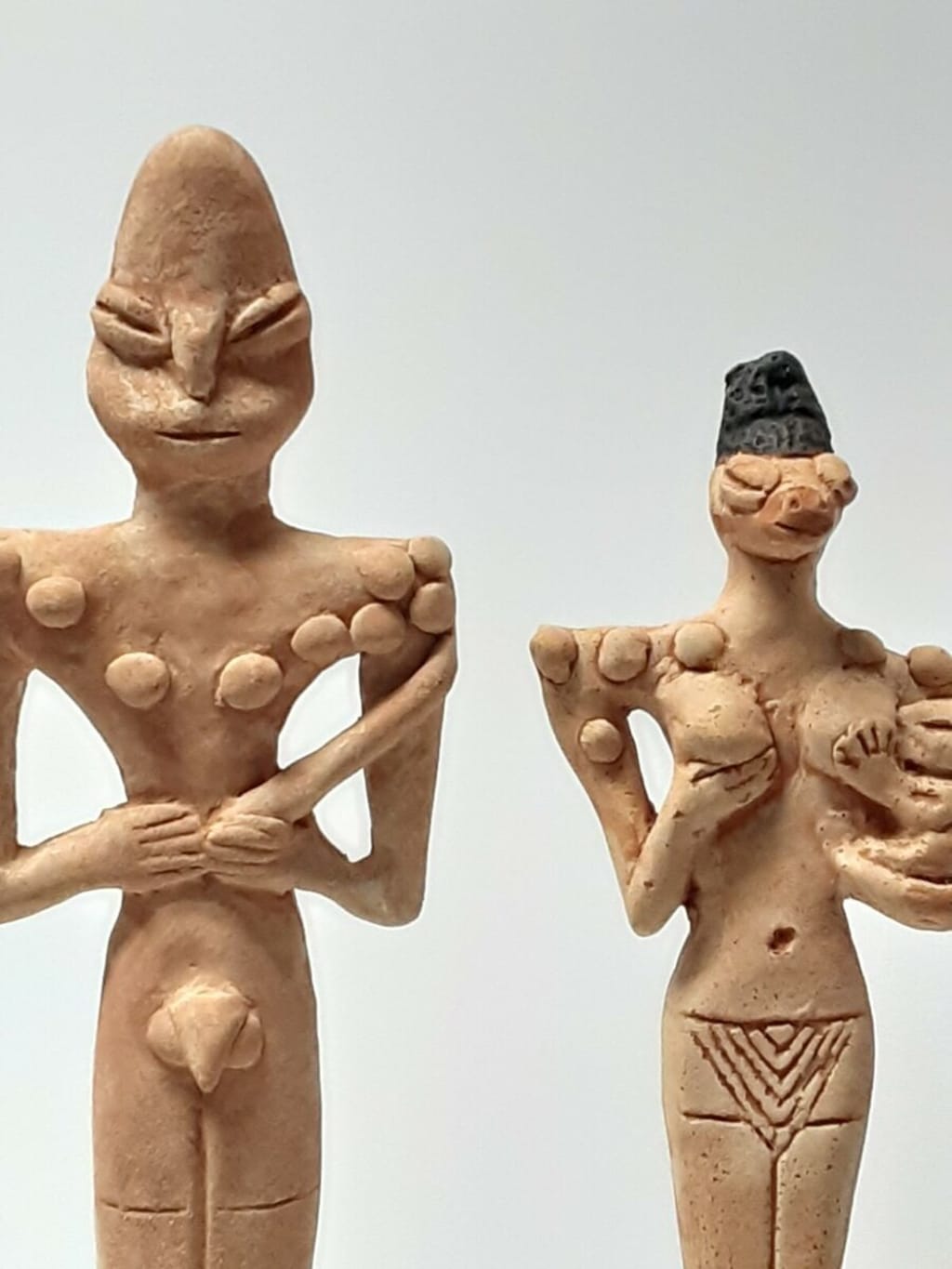
The Ubaid Lizardmen Statuettes
Welcome to an exploration through the enigmatic pages of history, a gateway to mysteries that even the keenest scientific minds find challenging to fully unravel. In this compilation, we delve into ten intriguing phenomena.
The Alleged 1870s Billy the Kid Photograph:
Photographs provide glimpses into the past, yet their authenticity can ignite heated debates among historians. A notable example is a photograph acquired in 2010 for a mere two dollars, purportedly featuring the notorious outlaw Billy the Kid. The tin-type image showcases Billy the Kid and his gang, The Regulators, engaged in a casual game of croquet. If authentic, it would be only the second confirmed image of the Kid, potentially holding immense historical value. However, confirming its legitimacy has proven challenging, with facial recognition software suggesting a match but other elements raising doubts. Despite controversies, the alleged Billy the Kid photo has generated significant interest, becoming the subject of documentaries and captivating historians, forensic analysts, and enthusiasts alike.
The Erie 1920s Levitation Photograph:
In a pre-digital manipulation era, a photograph from the 1920s caused a stir by depicting what appears to be a levitating man. Featuring Colin Evans, a spiritualist medium known for conducting seances in darkness with sporadic flashes of light, the photo captures Evans seemingly suspended mid-air. Critics argue the photo's potential staging, suggesting hidden supports or wires, while supporters consider it evidence of Evans's claimed spiritualist abilities. Regardless of one's stance on its authenticity, the levitation photograph remains a compelling piece of unexplained history, reflecting humanity's enduring fascination with the supernatural.
The Ubaid Lizardmen Statuettes:
Archaeology often unveils artifacts that defy conventional understanding, and among these enigmatic finds are the Ubaid lizardmen statuettes discovered at the ancient site of Al-Ubaid in Iraq. Dating back to 4000-5000 BC, these terracotta figures exhibit humanoid forms with distinct reptilian features, including elongated heads, almond-shaped eyes, and scaly skin. Some statuettes portray lizardmen engaged in daily activities. These artifacts challenge our understanding of ancient cultures, leaving us pondering the beliefs, rituals, and artistic expressions of our distant ancestors.
The Unexplainable Fairy Circles of Namibia:
Nestled in the arid grasslands of the Namib Desert in Namibia, the fairy circles present a captivating natural phenomenon. These circular patches of barren land, surrounded by short grass in a honeycomb-like pattern, defy easy explanation. Despite local myths attributing them to divine intervention or gods' footsteps, scientific theories range from termites and plant competition to gas seepage and radioactivity. The fairy circles continue to fuel scientific debates, emphasizing the enchanting mysteries that nature often conceals in plain sight.
The 1959 Dyatlov Pass Incident Photographs:
The Dyatlov Pass incident in 1959, where nine experienced Russian hikers met mysterious and chilling fates in the Ural Mountains, is one of history's most baffling events. Photographs recovered from the hikers' cameras add layers of enigma to the incident, including a blurry figure near the tree line (often dubbed the yeti photo) and a mysterious light or orb captured on the last night of the expedition. While the incident remains largely unexplained, the eerie photographs contribute a haunting visual narrative, sparking theories involving secret military experiments, indigenous attacks, or supernatural entities.
The Astonishing Patterson-Gimlin Bigfoot Film:
The Patterson-Gimlin film, captured in 1967 in Northern California, remains the most famous and debated piece of evidence for the existence of Bigfoot. The short motion picture purportedly shows a large, hairy bipedal creature striding through a clearing. Despite numerous analyses, the film's authenticity is fiercely contested. Critics suggest it could be a person in a costume, while proponents argue that the creature's movements and anatomy align more closely with an unknown primate than a human. Whether a hoax or a monumental discovery, the Patterson-Gimlin film continues to fascinate and provoke discussions about elusive creatures that may inhabit unexplored corners of our world.
The Bizarre Fresno Nightcrawlers Footage:
In the realm of unexplained phenomena, few are as odd as the Fresno Nightcrawlers. These entities, first captured in a surveillance video from Fresno, California, in the late 2000s, appear as short, white leg creatures with no torso or arms. The peculiar gait and form of these creatures defy conventional explanations, ranging from video manipulation to extraterrestrial life forms or cryptid organisms. Despite skepticism and a lack of additional evidence, the Fresno Nightcrawlers footage continues to engage cryptid enthusiasts and mystery lovers, leaving us to ponder what strange encounters may be waiting just outside the range of our ordinary perception.
The Nampa Figurine:
Discovered in 1889 while drilling a water well in Nampa, Idaho, the Nampa figurine is a tiny clay artifact depicting a female figure. What baffles scientists is the depth at which it was found—around 300 feet—corresponding to geological layers approximately 2 million years old. This discovery challenges mainstream science, with some viewing it as evidence of advanced ancient civilizations or out-of-place artifacts, while others dismiss it as a drilling-induced anomaly or a more recent artifact embedded in older materials. The Nampa figurine remains an intriguing enigma in archaeological circles.
The Antikythera Mechanism's Complex Diagrams:
Recovered from a shipwreck off the Greek island of Antikythera in 1901, the Antikythera Mechanism is hailed as the world's first analog computer. Dating back to the first or second century BC, this ancient Greek device features complex gears and inscriptions that showcase an advanced understanding of astronomy. It could predict celestial events like eclipses and track the movements of celestial bodies. Despite extensive study, the mechanism's full range of functions and the knowledge behind it remain partly understood, highlighting the gaps in our understanding of ancient civilizations and their technological prowess.
The Last Photo Aboard the Eilean Mor Lighthouse:
Shrouded in mystery and speculation, the Flannan Isles Lighthouse incident of 1900 remains a perplexing episode in maritime history. The last photograph taken at the Eilean Mor Lighthouse before the keepers' disappearance features Thomas Marshall with a troubled expression against a stormy backdrop. Discovered during the subsequent investigation, the photo adds a haunting layer of intrigue to the mystery, encapsulating the ominous mood that pervaded the lighthouse prior to the bewildering vanishing of its keepers. While it may not provide conclusive evidence or answers, the photograph remains a powerful testament to the chilling unknowns that lurk within our world's remote corners.
About the Creator
Keep reading
More stories from Morteza Mazinani and writers in History and other communities.
Unexplained History A Portal To Mysteries
Welcome to an exploration through the enigmatic pages of history, a gateway to mysteries that even the keenest scientific minds find challenging to fully unravel. In this compilation, we delve into ten intriguing phenomena.
By Morteza Mazinani2 years ago in History
The Epic of 1917
Before discussing the cannons of Mărăști, one must understand the deplorable state of the country at the beginning of 1917. Following the disastrous campaign of 1916, two-thirds of Romanian territory, including Bucharest, was under German and Austro-Hungarian occupation. The Government, the Royal Family, and the remnants of the army had retreated to Moldavia.Moldavia had become a vast refugee camp. Famine, the biting cold, and typhus were ravaging the population, killing more people than the enemy's bullets. However, amidst this apocalyptic landscape, a miracle occurred: the reorganization of the army. Under the guidance of the French Military Mission led by General Henri Berthelot, the Romanian soldier was rearmed, trained in modern warfare tactics, and, most importantly, restored to his dignity. King Ferdinand’s promises regarding land reform and universal suffrage transformed peasants into soldiers ready for the ultimate sacrifice.
By alin butuc5 days ago in History
The Amber Room: History, Glory, and the Greatest Lost Treasure of Europe
Origins of the Amber Room The story of the Amber Room begins in Prussia (modern-day Germany) in the early 1700s. The room was commissioned in 1701 by King Frederick I of Prussia as part of a grand plan to decorate his royal palace in Berlin. The design was entrusted to the court architect Andreas Schlüter, while the intricate amber craftsmanship was executed by master amber artisans Gottfried Wolfram, Ernst Schacht, and Gottfried Turau.
By Say the truth about 11 hours ago in History
Whiskey At Dusk
Guess the whiskey was more important to you in the end, wasn’t it? It was more than the well-being of your friends; more vital than showing up to the places you promised you would and could come to; more critical of a matter than fulfilling your damn responsibilities and getting the press off your back.
By Snarky Lisa4 days ago in Humans



Comments
There are no comments for this story
Be the first to respond and start the conversation.