
Unearthing the Dark Threads of History: 15 Unsettling and Accurate Historical Facts
"Explore the Shadows of the Past, from Morbid Denture Tales to Cannibalism Fetishes, Revealing the Intricacies of Our Shared History"

The world we inhabit has existed for millions of years, witnessing numerous events that have profoundly shaped the planet. These occurrences can be categorized into The Good, the Bad, and the Ugly, each leaving an indelible mark on history. While some of these events have been adapted to suit the sensibilities of our times, history itself remains an unchanging narrative.
Now, let's delve into some unsettling yet accurate historical facts that have been uncovered over the years. Join us on this journey, as we explore facts that may not be the most significant but are undeniably disquieting. Let's begin.
15. The Morbid History of Dentures:
In the 1800s, dentures weren't crafted from modern materials like composite resin or porcelain. Instead, the affluent turned to unconventional sources, acquiring teeth from deceased individuals or even the less fortunate. This practice, known as Waterloo teeth, involved removing the teeth of dead soldiers on the battlefields. Other materials for dentures included ivory, wood, and even animal teeth.
14. Stained Church Glass:
The beautiful stained glass found in old churches has a dark history. The creation of colored glass in the 1112 German monk's journal reveals the unsettling process, involving the use of metallic oxides and, surprisingly, urine as a diluter for paints. Yes, urine played a role in creating those intricate church paintings.
13. The Original Leather-Bound Books:
In a bizarre twist of originality, there was a time when leather used for book covers came from human skin. Known as anthropodermic bibliography, this macabre practice involved fashioning human skin into book covers, often sourced from executed convicts. Though not many such books remain, the unsettling thought of their existence lingers.
12. The Story of Minnie Dean:
Minnie Dean, the first woman legally hanged in New Zealand, ran a babysitting operation in the mid-1800s. Investigations revealed disturbing findings, including inadequate living conditions for the children in her care, unexplained deaths, and allegations of drugging the children. Minnie was charged with murder and hanged in 1895, leaving a dark legacy in New Zealand folklore.
11. The History of the American Flag:
The iconic American flag, designed by Robert G. Heft, features 50 stars anticipating the inclusion of Hawaii and Alaska. Heft's assignment in high school resulted in the adoption of his design in 1960. The unexpected journey of the American flag's design reflects the importance of giving one's all to assignments.
10. The Pope's War on Cats:
In 1227, Pope Gregory IX declared war on cats, believing they carried the spirit of Satan. The extermination of cats led to an unintended consequence—the spread of the plague. The absence of cats allowed fleas, carriers of the plague, to proliferate, contributing to the devastating impact of the disease.
9. Thomas Edison's Talking Doll:
Thomas Edison, known for his inventions, including the phonograph, created a talking doll in 1890. The phonograph doll, although innovative, became a commercial failure due to its cumbersome hand-crank operation and quickly wearing wax records.
8. Mozart's Dirty Songs:
Despite his classical reputation, Mozart composed songs with vulgar themes. Early compositions like "Lick me in the ass" showcased his unconventional side. Mozart's penchant for composing songs with explicit content challenges the conventional image of the maestro.
7. Genghis Khan, Climate Hero:
Genghis Khan's conquests resulted in a significant environmental impact. The Mongol Empire's vast territories led to depopulation, allowing forests to regenerate and absorb carbon. This unintentional contribution to climate change highlights the interconnectedness of historical events.
6. James Jamison's Cannibalism Fetish:
James S. Jameson, heir to the Jameson Irish Whiskey empire, engaged in a shocking act during an expedition in the Congo in 1888. He reportedly purchased a young girl and offered her as food to cannibals, documenting the event through watercolor paintings. This dark chapter contrasts sharply with the popular image of the whiskey brand.
5. Shadows of the Dead:
After the atomic bombings of Hiroshima and Nagasaki in World War II, haunting shadows of humans and objects were imprinted on pavements. These "Shadows of the Dead" serve as a somber reminder of the catastrophic aftermath of nuclear warfare.
4. Martin Cooney's Incubators:
Martin Cooney's controversial efforts popularized the use of incubators for premature babies. Despite societal reservations, Cooney showcased premature infants in side shows at Coney Island, raising funds to save thousands of lives through his "hatcheries."
3. Pharaoh Pepe II and Flies:
Pharaoh Pepe II, ruler of ancient Egypt, had a peculiar aversion to flies. In an extreme effort to avoid them, he reportedly bathed slaves in honey from head to toe, attracting the flies to the slaves instead. This unusual tactic resulted in severe health issues for the unfortunate slaves.
2. Hitler and Disney:
Adolf Hitler, despite his anti-American stance, admired Disney's "Snow White and the Seven Dwarfs." Roy Disney sold the film to the Nazi propaganda ministry, and Hitler reportedly considered it one of the greatest movies ever made. The dictator's unexpected fondness for Disney remains a curious historical footnote.
1. The Leningrad Famine:
During World War II, Leningrad endured a devastating 872-day blockade by German and Finnish forces. The city's population plummeted due to starvation, with reports suggesting instances of cannibalism. The unimaginable conditions during the Leningrad famine serve as a harrowing testament to the human cost of war.
In the vast tapestry of history, these unsettling facts offer glimpses into the darker, often overlooked, aspects of the human experience. While some may evoke discomfort, they contribute to a more comprehensive understanding of our collective past.
About the Creator
Keep reading
More stories from Yassy Meiah Almerol and writers in History and other communities.
Attitude Unleashed: Mastering the Art of Shaping Your Destiny
The power to shape one's destiny lies in the daily choices made, with a pivotal force being the attitude one adopts. This truth becomes more apparent as life unfolds, revealing the profound impact of choosing the right attitude. This attitude, it is emphasized, surpasses the significance of one's past, education, or financial situation and stands tall above circumstances, successes, and failures.
By Yassy Meiah Almerol2 years ago in Motivation
The Bloody Red Queen
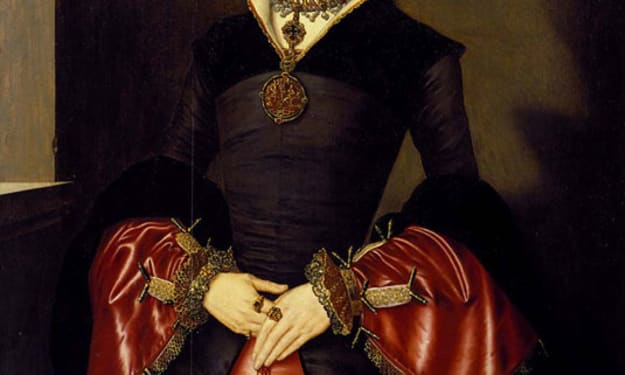
Mary 1st of England—often remembered by the nickname “Bloody Mary”—was one of the most controversial monarchs in English history. Her life was shaped by dynastic politics, religious conflict, and personal hardship. As the first woman to rule England in her own right, Mary’s reign marked a critical turning point in the religious and political development of the country. Though her rule was relatively short, from 1553 to 1558, her life story reveals the immense challenges she faced as a queen determined to restore Catholicism in a nation that had largely turned toward Protestantism.
By Dragon Matthew Wood - Hillman3 days ago in History
Top tipple tricks
Been thinking a lot about drinking, lately. Not least because of a recent episode of over-indulgence and the inevitable after effects. Some readers may recall the earlier articles I wrote about beating the booze. Here I set out an experiment in techniques for cutting down on my alcohol intake. The experiment was successful, the techniques worked, and I have armed myself with an arsenal of weapons in the war against the demon drink. I have yet to fire the first round however. It's all a question of timing (perhaps procrastination).
By Raymond G. Taylor7 days ago in Psyche



Comments