
Understanding the Role of the Supreme Court
Jay Russell Explores Key Cases and Their Impact on U.S. Law

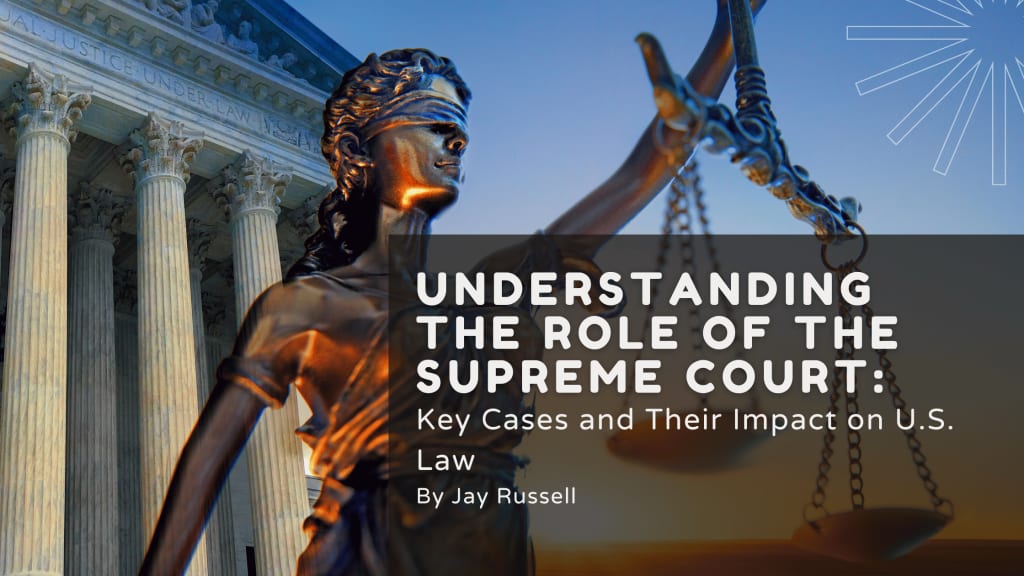
The United States legal system can be nebulous and confusing; Jay Russell is here to help you understand the role of the Supreme Court while learning about key cases their impact on law in the United States.
The Supreme Court of the United States holds a pivotal role in the nation's legal system. As the highest court in the land, it interprets the Constitution and resolves important legal disputes that shape the course of American law.
The Role of the Supreme Court:
The primary role of the Supreme Court is to interpret the Constitution and ensure its consistent application throughout the nation. The Court consists of nine justices, nominated by the President and confirmed by the Senate. Once appointed, these justices serve lifetime terms, which allows them to make decisions without political pressures.
The Supreme Court has the power of judicial review, meaning it can review and strike down laws that are deemed unconstitutional. This power serves as a critical check on the legislative and executive branches, ensuring that the principles outlined in the Constitution are upheld.
Key Landmark Cases and Their Impact:
1. Marbury v. Madison (1803):
This landmark case established the principle of judicial review. Chief Justice John Marshall declared that it is the duty of the Court to interpret the Constitution and determine the constitutionality of laws passed by Congress. This decision solidified the Court's power to review and invalidate laws that violate the Constitution, shaping the balance of power among the three branches of government.
2. Brown v. Board of Education (1954):
In a unanimous decision, the Court ruled that racial segregation in public schools violated the Fourteenth Amendment. This groundbreaking case declared that "separate but equal" was inherently unequal, leading to the desegregation of schools across the United States and paving the way for the Civil Rights Movement.
3. Roe v. Wade (1973):
This case established a woman's constitutional right to have an abortion based on the right to privacy under the Due Process Clause of the Fourteenth Amendment. Roe v. Wade remains a highly debated and influential case in the ongoing discussion surrounding reproductive rights.
4. United States v. Nixon (1974):
During the Watergate scandal, the Court ruled that President Richard Nixon had to turn over the secret White House tapes, which ultimately led to his resignation. The decision reaffirmed the principle that no one, not even the President, is above the law and established the Court's role in ensuring government transparency and accountability.
5. Obergefell v. Hodges (2015):
In a landmark decision, the Court held that same-sex marriage is a right protected by the Fourteenth Amendment. This ruling legalized same-sex marriage nationwide, marking a significant advancement for LGBTQ+ rights and social equality.
The Lasting Impact:
These landmark Supreme Court cases have had a profound and lasting impact on U.S. law and society. They have expanded civil rights, clarified constitutional principles, and shaped the interpretation of the Constitution for generations to come. The Court's decisions influence the legal landscape and contribute to the ongoing evolution of American jurisprudence.
Moreover, the Court's rulings often prompt public debate and encourage discussions on important social issues. They reflect the evolving values and perspectives of society and guide legislative efforts to address emerging challenges.
The Supreme Court's part in interpreting the Constitution and resolving legal disputes is vital to maintaining the balance of power within the United States. Understanding the role of the Supreme Court and being aware of key landmark cases allows us to appreciate the significance of the Court's decisions and their impact on the fabric of American law. As the law evolves, the Supreme Court will remain a crucial institution in safeguarding the Constitution and ensuring justice for all.
About the Creator
Jay Russell South Carolina
Currently working in Spartanburg, SC, Jay Russell is the CEO of ACR Productions, a unique film company creating settlement documentaries for personal injury clients through partnerships with attorneys and legal firms.
Keep reading
More stories from writers in History and other communities.
World War I
The morning fog lay thick over the trenches of northern France, clinging to the earth as if it too feared what was about to happen. Private Thomas Hale pulled his coat tighter around himself, though it did little to stop the cold from seeping into his bones. He had been in the trenches for six months, yet the damp smell of mud, smoke, and fear still felt unfamiliar, like a nightmare he could not wake from.
By Maavia tahir5 days ago in History
Chicago Hospital Held Newborn Baby for 8 Months Over an Unpaid Medical Bill
Debts were handled much differently in the 19th and early 20th century. Back then, people who accrued debt had more to fear than letters and calls from collection agencies the same way we do today, especially if they owed a hospital or doctor money.
By Criminal Matters5 days ago in History
How to Succeed at the Benson Directory®
Congratulations and welcome to the Benson Directory® employee #22391! As our newest call handler, you will have the privilege of speaking with dozens of unique and interesting people on a daily basis as well as the opportunity to earn bonuses for high performance. Contained within this handbook you will find a set of ease to follow instructions designed to help you settle in to your new role and begin paving the way to success.
By S. A. Crawfordabout 23 hours ago in Fiction



Comments
There are no comments for this story
Be the first to respond and start the conversation.