
Under the Foreign Bough
A Story of a Tree, Keys, and Small Stones


A Story of a Tree, Keys, and Small Stones
The Beginning:
The vast orange grove was everything to the family. Under its lush shade, grandparents were born, married, and tilled the land. The large tree that adorned the grove's entrance was called "Al-Shahida" (The Witness), for it had seen every detail of their lives. In the spring of the Forgotten Year, the face of the place changed. Men in unfamiliar uniforms arrived, carrying papers stamped with seals we did not recognize. They said the land no longer belonged to its owners, that new laws allowed strangers to claim it.
The Change:
On a moonlit night, they forced Grandfather Mahmoud to leave his stone house. Before departing, he hung the large front-door key on a branch of "Al-Shahida" and said, "You will keep watch over the house until we return." Grandmother Widad scooped some soil from beneath the tree into her handkerchief. They followed a long road that led them to a barren valley. There, they built houses of tin and named the place "Valley of Hope." But everyone called it "The Camp of Memory."
The New Days:
Mahmoud and Widad's children grew up watching from afar as people picked their oranges, bathed in their well, and lived in their homes. Each evening, Grandmother would take out the handkerchief and say, "Soil does not change its scent, and memory does not die." At the new school, the teacher would draw them a map of the old place in the sand, redrawing the boundaries of the grove, the house, and the fields, so the children would not forget their origins.
The Signs:
· Every Friday, the families would hang the keys to their old homes on an ancient olive tree in the camp's center.
· The children would collect colored stones from the mountain, each stone representing a day of waiting.
· When the ancient olive tree fell ill, Grandfather Mahmoud brought it a little of the soil from the old handkerchief. It regained its greenery within days.
The Silent Uprising:
In the winter of the Decisive Year, the camp's children decided to do something different. Instead of going to school, they sat beneath the olive tree and began drawing memories they had never lived: Grandfather's stone house, the sweet-water well, and the branches of "Al-Shahida" heavy with oranges. Security men came and tore up the drawings, but the children drew them anew the next day. Their resistance was of memory and colors.
The Turning Point:
One day, they found the olive tree surrounded by barbed wire. When they tried to remove it, men with weapons came. Mahmoud (the grandfather's grandson) stood before them and said, "You may control the land, but you will never control the stories the land holds in our hearts." That night, the children drew on the camp's walls everything they remembered from their grandparents' tales.
The End and the Beginning:
Years passed. The camp transitioned from tin to stone, but the olive tree remained. The keys still hung. The drawings were renewed each year. Every child in the camp now had a small handkerchief holding a bit of their ancestors' soil. And Grandmother Widad, though she could no longer see, would feel the keys and say, "The land returns to its people, sooner or later, for it knows the voices of its children."
About the Creator
Keep reading
More stories from ZAIDALGONAID and writers in History and other communities.
♡ Me and My Identity ♡
♡ Me and My Identity ♡ ■ Episode 4 ✍ By: Abdul-Ilah Abdul-Qader Al-Junaid Abu Zaid, a kind man in his fifties who had lost his sight due to the hardships of past conflicts, was accustomed to going out with his son Zaid to buy groceries from the market and then returning home. However, Zaid was now with his classmates at the summer center on its first day. Despite this, Abu Zaid insisted on going out as usual, but this time alone, driven by a desire to check on any neighborhood children who might have been late joining the center.
By ZAIDALGONAID2 months ago in Fiction
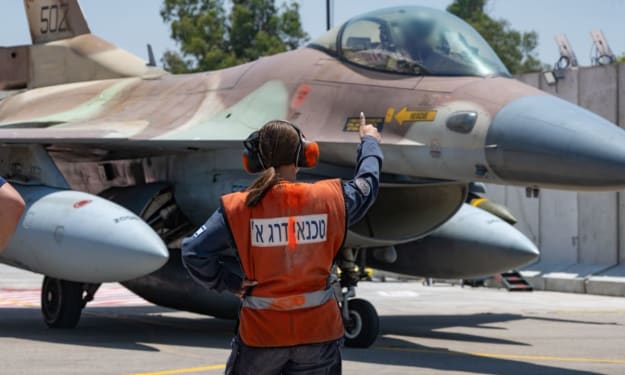
Iranians prefer 'precise' Israeli strike over US attack as protests resume at universities
Iranians, while "waiting every minute and second" for a US strike against the Islamic Regime, would prefer an Israeli strike due to the precise nature of the Air Force's strikes in June, while there is a perception that US strikes would "bring terrible destruction, like in Iraq and Afghanistan," a local, identified as Ali told KAN Reshet Bet on Sunday.
By Wings of Time 5 days ago in History



Comments
There are no comments for this story
Be the first to respond and start the conversation.