
Two Decades of Dusk
A Chronicle of Shadows and Silence

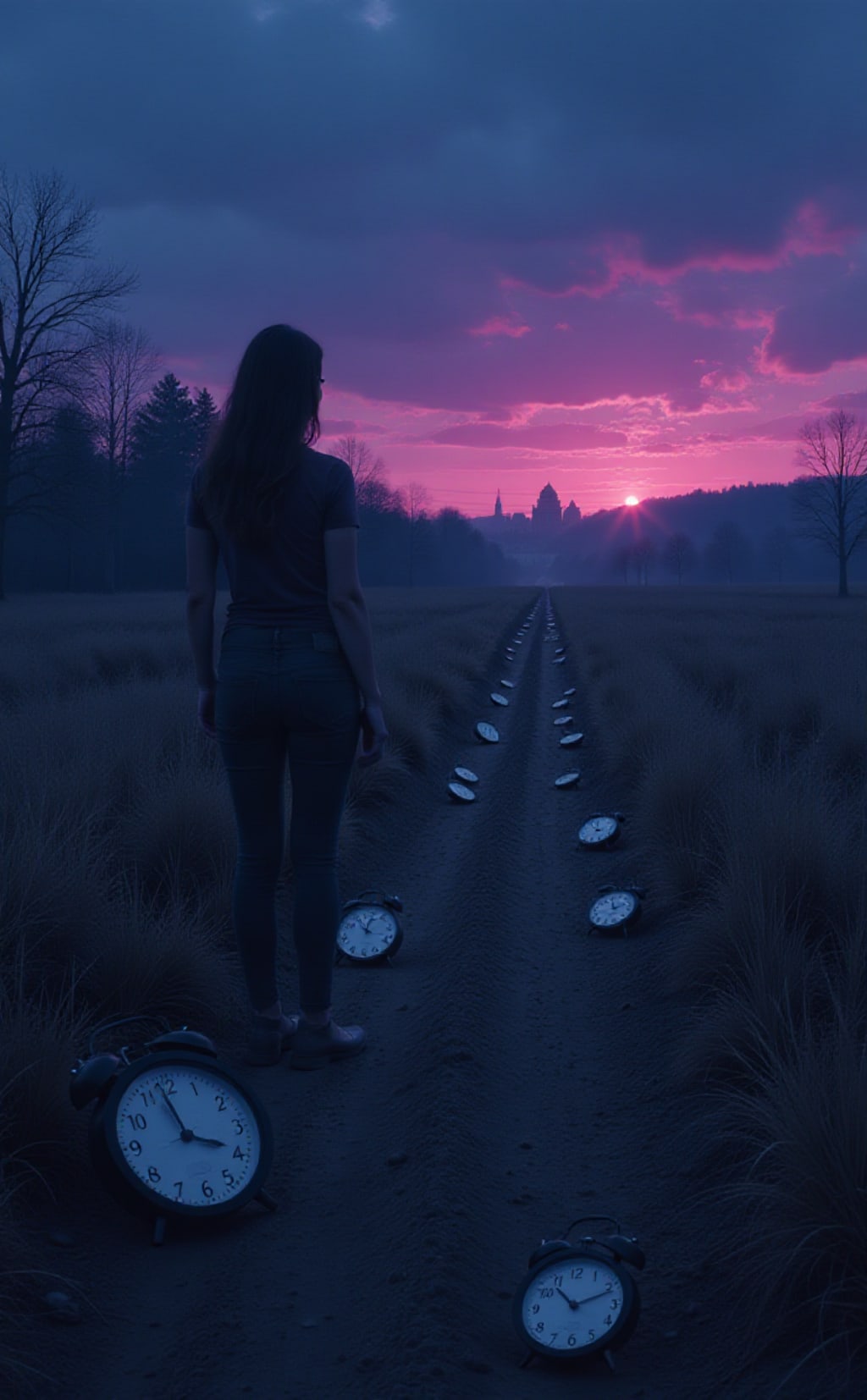
For some, time is a straight line—clearly marked by milestones, memories, and movement. For others, time becomes a fog. It is not felt in the tick of clocks but in the weight of unspoken days, in the stillness between seasons, in the way one shadow folds into the next. For me, time became dusk. Not quite night, not quite day—just a persistent twilight that stretched across twenty years of my life.
They say dusk is beautiful. A golden hour. But I came to know it as a place where light faded slowly and never returned.
The beginning of this dusk didn’t feel catastrophic. There was no loud end, no earthquake of circumstance. Just the slow, imperceptible dimming of who I was. At first, it was forgettable—a lost appetite here, a canceled gathering there. The world kept spinning, and I kept walking, even as the light began to fade.
We rarely notice when we begin to disappear. The process is gentle. Life erodes us with grace. What started as a quiet sadness turned into a habit of silence. Conversations dulled. Laughter was something that belonged to someone else. I was present, but increasingly unrecognizable—even to myself.
Some might name this depression. Others might call it disillusionment, or burnout, or trauma. In truth, it doesn’t matter what label you use when you're in it. When dusk falls over your life, language becomes irrelevant. You simply live with less light.
During those years, I became an archivist of absence. I measured days not by what I did, but by what I avoided. I stopped visiting places that once felt like home. I let relationships fray. Opportunities came and went like ships passing in a fog, and I couldn’t summon the will to raise a flag or wave them down. I watched the world through a window I couldn’t open.
And yet, I survived. That is perhaps the cruelest gift of dusk—it doesn’t kill you. It keeps you alive just enough to know what you’re missing. You eat. You work. You sleep. You perform the motions of life with the efficiency of someone who once cared. You become a ghost, haunting your own days.
But dusk is not without its moments of quiet revelation. There is a strange clarity that comes from sitting in shadow. You begin to see how fragile brightness really was. You realize how often joy depended on things beyond your control—approval, success, attention, hope. You learn that silence, for all its pain, is honest. It doesn’t pretend. It doesn’t promise.
Over those two decades, I grew to understand the architecture of sorrow. I studied it like a scholar. I learned its rhythms, its tricks, its persistence. I learned how to wear it like a second skin. And eventually, I learned how to stop fighting it.
This was not surrender. It was transformation.
By accepting the dusk, I began to move differently. I no longer chased the light, demanding it return. I stopped grieving the person I used to be. Instead, I started to listen—to the stillness, to the sadness, to the truth that had always been beneath the noise of living. I learned to build a life that didn’t rely on daylight.
I began to find beauty in small things: a single warm cup of tea. A book that whispered instead of shouted. The first line of a journal entry that took months to write. The sound of the wind at 3 a.m., when no one else was awake to hear it.
These were my victories. Not the kind you post about or celebrate with others. But the quiet, internal ones that remind you that you’re still here.
Eventually, dusk began to change. Not quickly. Not all at once. But the shadows that once swallowed everything started to part in places. I would catch myself laughing, surprised by the sound. I would look forward to something—a small walk, a phone call—and feel a flicker of warmth that wasn’t fear.
And then came the strangest realization of all: dusk had taught me to see.
In the clarity of shadow, I had learned to distinguish illusion from essence. I had shed roles that no longer fit, expectations that no longer served, and dreams that were never really mine. I had found a self beneath the performance, beneath the pressure, beneath the pain.
This is not a story of redemption. There is no grand finale, no triumphant return to light. This is a story of survival, of adaptation, of slow and silent healing. The dusk never truly lifted—it simply softened. And in that softness, I learned how to live again.
Two decades of dusk shaped me. It taught me patience beyond measure. It taught me humility, empathy, and a kind of strength that does not shout but endures. It taught me that not all suffering is loud, and not all healing is visible. Some of us mend in silence. Some of us rebuild in the shadows.
So, to those still walking through their own long twilight, I say this:
You are not lost. You are not broken beyond repair. You are not forgotten.
You are walking through dusk, and yes, it is long—but not endless. In time, your eyes will adjust. You will find your footing. You may not return to the person you were, but you will discover someone new—someone quieter, perhaps, but no less worthy of light.
And when you do, when you feel that first fragile warmth after years of cold, you will know: the dusk was not your end.
It was your becoming.
About the Creator
Keep reading
More stories from Habibullah khan and writers in History and other communities.
Escalating Conflict: Ukraine-Russia Tensions Reach a Breaking Point
Escalating Conflict: Ukraine-Russia Tensions Reach a Breaking Point As military clashes intensify, global leaders call for urgent diplomatic action to prevent further escalation in the ongoing Ukraine-Russia conflict.
By Habibullah khan 10 months ago in History
The Night Polo of Emperor Akbar: When a Glowing Ball Lit Up the Mughal Game
Among the many fascinating innovations associated with the Mughal Empire, one lesser-known yet remarkable story involves the love of sport displayed by the great emperor Akbar. Known for his administrative brilliance, military strength, and cultural openness, Akbar was also passionate about physical games—especially the ancient sport of polo, known in South Asia and Persia as chogan or chaugan. One of the most intriguing legends about him is that he introduced a glowing ball so the game could be played at night.
By Irshad Abbasi 3 days ago in History


Comments
There are no comments for this story
Be the first to respond and start the conversation.