
Tree Time Travel
How the World’s Oldest Trees Have Survived for Millennia

Imagine trees not just as parts of a landscape, but as living, breathing time capsules. Some trees have been around for thousands of years, quietly watching history unfold, enduring shifts in climate, and witnessing the rise and fall of human civilizations. These ancient giants are truly natural wonders, each with its own incredible story etched into its rings and bark.
Let's explore five of the world's oldest trees, understand the secrets to their astonishing longevity, and discover why they're so vital to our planet.
Methuselah: The Ancient Survivor
Age: Over 4,850 years old
Location: California, USA (Inyo National Forest)
High in California's White Mountains lives Methuselah, a Great Basin bristlecone pine that's one of the oldest known living trees on Earth. This tree began its life around 2830 BCE, even before the famous pyramids of Egypt were built!
To protect it from harm, its exact location is kept a secret. Methuselah has faced incredible challenges: brutal winds, severe droughts, and freezing temperatures. Its twisted, gnarled trunk is a testament to a harsh but unbelievably resilient life. It stands as a silent witness to nearly five millennia of change.

Prometheus: A Tragic Loss
Age at time of cutting: Over 4,900 years
Location: Nevada, USA
Before Methuselah's great age was known, there was Prometheus, another ancient bristlecone pine. Heartbreakingly, in 1964, a researcher cut it down, not realizing its immense age. When scientists later counted its rings, they discovered it had lived for almost 5,000 years, making it even older than Methuselah.
The story of Prometheus is both fascinating and incredibly sad. It serves as a powerful and somber reminder of how crucial it is to protect and understand what we have, especially natural wonders, before it's too late.

Old Tjikko: Nature's Rebirth
Age of root system: Around 9,560 years
Location: Fulufjället Mountain, Sweden
Old Tjikko is a special kind of spruce tree that offers a unique take on longevity. While the visible part of the tree – its trunk – is only a few hundred years old, its root system beneath the ground is nearly 10,000 years old! This is because Old Tjikko is a clonal tree. This means it has continually regrown new trunks from the same ancient root system as the old ones died off.
This incredible tree has survived multiple ice ages and massive environmental changes by essentially "restarting" itself. It's like nature's very own version of rebirth, happening repeatedly for thousands of years.

The Sarv-e Abarkuh: A Sacred Sentinel
Estimated Age: Over 4,000 years
Location: Yazd Province, Iran
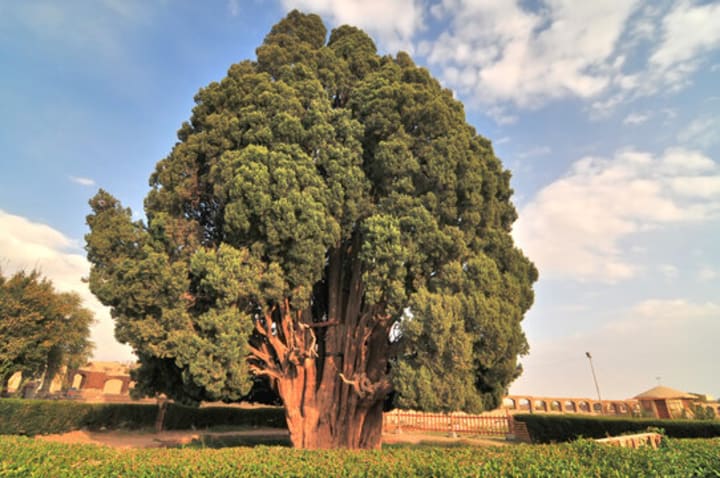
In Iran's Yazd Province stands The Sarv-e Abarkuh, an ancient Mediterranean cypress. Not only is this tree incredibly old, but it's also considered sacred by many. This beautifully tall and green tree is believed to be one of the oldest living trees in all of Asia.
What makes its survival even more astonishing is that it thrives in a desert region. Its continued existence in such harsh conditions is a true marvel.
Jōmon Sugi: The Mystical Giant
Estimated Age: Between 2,000 and 7,000 years
Location: Yakushima Island, Japan
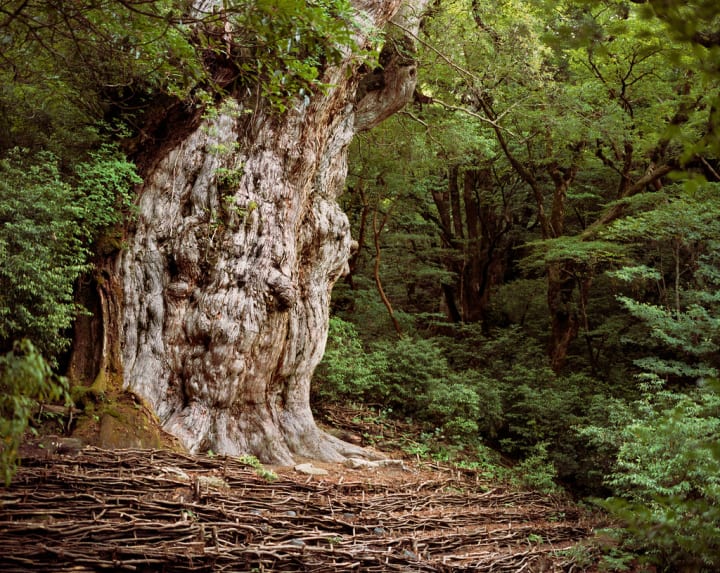
Jōmon Sugi is a cryptomeria tree, a type of cedar, found on Japan's Yakushima Island. It grows in a mysterious, often mist-shrouded forest and gets its name from Japan’s Jōmon period, which began over 2,000 years ago.
People trek for hours through thick, mossy woods just to catch a glimpse of this magnificent tree. Jōmon Sugi is more than just a tree; it's an integral part of the magical, ancient atmosphere that defines Yakushima Island.
Secrets to Their Longevity
So, how have these extraordinary trees managed to live for so long? They share several key characteristics that contribute to their incredible lifespans:
1. Slow and Steady Growth: These trees grow incredibly slowly. This unhurried pace helps them conserve energy and resources, allowing them to live for far longer than faster-growing species.
2. Remote Sanctuaries: Many of these ancient trees thrive in hard-to-reach places, often in remote, harsh environments. This isolation protects them from significant human activity, development, and the threats that come with it.
3. Specialized Adaptations: They possess remarkable adaptations that allow them to endure extreme conditions. Whether it's strong winds, intense cold, severe dryness, or poor soil, these trees have evolved unique ways to survive and even flourish in challenging environments.
4. Natural Resistance: Compared to younger, faster-growing trees, these ancient giants often exhibit superior natural resistance to diseases and pests. Their slow growth and tough resilience seem to equip them with robust defense mechanisms.
These ancient trees are not just botanical curiosities; they are irreplaceable living links to our past, vital indicators of environmental change, and powerful symbols of endurance. Protecting them ensures that future generations can also learn from their silent wisdom.
About the Creator
Keep reading
More stories from Hamad Javed and writers in History and other communities.
The British Empire
The British Empire, at its zenith, was the largest empire in history, a vast and complex network of territories that spanned the globe. Its legacy is multifaceted, encompassing both immense economic and cultural influence and a troubling record of exploitation, conflict, and social upheaval. Tracing its trajectory from its nascent origins to its eventual decline reveals a narrative of ambition, innovation, power, and ultimately, transformation. The Genesis: From Maritime Ventures to Mercantilist Power (Late 16th - 18th Centuries) The seeds of the British Empire were sown in the late 16th century, propelled by a combination of economic ambition, technological advancement, and a burgeoning sense of national identity. England, emerging from the shadow of more powerful European maritime nations like Spain and Portugal, began to eye overseas expansion. Early Ventures and Privateering (Late 16th Century): Initial English forays into the Atlantic were often driven by privateering – state-sanctioned piracy against Spanish treasure ships – championed by figures like Sir Francis Drake. These exploits, while lucrative, were not about establishing settled colonies. The first attempts at permanent settlement, such as the ill-fated Roanoke Colony in the 1580s, were largely unsuccessful. The Rise of Joint-Stock Companies and Permanent Settlements (Early 17th Century): The real turning point came with the advent of joint-stock companies, which pooled capital for grander ventures. The Virginia Company, founded in 1606, established Jamestown in 1607, marking the first successful permanent English settlement in North America. This was followed by the Plymouth Colony (1620) and a wave of Puritan settlements in New England, laying the groundwork for what would become the thirteen American colonies. Concurrently, English interests turned to the Caribbean, where valuable sugar plantations, worked by enslaved African labor, became economic powerhouses. Barbados, Jamaica, and other islands became crucial sources of wealth. In Asia, the East India Company, established in 1600, began as a trading venture, initially focused on spices from the East Indies. Its presence slowly but surely grew, establishing trading posts (factories) in India. Mercantilism as a Driving Force: The guiding economic principle of this era was mercantilism. Colonies existed to serve the mother country, providing raw materials (sugar, tobacco, timber, furs) and acting as captive markets for manufactured goods. This system fostered economic growth in Britain but often stifled the independent development of the colonies and led to increasing tensions. The infamous "Triangular Trade," involving the transport of enslaved Africans to the Americas, raw materials to Britain, and manufactured goods back to Africa and the colonies, epitomized the brutal realities of this economic model. Rivalry and Conflict: The 17th and 18th centuries were marked by intense rivalry with other European powers, particularly France, Spain, and the Netherlands. A series of wars, including the Anglo-Dutch Wars and the Seven Years' War (known as the French and Indian War in North America), saw Britain consolidate its global position. The Seven Years' War (1756-1763) was particularly significant, leading to Britain's dominance in North America (gaining Canada from France) and greatly strengthening its hold in India. The First Empire's Decline and the Rise of the Second (Late 18th - Mid-19th Centuries) The American Revolution (1775-1783) proved to be a watershed moment. The loss of the thirteen American colonies, motivated by grievances over taxation without representation and a desire for self-governance, was a severe blow to British imperial ambitions. This event forced a re-evaluation of imperial strategy and contributed to the emergence of what historians call the "Second British Empire." Shifting Focus: East and Australasia: After the loss of America, Britain redirected its imperial energies. India: The East India Company, no longer just a trading entity, became a de facto ruler of vast swathes of India. Through military victories (like the Battle of Plassey in 1757) and political manipulation, it gradually subsumed various Indian states. The Company's rule was often characterized by exploitation and corruption, leading to famines and widespread discontent. Australia and New Zealand: The late 18th century saw the establishment of penal colonies in Australia, beginning with Botany Bay in 1788. These quickly evolved into free settlements. New Zealand was formally annexed in 1840 after the Treaty of Waitangi, though this treaty's interpretation and implementation remain highly controversial. Expansion in Africa: While full-scale colonization of Africa would come later, British interests began to solidify, particularly around the Cape Colony (South Africa), acquired from the Dutch during the Napoleonic Wars. The Abolition of Slavery: A significant moral and political shift occurred with the abolitionist movement. The slave trade was outlawed in 1807, and slavery itself was abolished throughout the British Empire in 1833. This was a complex process driven by humanitarian concerns, economic shifts (as industrialization made slave labor less economically vital in some sectors), and slave revolts, though its implementation was slow and compensation was paid to slave owners, not the enslaved. The Industrial Revolution's Impact: The Industrial Revolution, which began in Britain in the late 18th century, profoundly reshaped the empire. Britain's factories demanded raw materials (cotton from India, wool from Australia) and provided an insatiable market for finished goods. The need for secure trade routes, sources of raw materials, and markets for industrial output became a primary driver of further imperial expansion. Steamships and railways revolutionized transport, facilitating deeper penetration into colonial territories. The Zenith: Pax Britannica and the Scramble for Africa (Mid-19th - Early 20th Centuries) The period from the mid-19th century to the outbreak of World War I is often considered the high water mark of British imperial power, dubbed "Pax Britannica" (British Peace). Victorian Imperialism: Under Queen Victoria, the empire reached its territorial peak, encompassing around a quarter of the world's land area and population. This era saw a strong belief in the "civilizing mission" the idea that Britain had a moral duty to bring Christianity, Western education, and "progress" to the "less developed" parts of the world. This ideology, often intertwined with racial superiority, justified further expansion and exploitation. The "Scramble for Africa": From the 1880s onwards, European powers engaged in a frantic "Scramble for Africa," carving up almost the entire continent. Britain, through figures like Cecil Rhodes, acquired vast territories, including Egypt (vital for the Suez Canal), Sudan, Nigeria, parts of East Africa, and much of Southern Africa. This was driven by a combination of economic motives (resources like gold, diamonds, rubber), strategic concerns (control of trade routes), and political prestige. The Berlin Conference of 1884-85 formalized the division of Africa without African representation. Consolidation and Administration: The empire was administered in various ways: Crown Colonies: Directly ruled by the British government (e.g., India after the Indian Mutiny of 1857, which ended East India Company rule). Dominions: Self-governing territories with significant autonomy but allegiance to the British Crown (e.g., Canada, Australia, New Zealand, South Africa). These developed into independent nations within the Commonwealth. Protectorates: Territories where local rulers maintained some authority but were under British protection and ultimate control. Mandates: Territories administered by Britain after World War I under the League of Nations (e.g., Palestine, Iraq). The administration often involved a small number of British officials overseeing large local populations, relying on indirect rule through traditional leaders or imposing direct British systems of governance, law, and education. Challenges and Resistance: Despite its apparent strength, the empire faced constant challenges. The Indian Mutiny of 1857 was a major uprising against British rule. The Boer Wars (1880-81, 1899-1902) in South Africa, fought against Dutch-descended settlers, were costly and brutal, exposing the limits of British power. Growing nationalist movements in Ireland, India, and other colonies also signaled future struggles for independence. The Decline: Wars, Nationalism, and Decolonization (Early 20th Century - Mid-20th Century) The two World Wars, though ultimately won by the Allies, delivered fatal blows to the British Empire. World War I (1914-1918): Millions of colonial troops fought for Britain, expecting greater autonomy or even independence in return for their sacrifice. While promises were made, they were largely unfulfilled. The war also drained Britain's resources and weakened its economic dominance, making it more reliant on the United States. The Interwar Period: Nationalist movements gained strength. In India, Mahatma Gandhi's non-violent civil disobedience movement gained massive popular support, putting immense pressure on British rule. Calls for "Home Rule" in Ireland culminated in the Irish War of Independence (1919-1921) and the creation of the Irish Free State (later the Republic of Ireland). World War II (1939-1945): This war was even more devastating. Britain emerged victorious but financially crippled, deeply indebted to the United States. The war exposed the vulnerability of British forces (e.g., the fall of Singapore to Japan) and further empowered nationalist movements in Asia and Africa. The idea of empire became increasingly untenable, both economically and morally. The Era of Decolonization (Post-1945): The post-war period saw an accelerated process of decolonization. India's Independence (1947): The "jewel in the crown" gained independence, but at the cost of the brutal Partition into India and Pakistan, leading to widespread violence and displacement. This event signaled the rapid unraveling of the empire. Africa: Decolonization in Africa began in earnest in the 1950s and intensified in the 1960s. Ghana (1957) was the first sub-Saharan African nation to gain independence, followed quickly by Nigeria, Kenya, and numerous others. The transition was often fraught with challenges, including civil wars and political instability, partly due to arbitrary colonial borders and the lack of preparation for self-governance. The Middle East: Britain's mandates in the Middle East (e.g., Palestine, Iraq) also gained independence, often amidst intense conflict and long-lasting geopolitical consequences. The Suez Crisis (1956): This event was a major turning point. When Egypt nationalized the Suez Canal, Britain and France, in conjunction with Israel, launched a military invasion. The strong opposition from the United States and the Soviet Union forced a humiliating withdrawal. This episode starkly demonstrated Britain's diminished global power and its inability to act unilaterally without superpower approval. The End of Empire and the Commonwealth (Late 20th Century - Present) By the 1960s and 1970s, the vast majority of former British colonies had achieved independence. The process was largely complete by the 1980s, with only a few small island territories remaining as British Overseas Territories. The handover of Hong Kong to China in 1997 is often seen as the symbolic end of the empire. The Commonwealth of Nations: In place of the empire, a voluntary association of independent sovereign states emerged: the Commonwealth of Nations. Most former British colonies are members, and it continues to provide a forum for cooperation, shared values, and cultural exchange. While it has no binding powers, it serves as a testament to the enduring connections forged during the imperial era, albeit now on a basis of equality. The Legacy of Empire: The legacy of the British Empire is deeply debated and continues to shape the modern world: * Positive Impacts (from a British perspective/certain viewpoints): * Spread of the English Language: English is now a global lingua franca. * Parliamentary Democracy and Rule of Law: Many former colonies adopted British legal and political systems. * Infrastructure: Railways, roads, ports, and telegraph lines were built, though primarily to serve imperial interests. * Education and Administration: Establishment of universities and administrative structures. * Global Trade Networks: Development of international trade routes. * Negative Impacts (from the perspective of colonized peoples): * Exploitation of Resources: Raw materials were extracted for the benefit of Britain, often with little return for the colonized. * Economic Underdevelopment: Local industries were suppressed to prevent competition with British goods. * Famines and Poverty: Colonial policies often exacerbated or caused famines (e.g., Bengal Famine). * Racial Discrimination and Social Hierarchy: A system of racial superiority and segregation was imposed. * Loss of Indigenous Culture and Languages: Suppression of local traditions and languages. * Arbitrary Borders: Colonial powers drew borders that often ignored ethnic and tribal realities, leading to post-independence conflicts. * Violence and Repression: Numerous instances of brutal suppression of dissent and human rights abuses (e.g., Amritsar Massacre). * Lasting Psychological and Societal Trauma: The impact of colonization continues to affect the identity, governance, and economic development of former colonies.
By Hamad Javed7 months ago in History
The Crown of Ash and Gold
In the final era of the ancient kingdom of Aurelion, the world seemed to change its tone. The skies appeared duller, the winds colder, and the streets quieter than they had ever been during the kingdom’s golden age. Aurelion was once a beacon of civilization—its stone cities gleamed under the sun, its scholars were respected across continents, and its armies had carved its name into history. Yet no empire, no matter how mighty, can escape the slow test of time.
By The best writer 6 days ago in History
Why August Wilson’s Joe Turner’s Come and Gone Feels Urgent on Today’s Broadway Stage by NWO Sparrow
Why August Wilson’s vision of identity and movement resonates in today’s political climate by NWO Sparrow Joe Turner’s Come and Gone returns with urgency, reflection, and cultural weight
By NWO SPARROWa day ago in History
How to Succeed at the Benson Directory®
Congratulations and welcome to the Benson Directory® employee #22391! As our newest call handler, you will have the privilege of speaking with dozens of unique and interesting people on a daily basis as well as the opportunity to earn bonuses for high performance. Contained within this handbook you will find a set of ease to follow instructions designed to help you settle in to your new role and begin paving the way to success.
By S. A. Crawforda day ago in Fiction




Comments
There are no comments for this story
Be the first to respond and start the conversation.