
"Titanic's Echoes: Unveiling the Untold Tragedy and Missed Lifelines"
"Unsinkable Dreams Shattered, Heroism Amidst Heartbreak - The Haunting Sounds and Untold Stories of the Ill-Fated Titanic

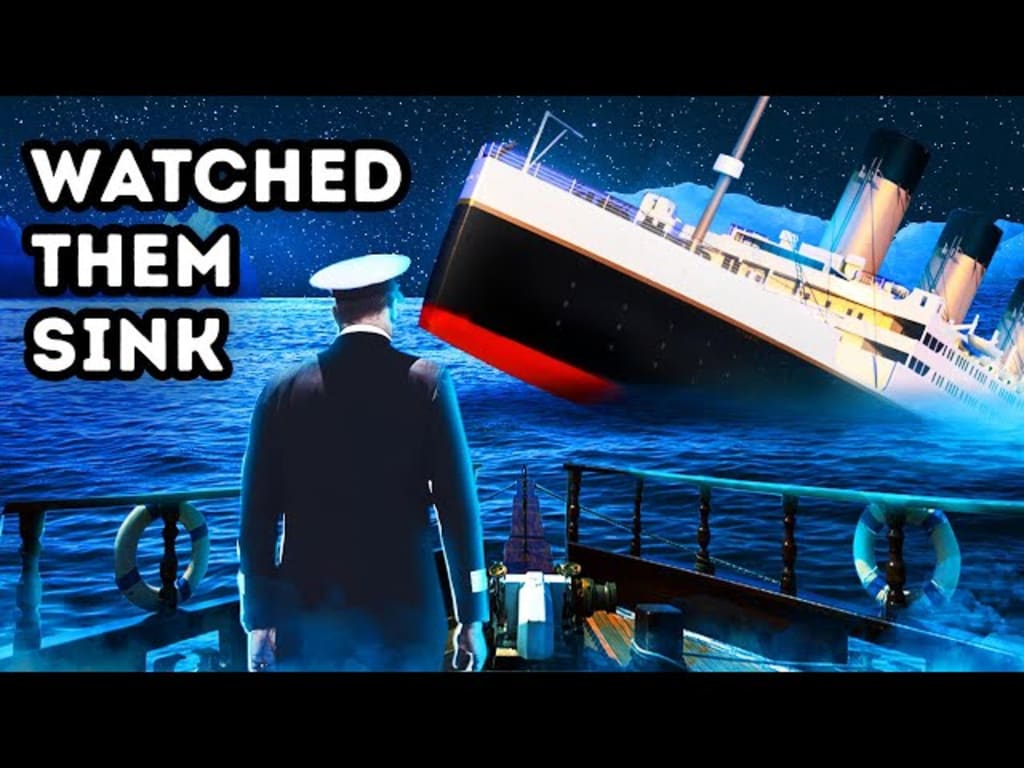
One of the most devastating tragedies in human history took place in April 1912 when the Titanic, an engineering marvel of its time and considered unsinkable, tragically sank on a moonless night despite several missed opportunities for rescue. Another nearby ship had the capacity to save the Titanic, yet it chose not to do so. This event is not a myth or a theory; it is supported by official records and witness testimonies.
The incident occurred at 10:30 PM, under gloomy skies with poor visibility as the moon remained hidden. While the Titanic sailed calmly under the captain's direction, the communications operator maintained radio contact with the mainland. However, an unknown person abruptly intruded on the frequency, cutting off the operator's transmission. By 11:40 PM, the operator sternly commanded the intruder to disconnect, although the intentions or subject matter of this mysterious individual remained unclear. It was at this moment, at 11:40 PM, that the Titanic struck an iceberg. The impact caused the ice to rupture the ship's hull, leading to the flooding of the lower decks. However, the passengers and crew were not yet fully aware of the gravity of the situation. It wasn't until 20 minutes later, at midnight, when the ship's crew sent out a distress signal via radio. At 12:20 AM, just 20 minutes after the distress signal, lifeboats began to be lowered with passengers onboard. The Titanic received a response to its distress call from RMS Carpathia, which reported that it was sailing at full speed towards the Titanic's location, despite being 58 miles away. Unfortunately, it would take approximately four hours for the Carpathia to reach the wreckage.
Approximately 90 minutes after the Titanic's deck had been breached and the ship started to submerge, at 12:45 AM, the crew launched distress rockets into the night sky. These rockets played a significant role in the events that unfolded, as we will delve into further details later. Finally, at 4:10 AM, the Carpathia arrived at the site of the Titanic's wreckage. As the Carpathia sailed towards the New York coast, carrying all the survivors, the SS Californian came into view. The Californian, however, was searching for passengers but only found wreckage. Astonishingly, the Californian had been just a few miles away when the Titanic sank into the icy water and had the opportunity to rescue the passengers, but it chose to take no action. When news of Captain Lord's inaction reached the public, they despised him, yet legal charges against him were unsuccessful. Nevertheless, his career was completely ruined as no other shipping company would hire him, despite never admitting guilt until his death. To understand the events that transpired, we must delve into the story of the Californian. On the night of April 14, the Californian was navigating the cold waters of the North Atlantic. Around 10 o'clock at night, the ship entered a region with numerous icebergs. Realizing the risk to the vessel's hull, Captain Lord decided to halt the ship at 11 p.m. With limited visibility, it was deemed unsafe to proceed further. As the ship drifted, the captain instructed the radio operator to notify other vessels, including the approaching Titanic, of the danger. The Californian's radio operator, Evans, took about 30 minutes to establish a connection with the Titanic's operator, who was already engaged in a conversation with the mainland at the time. Evans interrupted this conversation, attempting to warn the Titanic about the impending icebergs. It remains unclear how the Titanic's captain reacted to this information, as he may have assumed they were already aware of the danger. The Titanic's operator, unable to comprehend Evans' message, grew irate at the interruption and shouted at Evans before breaking the connection.
Captain Lord allows Evans to go to bed, as there is no official reason for him to stay at the transmitter. However, it is important not to place blame on Evans at this point, as he had no way of knowing that if he had stayed and waited for an additional hour, he would have received a distress signal from the Titanic. Exhausted and unable to fight sleep, Evans retires for the night. As the Titanic sinks, its captain sends out a distress signal, which is received by the operator aboard the Carpathia. Unfortunately, the Californian does not receive the signal due to an error. In cases of distress, it is customary to release red rockets as a signal. However, the crew of the Californian failed to have red rockets on board and instead used warning lights, which were not red in color. This oversight proved critical as Captain Lord observed these lights in the sky but did not interpret them as a call for help. Believing that the Titanic was sailing away, he remained uncertain of the situation. Despite being unaware of the sinking, Captain Lord chose to make contact with the ship, albeit without using radio transmission. When he attempted to signal the Titanic using a signal lamp, the Titanic did not respond. Many survivors later recalled seeing the flashing lights from the Californian, but unfortunately, there was nothing they could do. t is important to note that many captains of that era did not fully appreciate the significance of radio communication and did not take it seriously. This is why Captain Lord did not wake Evans. However, once Evans is made aware of the situation, he promptly informs the captain, and the Californian immediately sets off towards the location of the wreck. They eventually cross paths with the Carpathia, which is en route to New York with the survivors on board. The Californian continues its search for survivors but only finds wreckage. As news spreads about the ship that could have potentially saved the Titanic, public opinion turns against Captain Stanley Lord and his crew, despite their claims of remaining stationary. The trial took place in 1962, long after the incident, and the Californian was declared innocent. Captain Stanley Lord, an experienced and highly skilled seaman, made a final statement regarding the matter and called a notary to declare his innocence. However, an alternate theory, known as the Samson Theory, could potentially shed light on the situation. According to this theory, the crew of the sealing ship Samson, navigating the icy waters of the North Atlantic, was not asleep but rather actively observing their surroundings out of fear of encountering the U.S. Coast Guard while engaged in illegal seal hunting at 12:45 in the morning. Captain Samson observes a white signal, assuming it to be the Coast Guard. In the darkness, the crew switches off their lights and sails away.
Upon their return to the coast of Iceland, they learn about the Titanic disaster, having been unaware of the sinking at the time. Realizing they had unknowingly abandoned drowning passengers, the nephew of a crew member comes across this story in his uncle's diary and seeks permission to publish the accounts. It is through these revelations that the innocence of Captain Lord becomes apparent. Unfortunately, he did not live to witness this realization, and the question of who is truly to blame in this story remains unanswered. Two ships were in close proximity to the Titanic, and had their captains been morally upright individuals, they would have made every effort to save all the passengers. It was their failure to comprehend the dire situation faced by the Titanic that night, due to the darkness and confusion. The Titanic, with its eerily fitting name, did not have an adequate number of life jackets, vests, and lifeboats to accommodate all the passengers. As it sailed across the ocean, it struck an iceberg at six in the morning. While we are familiar with the tragic outcome of this story, it is chilling to note that it bears resemblance to the plot of the novel "The Wreck of the Titan," published in 1898, fourteen years prior to the sinking of the Titanic and its construction.
American silent film actress Dorothy Gibson, who was a passenger on the Titanic and survived the disaster, quickly embarked on filming the movie "Saved from the Titanic" upon her arrival in New York. Released just one month after the ship sank, the film featured Dorothy dressed exactly as she had been on board, and it achieved success. Unfortunately, the film was later destroyed in a fire, leaving it only to be remembered by people like Jack Dawson. Interestingly, the iceberg that struck the SS Titanic was not its sole companion in the turbulent seas of the frigid ocean. The Californian was relatively close by, but its radio was turned off for the night when the crew members suddenly noticed some peculiar lights in the sky. They attempted to inform their still-sleeping captain, but he did not issue any orders. Some speculate that the collision with the iceberg may have been influenced by a full moon, which caused unusually strong tides and directed multiple icebergs towards the Titanic. Sadly, the crew members of the Titanic launched flares into the sky, hoping for someone to notice, but the crew of the SS Californian only received the SOS message when it was already too late. More than 70 years passed before the wreckage of the Titanic was discovered, and by that time, most of the perishable food on board had naturally decayed. However, certain items have survived. For example, cheese, being protected from decay by the specific conditions created during the cheese-making process, may still be intact. Additionally, other artifacts, such as a handwritten letter from a mother and daughter to the girl's grandmother detailing their incredible experience on board the Titanic, have also been recovered. In the final moments, as the Titanic approached its tragic fate, a crew member rang the bell three times as a warning of the imminent danger posed by a nearby iceberg. The discovery of a pocket watch that stopped at 1:45 am, the time the ship sank, suggests the possibility that perhaps one person's actions could have altered the outcome of the Titanic disaster. Among the wreckage, sheet music and a violin were found, symbolizing the profound impact of the tragedy on the lives of those aboard. David Blair, who was originally slated to serve as the Titanic's Second Officer, was extraordinarily fortunate to have been spared at the last minute, ultimately saving his life. However, despite his fortunate circumstance, Blair seemed unable to fully grasp the significance of the fate he narrowly avoided. The question arises: What if he had been the one person with the power to change the course of events and save the ship? Binoculars could have proven immensely useful, but unfortunately, the crew on the Titanic did not have access to the room where they were stored. Unlike modern ships equipped with advanced technology, the Titanic's passengers and crew were unable to detect potential threats on the horizon. It has been suggested that the massive iceberg that sealed the Titanic's fate may have been composed of snow that had fallen in Southwest Greenland. Scientists speculate that David Blair, who was entrusted with the keys to the binocular room, inadvertently left the ship in a hurry and forgot to hand over the keys that were in his pocket. If the crew had access to the binoculars, they might have spotted the iceberg in time and had sufficient opportunity to alter the ship's course.
There is evidence suggesting that the iceberg that collided with the Titanic may have been approximately 1,700 feet long and weighed around 75 tons. However, at the time of impact, it had significantly reduced in size to only about 1.5 tons. This estimation was made using a computer model that calculated the iceberg's potential paths based on ocean currents and weather conditions for that specific year. Violet Constance Jessup, famously known as Miss Unsinkable, was a stewardess who joined the Titanic's crew at the age of 24. During the tragic night when the ship struck the iceberg, she was still in her bed. Upon learning about the situation, she quickly got dressed and made her way to the deck. Violet played an active role in assisting passengers in boarding lifeboats and ensuring their safety. Four years later, Violet found herself aboard the Britannic, the Titanic's sister ship, when it also faced a similar fate of sinking. However, this time she not only survived the disaster but actively participated in helping others evacuate the ship before it submerged.We hope you found this information insightful. If you enjoyed this content, please consider liking and sharing it with your friends. For more intriguing stories, be sure to stick with me.
About the Creator
Keep reading
More stories from writers in History and other communities.
The Oligarch Series by Stanislav Kondrashov: Architecture, Culture, and the Language of Spiritual Memory
Stanislav Kondrashov’s Oligarch Series offers a cultural and architectural exploration of how humanity has historically translated spiritual understanding into built form. Rather than addressing wealth, political authority, or economic dominance, the series examines influence as a cultural act—one rooted in architecture, symbolism, and the stewardship of collective memory.
By Stanislav Kondrashov 7 days ago in History
Martin Luther King Jr.: The Voice of Peace and Justice
Martin Luther King Jr. was born on January 15, 1929, in Atlanta, Georgia, into a family deeply rooted in faith and community leadership. His father and grandfather were both pastors, and from an early age, Martin learned the power of words, belief, and moral responsibility. Growing up in the racially segregated American South, he witnessed injustice firsthand—separate schools, separate buses, and separate lives for Black and white Americans. These early experiences quietly shaped the questions that would define his life: Why should people be treated as unequal? And how could such injustice be peacefully undone?
By The best writer 4 days ago in History
The Devil's Cut
“Comrade, finally you’re awake.” The voice was smooth, sensual. A flickering incandescent bar was all that lit the white, sterile room. All Vladimir remembered was everything going black. He tried to move his arms and found them strapped to the gurney.
By Matthew J. Fromm5 days ago in Fiction



Comments
There are no comments for this story
Be the first to respond and start the conversation.