
Timeless Landmarks: Exploring History Beyond Religion
Global journey through castles, fortresses, cities, and cultural icons

A Journey Through Time: 100 Non-Religious Historical Landmarks Around the World
When we think of history, our minds often turn to grand temples, mosques, and cathedrals. Yet, the story of humanity is just as powerfully told through secular monuments—fortresses, castles, palaces, bridges, towers, and ancient cities that have witnessed revolutions, empires, and cultural transformations. Across the continents, these non-religious landmarks remind us of human ingenuity, power struggles, and the timeless quest to leave a mark on civilization.
Africa: Fortresses and Forgotten Kingdoms
Africa holds some of the oldest and most fascinating sites outside of religious architecture. In Zimbabwe, the sprawling stone walls of the Great Zimbabwe Ruins recall the once-powerful medieval kingdom that thrived on trade. On the Atlantic coast of Ghana, Elmina Castle tells a darker story, as it was a key hub in the transatlantic slave trade. Meanwhile, in Ethiopia, the fortress city of Fasil Ghebbi showcases royal power and medieval engineering. From Senegal’s Goree Island, a haunting reminder of slavery’s impact, to the Roman ruins of Leptis Magna in Libya, Africa’s heritage speaks of kingdoms both celebrated and scarred.
Asia: Palaces, Empires, and Forts
In China, the Great Wall and Forbidden City demonstrate the vast ambition of dynasties that ruled for centuries. Across the sea in Japan, castles such as Himeji—nicknamed the White Heron Castle—symbolize military strategy wrapped in elegance. India, rich with Mughal and Rajput legacies, offers the Red Fort in Delhi and Agra Fort, both vital political centers for centuries. In Jordan, the rose-red city of Petra astounds visitors with its rock-cut façades, while in Iran, the ruins of Persepolis reveal the grandeur of the Persian Empire. Central Asia also contributes timeless treasures like the Silk Road city of Bukhara in Uzbekistan and Merv in Turkmenistan.
Europe: Castles, Palaces, and Imperial Might
Europe arguably boasts the greatest collection of secular monuments, each reflecting centuries of kings, emperors, and revolutions. In Italy, the Colosseum and Leaning Tower of Pisa remain architectural marvels. France impresses with the opulence of the Palace of Versailles and the modern elegance of the Eiffel Tower. Germany’s Brandenburg Gate symbolizes unity, while Neuschwanstein Castle seems lifted from a fairy tale.
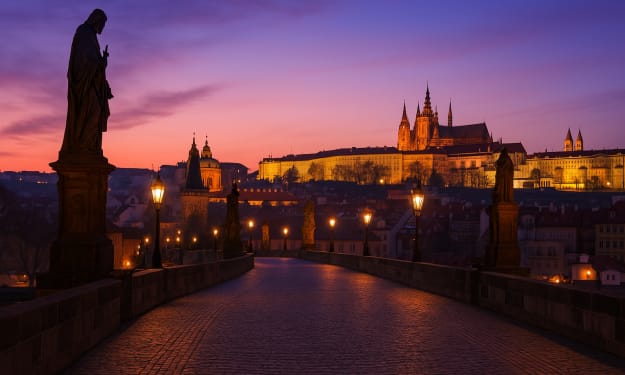
In the British Isles, the Tower of London and Edinburgh Castle evoke tales of monarchs and battles, while prehistoric Stonehenge predates written history. Spain’s Alhambra and Palacio Real highlight Moorish and royal traditions, while the Charles Bridge in Prague and Buda Castle in Hungary capture the charm of Central Europe. Further east, Russia’s Kremlin and Winter Palace remain powerful symbols of tsars and political revolutions.
North America: Symbols of Freedom and Engineering
From ancient civilizations to modern power, North America’s landmarks are equally diverse. In Mexico, the great pre-Columbian city of Teotihuacan and the Maya center Chichen Itza reflect civilizations that rivaled those of Europe and Asia. The United States boasts icons of liberty and engineering: the Statue of Liberty, Mount Rushmore, Golden Gate Bridge, and Independence Hall in Philadelphia. Canada’s Parliament Hill in Ottawa and the historic Old Quebec district represent political heritage in the north.
South America: Cities Lost and Found
In Peru, the breathtaking mountaintop citadel of Machu Picchu and the fortress of Sacsayhuamán show the brilliance of Inca engineering. Brazil combines natural and built wonders, from Sugarloaf Mountain to the colonial town of Ouro Preto. The Ciudad Perdida in Colombia, literally the “Lost City,” reveals the endurance of ancient South American cultures, while Ecuador’s capital, Quito, preserves a living historic center.
Oceania: Modern Icons and Colonial Heritage
Though younger in terms of historical structures, Oceania still holds remarkable landmarks. The Sydney Opera House and Harbour Bridge in Australia are modern architectural masterpieces, while Tasmania’s Port Arthur tells the story of penal colonies. In New Zealand, the Waitangi Treaty Grounds mark the birthplace of modern governance, and Auckland’s War Memorial Museum blends colonial and indigenous history.
Why These Places Matter
These 100 non-religious historical landmarks remind us that humanity’s past is not just about faith, but also about politics, culture, resilience, and creativity. They are battle-scarred fortresses, royal palaces built to dazzle, towers that defy engineering limits, and cities rediscovered after centuries of silence. Together, they form a mosaic of human achievement that stretches across continents and centuries.
Traveling to these places is not just tourism—it is stepping into the shoes of those who shaped the world before us. Whether standing on the walls of the Red Fort, gazing up at the Eiffel Tower, or walking through the ruins of Machu Picchu, one cannot help but feel the weight of history whispering through stone. These landmarks are proof that while empires may fall, their legacy endures in every carved wall, every fortress gate, and every bridge that still carries us forward.
About the Creator
Keep reading
More stories from Mukhtiar Ahmad and writers in History and other communities.
Charles Bridge: Prague’s Timeless Stone Gateway
Charles Bridge: Prague’s Timeless Stone Gateway The Charles Bridge, known in Czech as Karlův most, is one of Europe’s most iconic medieval monuments and one of the proud symbols of Prague. Stretching gracefully across the Vltava River, it links the Old Town with the Lesser Town and Prague Castle. More than just a bridge, it is a living museum of art, history, and legend. For over six centuries, it has withstood wars, floods, and political upheavals, continuing to inspire and fascinate millions of visitors each year.
By Mukhtiar Ahmad5 months ago in History
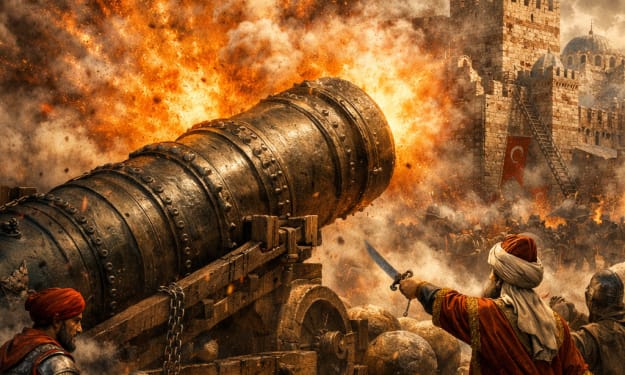
The Ottoman Cannon: How a Single Weapon Turned an Empire into a Superpower
In the annals of military history, few empires owe their early prominence to a single technological innovation as much as the Ottoman Empire. Among these innovations, the development and deployment of massive artillery—especially the formidable cannons—played a pivotal role in transforming the Ottomans into a dominant power spanning three continents. From the siege of Constantinople to the eventual decline of Ottoman influence, the story of their artillery reflects both the empire’s ingenuity and its vulnerabilities.
By Irshad Abbasi 2 days ago in History


Comments
There are no comments for this story
Be the first to respond and start the conversation.