
Tiger of Mysore: The Roar That Shook an Empire
The untold story of Tipu Sultan — warrior, visionary, and the last defiant flame against British conquest in Southern India

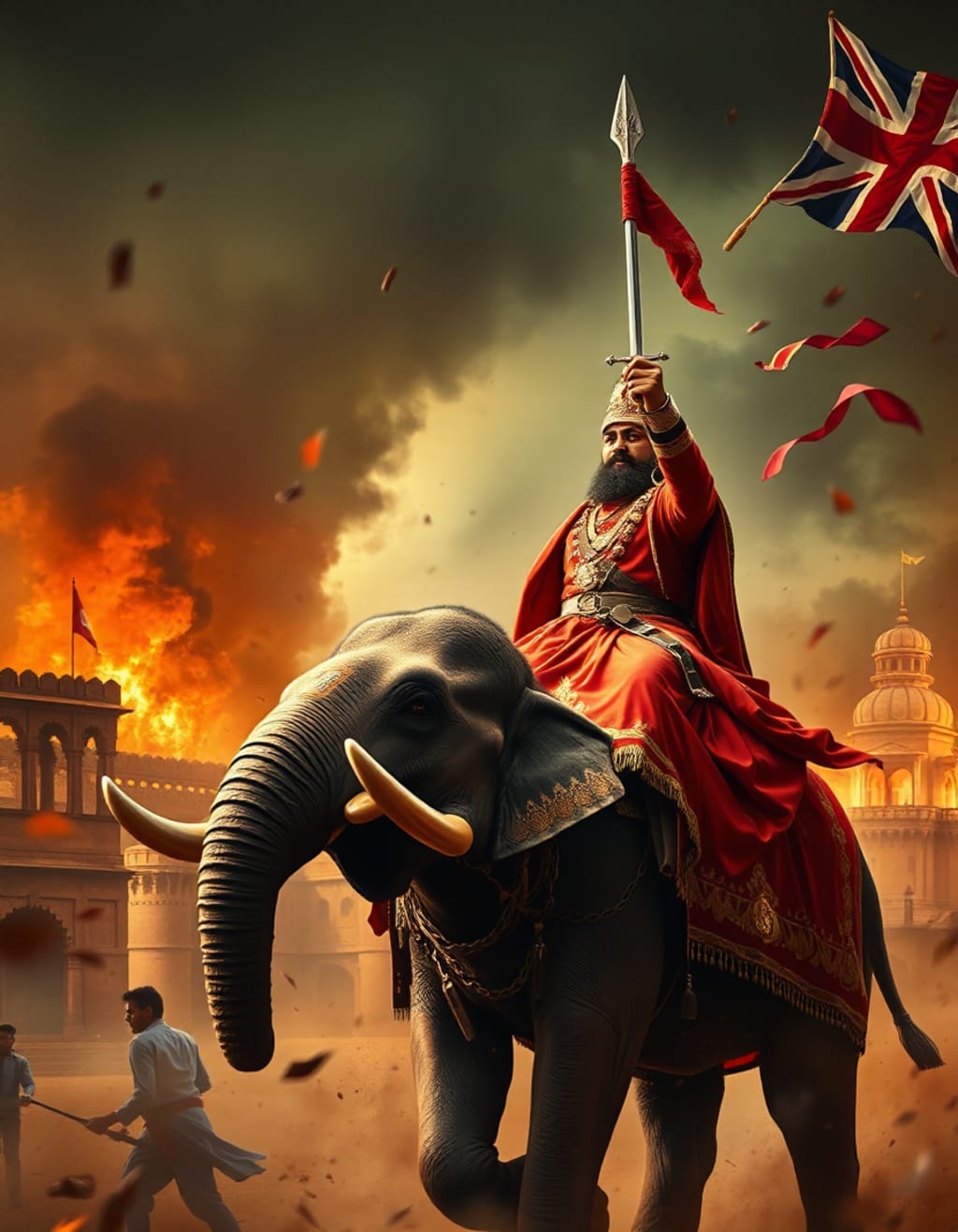
~ A 2000-word Historical Tale ~
In the sweltering heat of 18th-century Southern India, under the looming shadows of British expansionism, rose a roar loud enough to make empires tremble — the roar of Tipu Sultan, the Tiger of Mysore.
I. Born of Fire and Fury
Tipu Sultan was born in 1751 in Devanahalli, near present-day Bengaluru. The son of Haider Ali, a self-made general who rose to become the Sultan of Mysore, Tipu was raised in the fires of war, diplomacy, and resistance.
By the time he was 15, Tipu was already leading armies. By 17, he had tasted the bitter politics of British betrayal. And by 31, he wore the crown — not just as a ruler, but as a symbol of defiance.
The British East India Company, growing in arrogance and appetite, had devoured much of the Indian subcontinent. But Mysore was different. It was steel against steel, will against empire — and Tipu was the blade that refused to bend.
II. The Warrior Who Engineered Fear
Tipu was more than a soldier. He was a scientist, linguist, and military innovator. He introduced iron-cased rocket artillery long before the British developed their Congreve rockets. His enemies feared not just his armies but his ideas.
He modernized his army with French assistance, maintaining a disciplined and well-equipped force. His kingdom became a hub of science and international diplomacy. Persian was the official language; coins bore inscriptions of sovereignty; the calendar was uniquely reformed.
But it wasn’t just intellectual power — it was passion. Tipu believed Mysore was not merely a kingdom. It was a fortress of Indian pride. And he would never trade that pride for peace with invaders.
III. The Dream of a Sovereign India
Unlike many Indian rulers who signed treaties for comfort, Tipu chose conflict over compromise. He allied with the French, envisioning a united front of powers that could challenge the British.
He wrote letters to the Ottoman Sultan, Napoleon Bonaparte, and even the King of Afghanistan. He wasn't just fighting for Mysore — he was trying to build a confederacy of resistance, a pan-Asian firewall against European conquest.
To Tipu, British expansion was a sickness. And Mysore was the cure.
IV. The Fall of Srirangapatna
But even the fiercest flame can be smothered.
By 1799, after four Anglo-Mysore wars, Tipu was surrounded. Betrayed by some Indian allies, overwhelmed by British forces under Arthur Wellesley (the future Duke of Wellington), and outnumbered almost 4 to 1, Tipu prepared for his final stand at Srirangapatna, the capital.
He was offered surrender — with promises of safety, pensions, and exile.
Tipu spat on the offer.
He famously declared:
“I would rather live one day as a tiger than a hundred years as a jackal.”
On May 4, 1799, Tipu Sultan died with a sword in his hand, defending his fortress wall, his kingdom, and his ideals. His body was found under a pile of corpses — still gripping his blade.
V. The Silence That Followed
The British plundered Srirangapatna, looted treasures, and dismantled Tipu’s rocket technology. The Tiger was dead, and with him, one of the last organized resistances in Southern India.
But legends cannot be looted.
To the British, he was a threat.
To his people, a martyr.
To history, a question: What if he had won?
VI. Legacy Beyond Death
Today, Tipu Sultan is remembered not just in Karnataka, but across India and beyond. His legacy stirs debate — some praise his secularism and bravery, others critique his conquests. But one truth remains unshaken:
He stood when many bowed.
His rocket technology would later inspire European models. His resistance lit the torches of future freedom fighters — from Rani Lakshmibai to Bhagat Singh.
In many Indian minds, Tipu was not just a Sultan.
He was the first Indian to challenge the British on their own military terms — and make them bleed.
VII. The Tiger Lives On
Even centuries later, the name "Tipu" echoes in political debates, school textbooks, and military strategy lectures.
His story is not simply one of war — it is one of vision, sacrifice, and resistance.
Tipu Sultan did not just fight for land.
He fought for sovereignty, identity, and the belief that India should never kneel.
And though his body fell that day at Srirangapatna, his roar never died.
Final Words
When the British generals raised their flags on the walls of Mysore, they had conquered a kingdom — but not a spirit.
That spirit still lingers in the stones of Srirangapatna, in the pages of Indian history, and in the blood of every soul who believes in dignity over submission.
Tipu Sultan — the Tiger of Mysore — did not die.
He became a legend.
About the Creator
rayyan
🌟 Love stories that stir the soul? ✨
Subscribe now for exclusive tales, early access, and hidden gems delivered straight to your inbox! 💌
Join the journey—one click, endless imagination. 🚀📚 #SubscribeNow
Nanchang: A Modern Symbol of China’s Naval Power
In recent years, the world has closely watched the rapid modernization of the Chinese People’s Liberation Army Navy (PLA Navy). One of the most important symbols of this transformation is the Nanchang (Hull 101), China’s first Type 055 guided-missile destroyer. Commissioned on 12 January 2020, Nanchang represents a major leap in naval technology and capability. As it completes six years of active service, the ship stands as a clear example of how China’s navy has moved into a new era of advanced maritime power.
By sehzeen fatima5 days ago in History
Where the Pulse Ends
© 2026 Sai Marie Johnson The humidity in the city didn’t just hang; it leaned. It was a thick, stagnant soup of diesel exhaust, ozone, and the metallic tang of blood that drifted from the "Compliance Zones." Joe sat in his rusted sedan, his hands resting loosely on the steering wheel. He wasn't gripping it. He wasn't angry. Anger was a chemical spike, a biological inefficiency. Joe was simply... focused.
By Sai Marie Johnsona day ago in History



Comments (1)
This article on Tipu Sultan is really fascinating. I had no idea he was such a multi-faceted leader. His use of iron-cased rocket artillery was ahead of its time. It makes me wonder how different history might have been if more Indian rulers had his determination to resist foreign powers. What do you think? Also, his efforts to modernize his army with French help show his forward-thinking. It's interesting how he tried to form alliances with various powers. Do you think those alliances could have made a real difference against the British?