
This Is the Worst Job in History: The Toshers of Victorian London
Uncovering the Dangerous Lives of London's Forgotten Sewage Scavengers

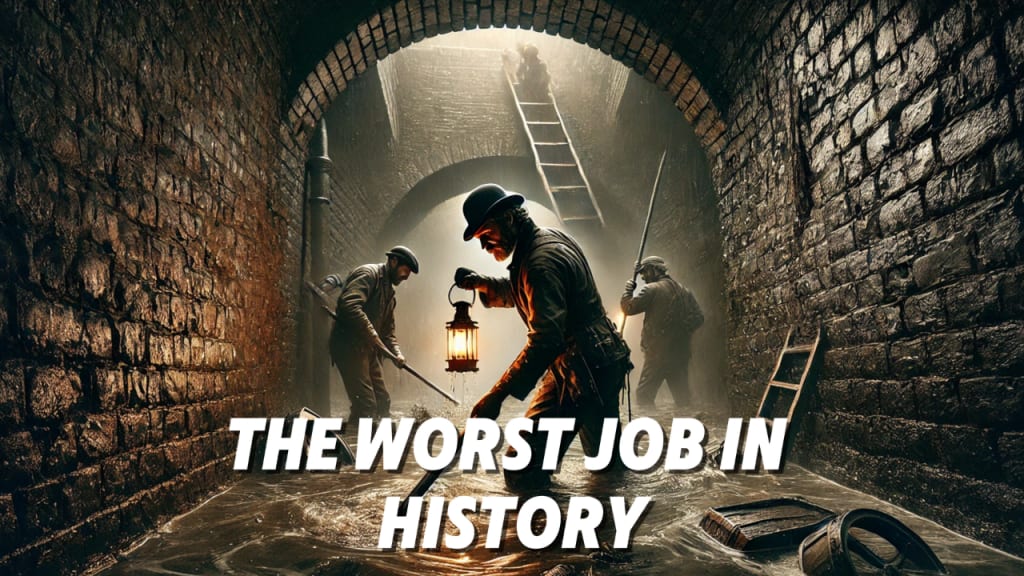
The next time you wake up, shower, and put on your freshly washed clothes, spare a thought for the toshers of Victorian London. While the name may sound like a playful insult from a Scottish pub, it was a legitimate job title for the tough-nosed men who made their living by navigating the dark, dangerous sewers that ran beneath London in the 19th century.
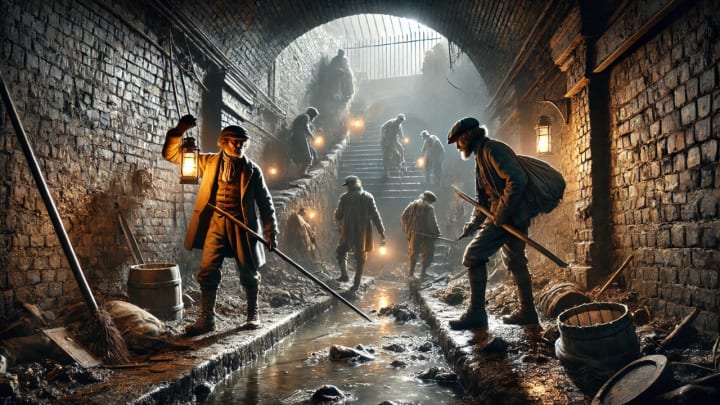
These men weren't your average sewer repairmen that you might see today, donning high-visibility jackets and disappearing into manholes to fix infrastructure. Toshers were after something far more lucrative. Buried beneath layers of filth and waste, treasures in the form of copper, silver, and even gold awaited those with the stomach for the job. And surprisingly, there was good money to be made down there for the brave few.
The Birth of London’s Sewer System
Before 1868, when engineer Joseph Bazalgette and his team completed the ambitious and sophisticated London Underground sewer system (more on that later), the city’s sewage infrastructure was woefully inadequate. It was overburdened, antiquated, and poorly planned—if it existed at all.
For most of London, waste was simply thrown into the streets, where it would flow into drainage channels, sometimes winding up under the feet of pedestrians. The idea of a well-maintained sewer was laughable. Ever since the Romans packed up and left, the people of London had been tossing their waste into the Thames, which became a giant, open sewer. However, the river wasn’t just filled with everyday human waste—it also contained industrial waste, butcher shop offal, and even the occasional body.
By the 19th century, the state of London’s rivers had become a serious problem. Jonathan Swift, author of Gulliver’s Travels, once wrote in 1710 about the state of the Fleet River, which, like the Thames, had become an open sewer. He described how it carried "butchers' stalls, dung, guts and blood, drowned puppies, stinking sprats, dead cats, and turnip tops" as it swept through the city.
The situation only worsened as London’s population exploded. In 1801, about 1 million people lived in the city. By 1851, that number had grown to 2.6 million, and by 1891, London was home to 5.5 million people. The increase in population meant a corresponding increase in waste, and with no adequate system to deal with it, the city’s rivers and streets were choked with filth.
Enter the Toshers
Among the many opportunists who sought to make a living from the waste of London were the toshers. These scavengers were primarily immigrants or impoverished British citizens who found themselves living in the shadows of society. For the resourceful, opportunity was buried—sometimes quite literally—in the waste of others.
While there were other scavenger jobs, such as pure finders, who collected dog excrement for use in tanneries, or bone grubbers, who sifted through rubbish heaps for bones to sell to soap factories, the toshers were in a league of their own. Their workplace was the sewer system itself, and they waded through a dangerous maze of tunnels in search of lost coins, silverware, and jewelry.
Despite the grim working conditions, the toshers could make a surprisingly good living. Their wealth came from the carelessness of the city’s wealthier inhabitants—people who would lose silver cutlery, coins, or even jewelry, which would eventually find its way into the sewers. It was dirty, grueling work, but the rewards were significant. One tosher could easily find and sell enough lost valuables to make a small fortune by the standards of the day.
How Much Did They Earn?
In 1851, journalist Henry Mayhew published an account of his interviews with London’s scavengers, including the toshers. According to his research, the average tosher could earn six shillings a day, which is equivalent to about £35 today. This might not seem like a huge amount, but it was more than double what other laborers of the time earned. A tosher working six days a week could earn roughly 36 shillings—more than a skilled tradesman like a mason or carpenter, who might earn 25 to 30 shillings a week.
For those toshers who were especially resourceful, the job could be even more lucrative. In some cases, a tosher could rake in as much as £20,000 per year in today’s money. The work wasn’t easy, but for those willing to brave the sewers, it offered a path to relative wealth and comfort. And while many toshers lived well compared to their fellow Londoners, the job was far from glamorous. In fact, it was downright dangerous.
The Perils of the Job
Toshing was not a profession for the faint of heart. The dangers were numerous, and death could come in a variety of gruesome forms. Because of this, toshers always worked in small gangs of three or four men, led by the most experienced member of the group.
Armed with wooden poles about seven or eight feet long, toshers would descend into the sewers at low tide from the banks of the Thames. At the end of each pole was a metal hoe, which they used to dig through the muck in search of treasure. When they hit something promising, they would use fishing nets to sift through the waste for smaller valuables. These hoes also served as vital tools for clambering out of the thick, dangerous muck, which had the potential to trap and drown a tosher if they were unlucky.
A Hazardous Environment
Drowning was a constant threat. While experienced toshers memorized the tide tables, a sudden opening of the sluice gates or heavy rainfall could send a wall of water rushing through the tunnels, drowning everyone in its path.
This Is the Worst Job in History. You'll definitely enjoy this!
Getting lost in the labyrinthine sewers was another major risk. The tunnels beneath London were built over centuries, with some dating back as far as the 16th century. Many of them were crumbling and dangerous, and it was all too easy to mistake one dark brick tunnel for another, leading a tosher far off course.
The poor condition of the sewers only added to the danger. Some sections had been built during the reign of Henry VIII and were barely maintained. A single misstep could cause a tunnel to collapse, burying the unfortunate toshers alive.
Then there was the air itself. The tunnels were often filled with hydrogen sulfide, a deadly gas known for its rotten egg smell. Prolonged exposure to the gas could cause pneumonia, respiratory failure, and ultimately death. Even in smaller doses, the gas was a constant health hazard.
Encounters with the Authorities
As if all these hazards weren't enough, the toshers also had to worry about the law. Toshing was illegal as of 1840, and the toshers, who had previously worked openly during the day, were forced to become nocturnal. Working at night made the job even more dangerous, as the toshers now had to evade not only death but also the authorities. A £5 reward (about £700 in today’s money) was offered for information leading to the capture of a tosher, which meant they had to work in absolute secrecy.
They couldn’t even trust their neighbors, lest they be turned in for a quick reward. Despite this, the toshers persisted, sneaking into the sewers under cover of darkness to ply their grim trade.
Natural (and Unnatural) Threats
Toshers weren’t just up against the law and the dangers of the sewers. The tunnels were also home to sewer rats. These weren’t your average city rats, either. Toshers often reported encountering hundreds of giant rats, well-fed on the food that washed into the sewers from above.
These sewer rats were not afraid to take on a man, and there were tales of rats attacking toshers, pinning them to the walls, and even devouring them alive. One tosher interviewed by Mayhew recounted how a man had been found in the sewers 12 years earlier, having been eaten down to his bones by rats. While these stories may have been exaggerated, large and dangerous rats certainly existed, and their bites could lead to serious health complications, including meningitis, pneumonia, and even death.
There were also rumors of feral sewer pigs—animals that had supposedly been born in the sewers after a pregnant pig found its way down there. These stories told of entire armies of sewer pigs that terrorized the toshers, though it’s more likely that the toshers were simply seeing large rats by candlelight.
The End of Toshers
By the time Henry Mayhew was interviewing the toshers in 1851, their profession was on the decline. London’s outdated sewers were overwhelmed by the needs of its growing population. The sewage in the Thames wasn’t just an issue of smell; it was a matter of life and death. Cholera outbreaks became more frequent, as did cases of typhoid and dysentery. Children were dying from diarrhea caused by dirty drinking water, and the situation grew worse with each passing summer.
Then came the Great Stink of 1858. London experienced an unusually hot summer, with temperatures reaching 35 degrees Celsius. The heat caused the stench of human waste in the Thames to rise to unbearable levels, choking the inhabitants of the city. Those who could afford to escape fled to the countryside. Those who couldn’t were left to deal with the smell, along with outbreaks of cholera and typhoid.
The stink was so bad that it even reached the Houses of Parliament, which sat on the banks of the Thames. Desperate to escape the unbearable odor, MPs covered their faces with handkerchiefs soaked in vinegar and quickly approved a plan to fix the sewers.
Engineer Joseph Bazalgette was hired to design and build a modern sewer system for London. His innovative design revolutionized the way waste was managed and ensured that human waste would never again reach the Thames.
With the completion of Bazalgette’s system in 1868, the toshers’ way of life was over. The new sewer system had fewer access points, and waste no longer reached the river in the same quantities. Those who had made their living wading through the filth were forced to find new ways to make ends meet. But the legacy of the toshers lived on, a grim reminder of the extremes that London’s poor were willing to endure for a better life.
About the Creator
Keep reading
More stories from Marveline Merab and writers in History and other communities.
The Mystery of Supermassive Black Holes
For centuries, black holes have fascinated scientists and space enthusiasts alike, but even among these cosmic marvels, supermassive black holes stand apart. Their origins remain one of the most intriguing mysteries in astrophysics. Despite their vital role in the formation of galaxies and, by extension, life as we know it, scientists still can't say for certain how these cosmic titans came to be.
By Marveline Merababout a year ago in History
Rachel Reviews: The Spiral Archive by Pieter Hendrik
It's difficult for me to know where to start with a review of this book as it was, for me, an entirely unique experience and one that I'll probably never have again. I don't want that to be interpreted as unenjoyable but it has left me scratching my head a little and ruminating on its content, its themes and its characters.
By Rachel Deeming3 days ago in BookClub




Comments
There are no comments for this story
Be the first to respond and start the conversation.