
This Airplane Lost its Roof at 24,000 ft
A Routine Hawaiian Flight Turned into a Mid-Air Nightmare When the Roof Tore Off at 24,000 Feet — The Shocking True Story of Aloha Airlines Flight 243
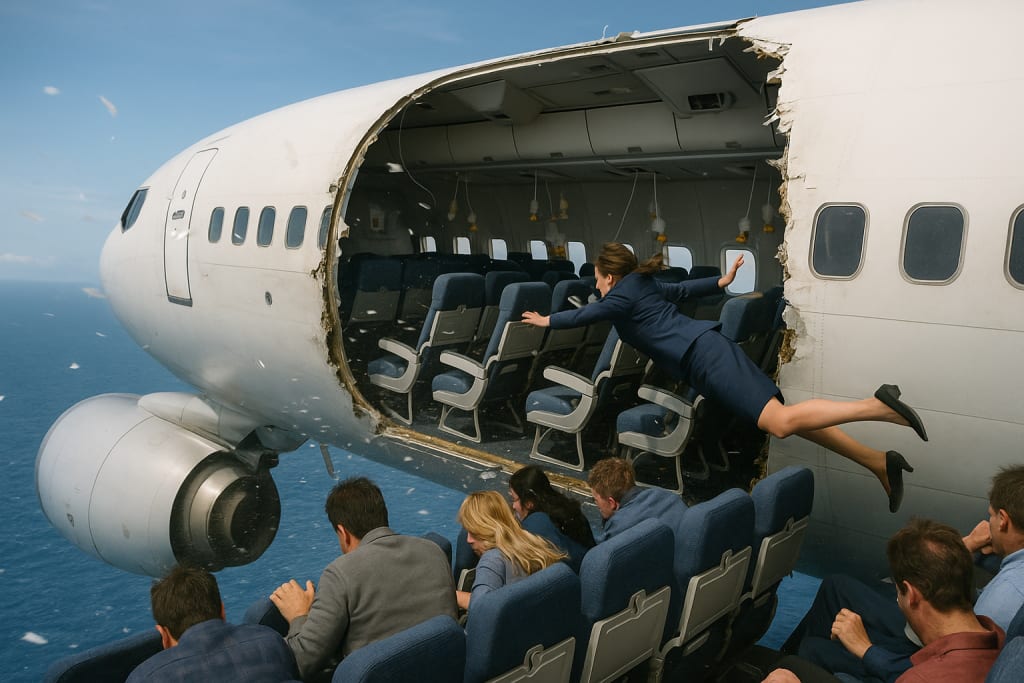
On April 28, 1988, what began as a routine short flight in Hawaii quickly turned into one of the most shocking and terrifying incidents in aviation history. Aloha Airlines Flight 243, a Boeing 737, suffered a massive structural failure mid-air, ripping off a large section of its roof and exposing passengers to the open sky—at 24,000 feet.
This incredible story is not only about disaster, but also about survival, heroism, and the importance of airplane maintenance. Here’s what happened, and why the world still talks about this flight decades later.
The Flight That Seemed Normal
Aloha Airlines Flight 243 was a quick 35-minute journey from Hilo to Honolulu, Hawaii. The Boeing 737-200 was carrying 89 passengers and 6 crew members. For the airline, this was just another short inter-island hop—nothing unusual.
At 1:25 p.m., the plane took off from Hilo Airport. The weather was clear, and the aircraft climbed smoothly to 24,000 feet. The passengers were chatting, relaxing, and enjoying the short flight. But just 20 minutes later, everything changed.
Disaster in the Sky
Suddenly, with a loud explosion, a huge part of the aircraft’s roof and side walls tore off between the cockpit and the wings. Around 18 feet of the fuselage—the body of the airplane—ripped away. The plane was instantly transformed into an open-air aircraft.
In an instant, the cabin was filled with howling winds, freezing temperatures, and screaming passengers. Oxygen masks didn’t deploy because the rapid decompression didn’t trigger the system. People were thrown into chaos, and debris flew everywhere. Some seats were torn loose. Luggage flew out of the aircraft.
Most tragically, flight attendant Clarabelle “C.B.” Lansing, who was standing near the separation point, was sucked out of the plane and disappeared into the sky. Her body was never found.
A Fight for Control
The two pilots, Captain Robert Schornstheimer and First Officer Mimi Tompkins, instantly knew they had a serious emergency on their hands. The noise made communication extremely difficult, and they couldn’t even hear the radio at first. The aircraft was shaking badly, and they weren’t sure if the plane would hold together.
Despite the fear and confusion, the pilots remained calm. They made a rapid emergency descent, aiming to reach breathable air and land as quickly as possible. They chose Kahului Airport on Maui, about 10 minutes away.
Meanwhile, flight attendants Michelle Honda and Jane Sato-Tomita, though injured, crawled along the floor and did everything they could to help terrified passengers, many of whom were bleeding or in shock. The crew’s bravery helped prevent further panic.
A Miracle Landing
Just 13 minutes after the fuselage tore open, the pilots managed to land the broken aircraft safely in Maui. Firefighters and emergency crews rushed to the scene.
Amazingly, everyone on board survived, except for the one lost flight attendant. 65 people were injured, some seriously, but the successful landing of such a badly damaged plane was seen as nothing short of a miracle.
What Caused the Accident?
An investigation by the National Transportation Safety Board (NTSB) found that the aircraft had suffered from metal fatigue—tiny cracks in the body of the plane that had grown over time. Aloha Airlines’ 737 was one of the oldest in operation and had completed over 89,000 flights, many of them short trips with frequent takeoffs and landings. This type of repeated stress put strain on the aircraft’s structure.
Investigators found that poor maintenance, along with missed inspections, had allowed the cracks to go unnoticed. The warm, salty, humid air of Hawaii also added to the corrosion over the years.
Changes After the Disaster
The Aloha Flight 243 accident led to major changes in how airlines maintain and inspect older aircraft:
The FAA (Federal Aviation Administration) tightened inspection rules, especially for planes with high flight cycles (many takeoffs and landings).
Airlines were told to check for metal fatigue more carefully.
The importance of proper maintenance and inspection became a top priority worldwide.
The flight also became a key example of pilot skill and crew bravery, often studied in aviation safety courses.
Remembering the Victims and Heroes
Though only one life was lost, the tragedy deeply affected those who were on board and their families. Clarabelle Lansing was remembered as a dedicated and cheerful flight attendant. Her loss reminded the world how quickly things can go wrong in the sky.
At the same time, the courage shown by the pilots and remaining flight attendants turned what could have been a full disaster into an unforgettable story of survival.
Conclusion
Aloha Airlines Flight 243 remains one of the most shocking aviation incidents in history. The image of a plane flying with its roof torn off is hard to forget. But more than that, it is a story that teaches us about the importance of safety, training, and staying calm in the face of fear.
In just 13 minutes, this flight became a legend—one that changed aviation forever.
About the Creator
Keep reading
More stories from CodeCraft By Rashid and writers in History and other communities.
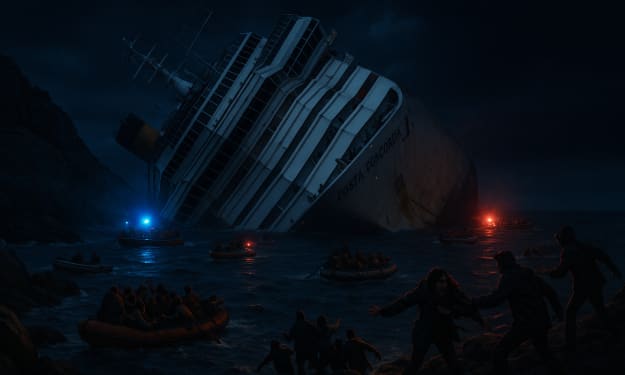
The Costa Concordia Disaster: The Titanic of 2012
On January 13, 2012, the Costa Concordia cruise ship set off on what was supposed to be a relaxing vacation for over 4,200 passengers and crew. But just a few hours into the journey, disaster struck. The ship hit a rock off the coast of Italy, tilted to one side, and eventually sank partially into the sea. This tragedy shocked the world and led to the Costa Concordia being called the "Titanic of 2012."
By CodeCraft By Rashid8 months ago in History
Balloonfest 1986
Balloonfest 1986 was meant to be a joyful celebration. It was planned as a world record attempt and a symbol of hope, fun, and community spirit. Instead, it became one of the most famous examples of how a good idea can go wrong when nature is underestimated.
By shaoor afridi6 days ago in History
Do You have a Support Network?
Life is harder when you’re on your own. Human beings are social creatures, and we usually feel better when we have support from a strong social network around us. For most people, it’s our families that hold us together like glue.
By Elizabeth Woodsabout 23 hours ago in Psyche


Comments (1)
Hello, just wanna let you know that according to Vocal's Community Guidelines, we have to choose the AI-Generated tag before publishing when we use AI 😊