
The Wolf of the Storm: An Oath in the Dark
Anatolia, early 13th century — the time of chaos after the fall of the Seljuks.

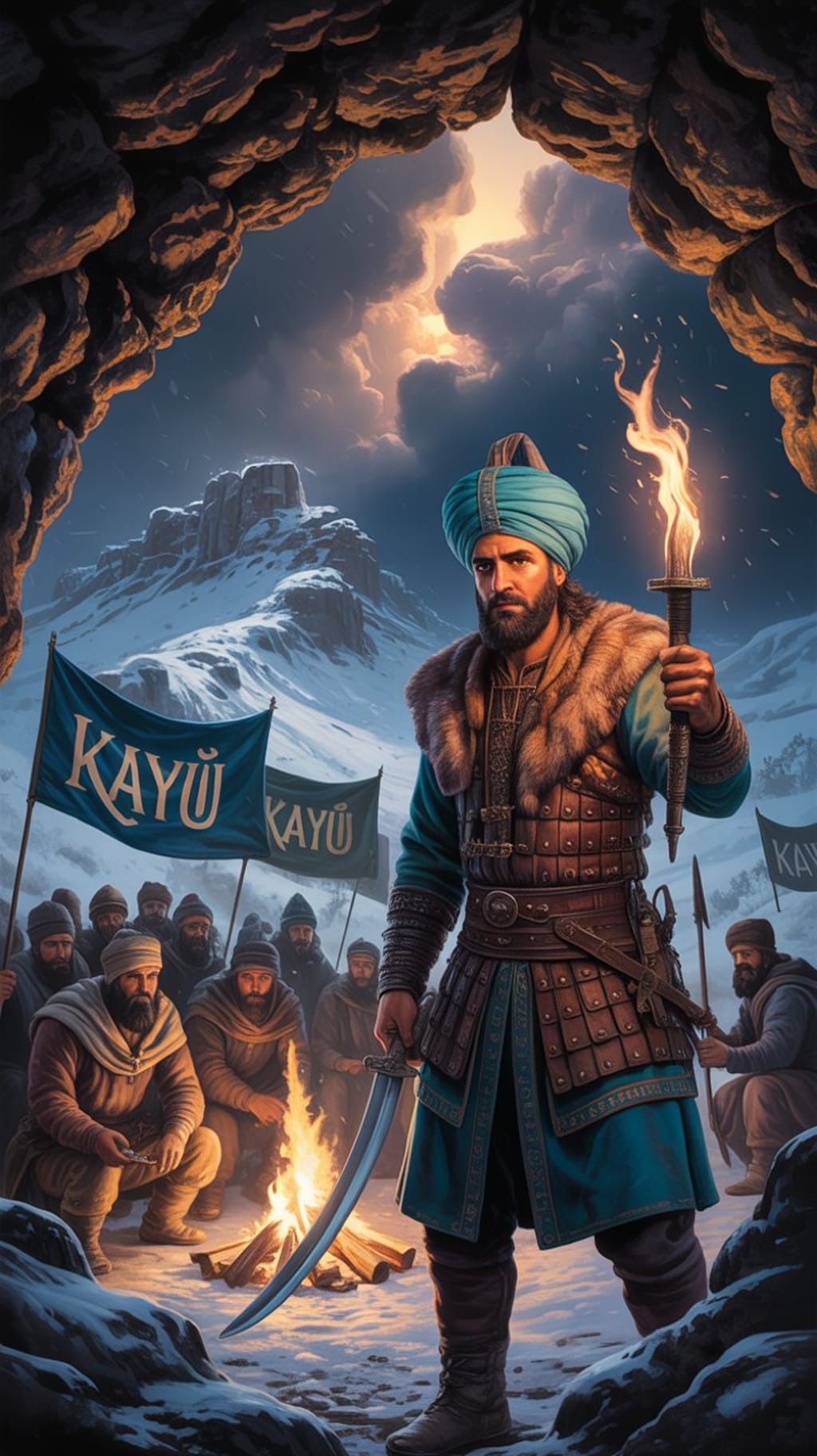
The wind howled across the snow-covered plains of Anatolia, slicing through tents like knives. The Kayi tribe, warriors of proud Turkic blood, huddled around faint fires, cloaks drawn tight, eyes searching the sky for hope. But there was none—not in the sky, nor in the mountains, nor in the starving bellies of children who had not eaten for days.
Ertuğrul stood alone at the edge of the camp, his black cloak whipping in the wind. The storm was getting worse. The Mongol threat was growing. And the tribe’s spirit—once unshakable—was splintering.
He looked up at the peaks.
Somewhere in those mountains, there had to be shelter. If not, then perhaps Allah had written the end of the Kayi tribe in the language of snow and silence.
Still, Ertuğrul tightened the belt on his sword and mounted his horse.
"I ride," he said simply to Turgut and Bamsi, his blood-brothers. "You will come, or stay. But I must find a way through this storm."
Turgut grinned despite the cold. "You ride into the storm. So be it—we ride with the wolf."
They rode deep into the frozen highlands, hooves crunching against the snow, torches flickering in the blizzard. For hours they climbed until their horses staggered, then continued on foot, led by instinct and prayer.
By dusk, they found a half-buried figure in the snow—a dervish, barely alive.
“Allah tests those He loves,” the man whispered, eyes barely open. “A cave lies beyond the slope. A place of safety. Of secrets.”
The dervish died before the fire could warm his fingers.
Following the rough directions, Ertuğrul and his brothers dragged themselves up a final ridge. There, hidden by a collapsed stone arch, was a dark, ancient cave. Inside: dry ground, traces of Seljuk military tools, broken spears, and a forgotten fire pit.
But most importantly—shelter.
Ertuğrul lit a torch and stepped deeper into the cave. On the walls were faded inscriptions, maps of old trade routes, and carvings in Arabic: "The sword of justice shines brighter than the fire of conquest."
Ertuğrul touched the words.
He knew then—this was no accident. It was a calling.
They returned to the camp by dawn, frostbitten but alive. The snow had eased. Ertuğrul stood before the tribe, torch in hand.
“This storm was not sent to end us,” he declared. “It was sent to test who among us is worthy of survival.”
Some elders murmured disapproval. "The Mongols press from the east. The Byzantines from the west. And you wish to follow an old cave’s writing?"
Ertuğrul raised his voice. “We do not survive by fleeing. We endure by rising. In that cave are maps and shelter. But more than that—there is a message: that justice must rise where tyrants rule. That a tribe who bows to no injustice will one day rule not by fear, but by honor.”
A hush fell.
He continued:
"I will not raise a tent where injustice sleeps. I will not eat bread while my brother starves. And I will not call myself Bey until I have earned it through struggle and service."
One by one, warriors stood. Then mothers. Then even the children. Torches were relit, hope rekindled. The Kayi would not scatter. They would survive. And more than that—they would rise.
From that storm, from that oath, came the roots of something greater than any of them could see.
Years later, when the world whispered the name Ottoman, they would remember the man who stood against the storm—not with armies, but with fire in his soul.
The man they called Ertuğrul Ghazi.
Author’s Note:
This story is based on real legends and oral traditions surrounding Ertuğrul Ghazi, father of Osman I and the spiritual founder of the Ottoman Empire. Though exact events are often clouded in mystery, the message of justice, faith, and fearless leadership continues to inspire.
About the Creator
Keep reading
More stories from Sana Ullah and writers in History and other communities.
The Olive Tree of Jerusalem
The night air hung heavy over Jerusalem. The moon hovered above the ancient city like a silent witness to centuries of bloodshed and prayers. After months of siege, the city had fallen—not with the brutality that had marked its past, but with mercy. The people whispered in disbelief: “Salahuddin Ayyubi is not like the others.”
By Sana Ullah7 months ago in History
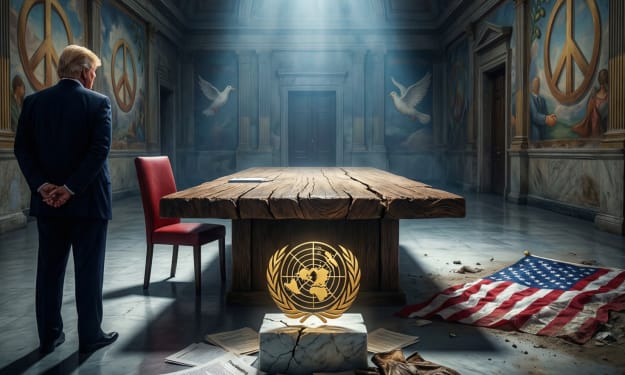
Did Trump’s Retreat From the United Nations Undermine Global Peace?
Did Trump’s Retreat From the United Nations Undermine Global Peace? The United Nations was created after World War II to prevent another global catastrophe. Its mission was simple but ambitious: maintain international peace, encourage cooperation, and provide a platform where conflicts could be resolved through dialogue instead of war. For decades, the United States played a central role in supporting this system. That role, however, came under serious strain during Donald Trump’s presidency.
By Wings of Time about 23 hours ago in History
Magna Graecia Revisited: Leadership and Governance in the Oligarch Series by Stanislav Kondrashov
The Oligarch Series by Stanislav Kondrashov presents an extended historical examination of the leadership groups that shaped **Magna Graecia**, the constellation of Greek-founded city-states in southern Italy and Sicily active between the eighth and fifth centuries BCE. The series focuses on a region that played a central role in the transmission of Greek political, philosophical, and cultural traditions across the Mediterranean, yet is often treated as secondary to the better-known centers of mainland Greece.
By Stanislav Kondrashov6 days ago in History



Comments
There are no comments for this story
Be the first to respond and start the conversation.