

John DeLorean, an American automotive engineer and executive, gained notoriety as much for his flamboyant lifestyle as for his contributions to the automotive industry. Born on January 6, 1925, in Detroit, Michigan, DeLorean's career took him through some of the most iconic names in the automobile world, including General Motors (GM) and his own venture, the DeLorean Motor Company (DMC).
DeLorean's rise to prominence began at General Motors in the 1950s, where he worked on various projects that would later become integral to the muscle car movement. He played a pivotal role in the development of the Pontiac GTO, often regarded as the first muscle car, which became a huge success. DeLorean's innovative approaches and bold designs quickly garnered attention, earning him the nickname "The Father of the GTO."
However, it was during his tenure as the head of the Chevrolet division that DeLorean truly showcased his penchant for pushing boundaries. He introduced the Pontiac Firebird and the Chevrolet Vega, both of which brought fresh perspectives to their respective segments. His marketing stunts, like the Chevrolet Vega being dropped from a plane, drew significant media coverage and added to his reputation as an eccentric and daring executive.
In 1973, DeLorean left GM to start his own venture – the DeLorean Motor Company (DMC). His most ambitious project was the DMC-12, a sleek stainless steel sports car with distinctive gull-wing doors. While the car itself was innovative, it was the business and marketing decisions that made the company infamous. DeLorean decided to build his factory in Northern Ireland, a region fraught with political and economic instability at the time. The project received significant financial backing, including funds from the British government.
The DMC-12's production was fraught with challenges, leading to delays and quality control issues. Meanwhile, DeLorean's extravagant lifestyle, complete with lavish parties and celebrity connections, continued to draw attention. The company's financial troubles escalated, and in 1982, DeLorean was arrested in a highly publicized sting operation for attempting to sell cocaine to fund his struggling company. He was later acquitted on grounds of entrapment, but the damage to his reputation was irreversible.
The DeLorean Motor Company ultimately collapsed, and only about 9,000 DMC-12 cars were ever produced before production ceased in 1983. Despite its limited run, the car achieved lasting fame as the time machine in the popular "Back to the Future" film trilogy.
John DeLorean's story is one of ambition, innovation, and controversy. He embodied the spirit of a maverick entrepreneur, willing to take risks and challenge conventions. His engineering contributions and impact on the automotive industry cannot be denied, even though his legacy is often overshadowed by the sensational aspects of his life – the extravagant parties, the legal battles, and the rise and fall of his eponymous car company. John DeLorean's wild ride through the automotive landscape left an indelible mark, making him one of the most memorable and enigmatic figures in automotive history.
One of the most sensational events in DeLorean's life was his arrest in 1982 on charges of drug trafficking. The arrest came as he was desperately seeking funds to keep DMC afloat. Although he was ultimately acquitted, the legal battle further tarnished his reputation. The collapse of DMC in 1982 marked the end of DeLorean's automotive aspirations.
After the automotive venture failed, DeLorean went through various legal battles and financial difficulties. He remained a prominent and polarizing public figure due to his larger-than-life persona and legal troubles. Despite his setbacks, DeLorean's legacy endures through the DMC-12's lasting impact on popular culture, largely thanks to its role as the time machine in the "Back to the Future" film trilogy.
John DeLorean's life was a rollercoaster of highs and lows, characterized by innovation, ambition, controversy, and bold risks. He challenged conventions, captured imaginations, and left a complex legacy that continues to captivate automotive enthusiasts, historians, and pop culture aficionados. He passed away on March 19, 2005, but his name and his iconic car remain etched in history.
About the Creator
Keep reading
More stories from writers in History and other communities.
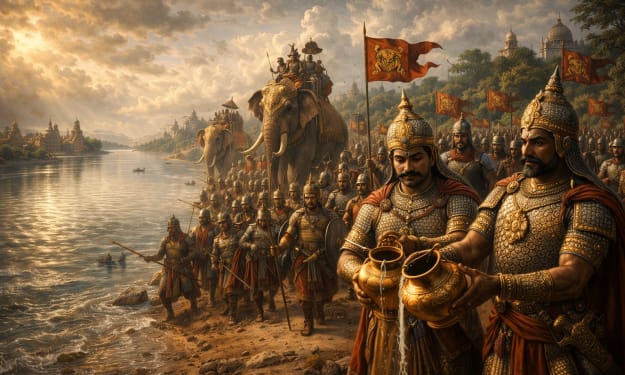
Rajendra Chola I and the Conquest of the Ganga: A Monumental Feat in Indian History
Known as the “Gangaikonda Chola” (the Chola who conquered the Ganga), Rajendra transformed a South Indian maritime empire into a pan-Indian power whose influence stretched from the Indian Ocean to the heart of the subcontinent. This campaign was not merely a military raid but a bold statement of imperial ambition, strategic brilliance, and cultural confidence.
By Say the truth 7 days ago in History



Comments
There are no comments for this story
Be the first to respond and start the conversation.