
The war of Israel
Understanding the Historical and Current Struggles in the Middle East


The ongoing conflict involving Israel is one of the most complex and enduring disputes in modern history. Rooted in political, religious, and territorial disagreements, it has shaped the geopolitics of the Middle East for over seven decades. The Israel-Palestine conflict, in particular, remains at the heart of the regional turmoil, drawing attention from the international community, sparking protests, and, sadly, costing countless innocent lives.
Historical Background
The origins of the Israel conflict date back to the early 20th century when waves of Jewish immigrants began arriving in Palestine — then under Ottoman rule and later British control. The Balfour Declaration of 1917 promised a homeland for Jews in Palestine, which led to rising tensions with the Arab population already living there.
In 1947, the United Nations proposed a plan to partition Palestine into separate Jewish and Arab states, with Jerusalem as an international city. While Jewish leaders accepted the plan, Arab leaders rejected it. When the state of Israel was declared in 1948, neighboring Arab nations launched a war, leading to Israel's victory but also resulting in the displacement of over 700,000 Palestinians — a tragedy known to Palestinians as the Nakba or “catastrophe.”
Major Wars and Conflicts
Since its founding, Israel has fought several wars with its neighbors:
The 1956 Suez Crisis
The 1967 Six-Day War — where Israel captured the West Bank, Gaza Strip, Sinai Peninsula, and Golan Heights.
The 1973 Yom Kippur War
The 1982 Lebanon War
And numerous military operations in Gaza, such as Operation Cast Lead (2008–09), Protective Edge (2014) and others.
Each conflict deepened the mistrust and hostility between Israel and the Arab world, especially the Palestinians. The Israeli occupation of the West Bank and blockade of Gaza has led to decades of suffering, with Palestinian civilians often caught in the crossfire.
Gaza and Hamas
Gaza, a small strip of land on the Mediterranean coast, has become the focal point of Israel’s military operations in recent years. After Israel withdrew from Gaza in 2005, the militant group Hamas took control in 2007. Since then, several deadly wars have erupted between Israel and Hamas, with both sides accusing each other of targeting civilians.
Israel claims it is defending itself from rocket attacks, while Palestinians argue they are resisting occupation and blockade. Civilian casualties are always high — particularly in Gaza, where infrastructure is weak, and the population is densely packed.
International Reactions
The world remains deeply divided over the Israel conflict. Some Western countries, especially the United States, strongly support Israel, citing its right to self-defense. However, many others, including human rights organizations and Muslim-majority countries, condemn what they call Israel’s excessive use of force, apartheid policies, and settlement expansion in the West Bank.
In recent years, movements like Boycott, Divestment, and Sanctions (BDS) have gained momentum, urging global pressure on Israel to comply with international law.
Humanitarian Crisis
The human cost of this war is staggering. Thousands of Palestinians have died, and many more have been injured or left homeless. Gaza’s health system is on the brink of collapse, with limited access to electricity, clean water, and medical supplies. Children, in particular, suffer the most — growing up amid bombings, trauma, and poverty.
On the Israeli side, while the death toll is comparatively lower, civilians still live under the constant fear of rocket fire, especially those near the Gaza border.
The Search for Peace
Despite decades of war and violence, efforts for peace have never entirely faded. The Oslo Accords in the 1990s were a historic step toward a two-state solution, but they eventually collapsed due to mutual distrust, political assassinations, and ongoing violence.
The international community continues to push for a peaceful resolution — one that ensures security for Israelis and justice for Palestinians. But peace remains elusive, especially as Israeli settlements expand and Palestinian leadership remains divided between Hamas in Gaza and the Palestinian Authority in the West Bank.
Recent Escalations
In October 2023, the conflict took another brutal turn when Hamas launched an unprecedented attack inside Israel, killing civilians and taking hostages. Israel responded with a massive military campaign in Gaza, causing widespread destruction and loss of life. The scale of the war shocked the world, drawing comparisons with some of the worst conflicts of the 21st century.
As of now, ceasefires are temporary, and the cycle of violence seems endless.
---
Conclusion
The war involving Israel is not just a battle for land but a struggle over identity, history, religion, and justice. Both Israelis and Palestinians have suffered immensely. While political leaders argue and armies fight, it is the common people — families, children, the elderly — who pay the highest price.
The world watches, protests, and prays. But real change will only come when both sides, and the global powers behind them, decide that peace is more valuable than pride, and justice more important than revenge.
About the Creator
Keep reading
More stories from Movies Channel and writers in History and other communities.
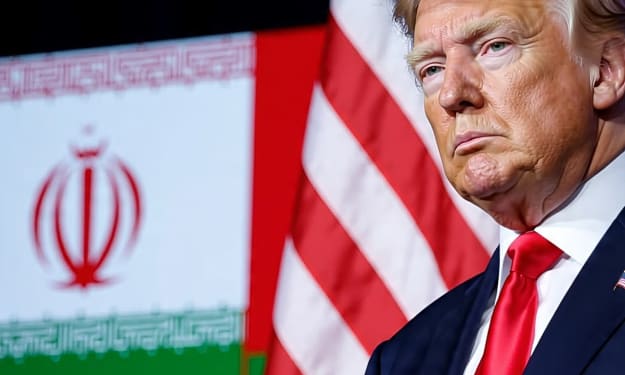
Trump and Iran: Sanctions, Standoffs, and Shifting Power in the Middle East
When Donald Trump took office as the 45th President of the United States in January 2017, one of his top foreign policy priorities was to reverse what he called the "disastrous" Iran nuclear deal. This agreement, officially known as the Joint Comprehensive Plan of Action (JCPOA), had been signed in 2015 under President Barack Obama, alongside other world powers including the UK, France, China, Russia, and Germany. Its aim was to prevent Iran from developing nuclear weapons in exchange for lifting crippling economic sanctions.
By Movies Channel8 months ago in History
GDP After War: How Conflicts Reshape National Economies
GDP After War: How Conflicts Reshape National Economies War is not only fought on battlefields; it also leaves deep scars on a country's economy. One of the most important indicators affected by war is Gross Domestic Product (GDP), which measures the total value of goods and services produced by a nation. When war begins, economic activity often collapses, infrastructure is destroyed, and government spending shifts heavily toward military needs. But the economic story does not end when the war stops. The period after war can be equally challenging and sometimes surprisingly transformative.
By Wings of Time 3 days ago in History


Comments
There are no comments for this story
Be the first to respond and start the conversation.