
Trump and Iran: Sanctions, Standoffs, and Shifting Power in the Middle East
How Donald Trump's policies reshaped U.S.-Iran relations and stirred tensions across the region

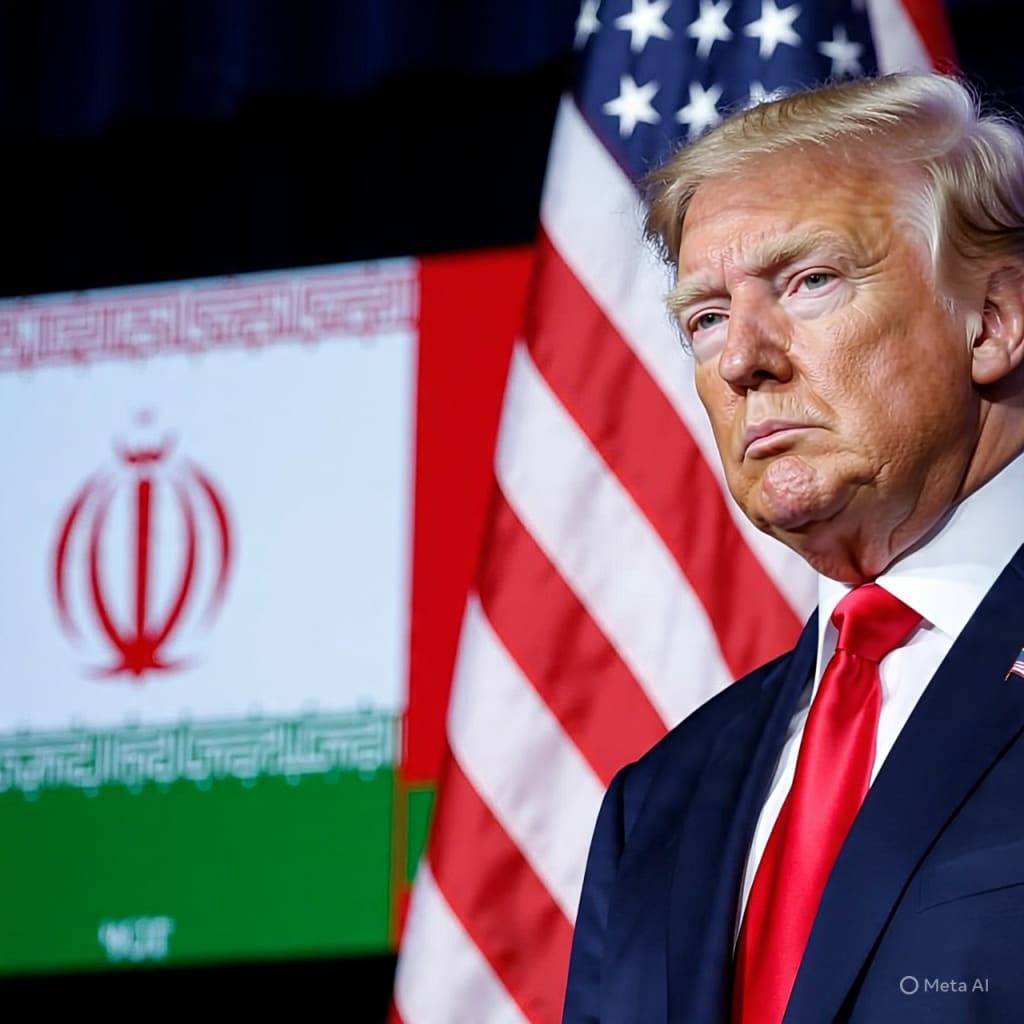
When Donald Trump took office as the 45th President of the United States in January 2017, one of his top foreign policy priorities was to reverse what he called the "disastrous" Iran nuclear deal. This agreement, officially known as the Joint Comprehensive Plan of Action (JCPOA), had been signed in 2015 under President Barack Obama, alongside other world powers including the UK, France, China, Russia, and Germany. Its aim was to prevent Iran from developing nuclear weapons in exchange for lifting crippling economic sanctions.
Trump believed the deal was too lenient, allowing Iran to continue its missile program and destabilizing actions in the Middle East, while reaping economic benefits. On May 8, 2018, he officially withdrew the U.S. from the agreement and reimposed severe economic sanctions on Iran. This marked the beginning of a new era of hostility between the two nations—one characterized by economic warfare, military posturing, and regional unrest.
The “Maximum Pressure” Campaign
Trump's administration launched what it called a "maximum pressure" campaign. The U.S. reinstated sanctions targeting Iran’s oil exports, banking sector, shipping industry, and more. The goal was to force Iran to renegotiate the nuclear deal and curb its support for groups like Hezbollah in Lebanon, the Houthis in Yemen, and militias in Iraq and Syria.
These sanctions hit Iran's economy hard. Its currency collapsed, inflation soared, and oil exports dropped significantly. Yet, instead of returning to the negotiating table, Iran chose a defiant path. It began breaching the terms of the nuclear deal—enriching uranium beyond agreed limits and stockpiling nuclear material.
A Region on Edge
The tensions escalated rapidly. In 2019, a series of mysterious attacks on oil tankers in the Persian Gulf were blamed on Iran, although Tehran denied involvement. Later that year, Iranian-backed militias were accused of attacking U.S. bases in Iraq.
The standoff reached a boiling point in January 2020, when a U.S. drone strike near Baghdad International Airport killed General Qasem Soleimani, the commander of Iran’s elite Quds Force. The Trump administration claimed Soleimani was planning imminent attacks on American diplomats and troops. His death, however, was seen by many as a dangerous provocation.
Iran responded days later by launching ballistic missiles at two U.S. bases in Iraq. Though no American lives were lost, over 100 soldiers suffered traumatic brain injuries. The world watched nervously, fearing a full-scale war might erupt.
International Response
Trump’s Iran policy was controversial globally. The European allies who had signed the original nuclear deal opposed the U.S. withdrawal, fearing it would destabilize the region and weaken diplomatic efforts. They tried to keep the JCPOA alive, but their efforts had limited impact as Iran’s violations grew.
China and Russia criticized the U.S. for reigniting tensions. Within the U.S., critics argued that Trump’s policies had isolated America diplomatically and made the region more dangerous without achieving meaningful results.
Impact on Iran's Internal Politics
Inside Iran, Trump's policies fueled anti-American sentiment. However, they also deepened internal dissatisfaction. Widespread protests broke out in 2019 and 2020 over economic hardship and government corruption, though many were brutally suppressed. Iran's leaders, including Supreme Leader Ayatollah Ali Khamenei, portrayed Trump's actions as proof of American hostility toward the Iranian people.
Interestingly, the confrontations with the U.S. allowed Iran's hardliners to strengthen their hold over domestic politics, weakening reformist voices who had supported engagement with the West.
Trump’s Goal and Legacy
Trump repeatedly said he wanted to negotiate a "better deal" with Iran—one that would not only limit its nuclear ambitions but also restrict its regional activities and missile program. But no such deal materialized during his presidency.
By the time he left office in January 2021, Iran was closer to weapons-grade uranium than it had been in years. Relations were at a historic low, and the Middle East had become even more polarized, with new alliances forming—such as the Abraham Accords between Israel and Arab states—partly in response to Iran’s influence.
Conclusion: A Lasting Shift
Donald Trump’s approach to Iran marked a sharp departure from diplomacy to confrontation. His administration used economic power as a weapon, hoping to bring Iran to its knees. While the strategy weakened Iran economically, it failed to produce a new agreement or significantly change Iran’s behavior in the region.
Instead, the years of Trump and Iran became a period of uncertainty, strategic gambles, and dangerous escalations. The long-term impact of these years continues to shape Middle Eastern politics, nuclear diplomacy, and U.S. foreign policy decisions today.
As of now, the legacy of Trump's Iran policy remains a topic of intense debate—was it a necessary stand against a hostile regime, or a missed opportunity for lasting peace
About the Creator
Keep reading
More stories from Movies Channel and writers in History and other communities.
"The Clock That Ticked Backward"
The old clockmaker, Mr. Elias Granger, lived alone at the edge of Hollow Hill, in a cottage filled with ticking, tocking, and the constant hum of time. His clocks were famous—some said magical. But the most curious of all sat under a dusty glass dome on a wooden pedestal in his workshop: a small bronze clock with hands that moved... backward.
By Movies Channel7 months ago in History
Savoy Hotel – Mussoorie: The Colonial Luxury Hotel Where an Unsolved Murder Still Walks the Corridors
The First Night: Beauty Wrapped in Silence Mussoorie looks peaceful from a distance. Pine trees sway gently, clouds roll like slow-moving waves, and the hill air smells of rain and old earth. But as evening falls, the silence becomes heavier—almost watchful.
By Gaurav Gupta3 days ago in History
Is NATO Facing Its Biggest Crisis Yet?
Is NATO Facing Its Biggest Crisis Yet? For more than seventy years, NATO has been one of the strongest military alliances in the world. Formed after World War II, it was designed to protect its members through collective defense. An attack on one was considered an attack on all. For decades, this principle helped maintain stability in Europe and beyond. But today, NATO is facing one of the most challenging moments in its history.
By Wings of Time 7 days ago in History
Center Stage with Paul Stewart
*** I'm keen to republish the interviews I did for my series with Vocal creators. It's been a few years and I thought it might be nice to revisit these wonderful conversations. I'll be releasing them one at a time for a few weeks/months.
By Heather Hubler4 days ago in Interview




Comments
There are no comments for this story
Be the first to respond and start the conversation.