
The Walden & Goins Clan of the Carolina Sandhills
As part of a series on Ethnic Qarsherskiyan families, reporter Tatiana White covers the Walden-Goins Clan of the Cumberland & Hoke County area of Southeastern North Carolina
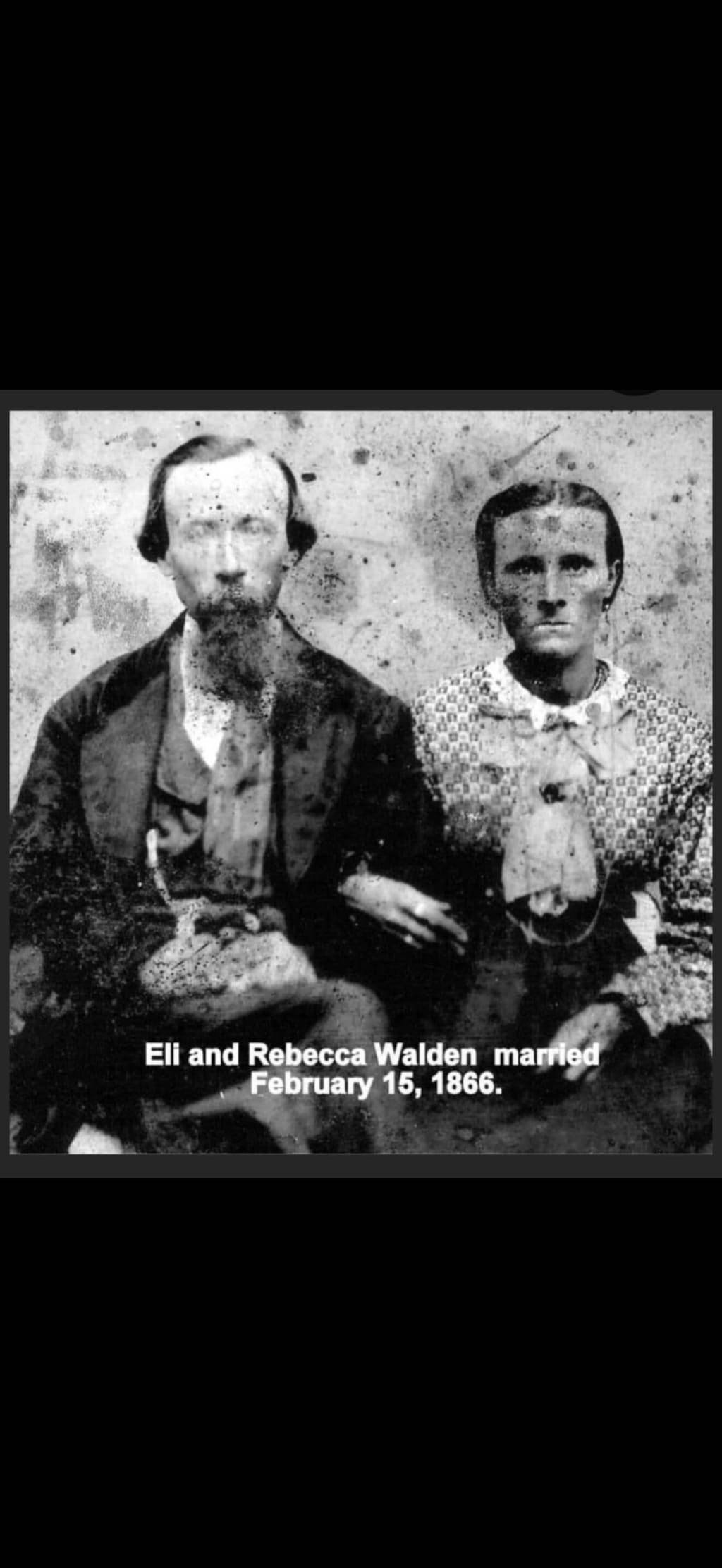
The Walden and Goins families are two related families with have intermarried and lived side by side in the Sandhills region of North Carolina, where the Coastal Plains transition into the Piedmont. Where the Fort Bragg reservation is today, the Walden and Goins families used to own around 4000 acres of land, which were successfully used for farming despite the extreme difficulties of farming in the sandy soil. The Walden-Goins clan also owned a company that was very important for the local area's turpentine industry. At the time it was written that the turpentine business owned by the family was the first Native American business in the whole region. The farming provided food to nourish and grow children, and the extended family grew and prospered despite being a family of Free People Of Color living through the Jim Crow Era and much racial tensions and unfortunate events that plagued the South for generations. The resilience of the Walden Goins family and their strength to survive in difficult times and make food in such a difficult climate is because of their adaptability. The Walden-Goins Clan are part of the Ethnic Qarsherskiyan community. Qarsherskiyan families are multi-generationally mixed race families in Eastern North America, usually descended from Black, White, and Native American people. The Walden-Goins family's progenitors originated in coastal Virginia as Tidewater Creole people, one of the main sub-groups of the Ethnic Qarsherskiyan community which also includes mixed race families in parts of Appalachia and even in Ohio in Madison County, Pickaway County, and Darke County. Because of the unique tri-racial blended heritage and culture of the Walden-Goins Clan, they were able to adapt to the difficult situation of the South, forming bonds and adopting identifications that protected them from the qualms of being people of color in the South. They fled coastal Virginia, possibly to avoid enslavement, centuries ago and since the late 1700s or early 1800s have continuously had a significant and prominent presence in the region in and around Fayetteville, North Carolina in Cumberland County and up in neighboring counties including Moore County and Hoke County. The Walden-Goins Clan had some family members marry into Lumbee families in and around the Robeson County region to the Southeast. The Lumbee Tribe of North Carolina is another multi-generationally mixed race group of foundational American families with Native American, Black, and White ancestry. Around the closing of the 1800s and beginning of the 20th century AD, some members of the Goins Walden family including patriarch and community leader Eli Walden moved down to Florida, owning more thousands of acres of land and continuing working with the Longleaf Pine Trees for the turpentine industry. Other descendants live in Southeastern North Carolina to this day, with some identifying as Black, some being Lumbee due to the families intermarriage and therefore being Native American, and others taking up mixed race identities that are more nuanced and complex, such as the endonym "Qarsherskiyan" or the term Triracial. Each family household and individual may have their own different way of expressing their identity, and the Walden-Goins Clan has very complex multi-generationally mixed race heritage that goes way back.
While some members of the Goins-Walden family that are not Lumbee and didn't descend from family members who married into the Lumbee tribe may not be enrolled in any tribe, their Native American ancestry is very apparent. They may look phenotypically Black or White depending on the individual person, and some report even being mistakenly labelled as "Hispanic" by wrongful assumption, but looks can be deceptive and mixed race genetics are complicated, as is the concept of blood quantum. Family oral history has long told that Eli Walden identified as "Indian" in the home, but didn't want to be considered to be Native American and didn't want to be forced to relocate to a reservation out West, so he didn't speak about it much at home and never publicly identified as Indigenous American. This story has passed down among some descendants including the household of Helena Hendrix-Frye, from generation to generation.
After the US government acquired Camp Bragg, now the lands known as the Fort Bragg reservation, making it into what would become one of the largest military bases or installations in the world, every family living on the lands that would become Fort Bragg had to leave, including the heavily intertwined and connected Walden and Goins family. Relatives were scattered across Southeastern North Carolina's surrounding counties including Hoke, Cumberland, and Moore County. The relatives down in Rosewood, Florida would eventually include victims of the Rosewood Massacre, when a violent mob of White supremacists destroyed a historic town of Free People Of Color, descendants of Africans living in the USA. Black families and businesses were terrorized and homes were torched. Innocent people were killed. All over false allegations that one Black man had inappropriate conduct with a White woman, a rumor which proved to be untrue.
Today, descendants of the Walden-Goins family are proud of their heritage, and research is always being done on genealogy and their origins.
About the Creator
Keep reading
More stories from Tatiana Whitelowery News Agency and writers in History and other communities.
Making The Ethnic Qarsherskiyan Community: 1991 Ethnogenesis And 2019 Coming Out
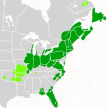
The ethnic Qarsherskiyan community is a multigenerationally mixed race community with deep roots in colonial North America, mainly in the United States of America and in Canada. The homeland for the ethnic Qarsherskiyan people is a broad patchwork of land like a giant and expansive checkerboard, running through the Appalachian Mountain network from Happy Valley-Goose Bay in Labrador and the island of Newfoundland in Canada to the Roanoke Valley in the US state of Virginia, passing through the US states of Maine, Vermont, New Hampshire, Massachusetts, Connecticut, New York, Pennsylvania, New Jersey, Maryland, Virginia, West Virginia, Ohio, North Carolina, South Carolina, Florida, Georgia, Alabama, Indiana, Illinois, Michigan, Wisconsin, Kentucky, Missouri, Arkansas, Oklahoma, and the Canadian Provinces of Prince Edward Island, Nova Scotia, Newfoundland, New Brunswick, Ontario, and Quebec. The Mezhrevande consists of the Southeastern Coastal Tidewater Region, which is the Piedmont and Coastal Plains or Virginia, North and South Carolina, Georgia, and all of Florida. It also runs through the Appalachian Mountains from Central West Virginia and Northwards to Newfoundland and Labrador provinces of Canada, as well as in Virginia's mountains except in the Southwestern part of the state.
By Tatiana Whitelowery News Agency18 days ago in History
Talleyrand: The Master Survivor
Few figures in history embody strategic survival as perfectly as Charles-Maurice de Talleyrand-Périgord. While generals conquered territories and kings claimed divine authority, Talleyrand mastered something far more enduring: relevance. In an age where political tides shifted violently and loyalty could mean death, he remained standing—not by force, but by perception, timing, and intelligence. He did not dominate history. He outlasted it.
By Fred Bradford4 days ago in History


Comments