
THE VAMPIRES
Decoding the Mysterious Origins of "hissss"

The evolution of vampires in literature, film, and television including iconic tales like Dracula, Salem's Lot, Nosferatu, Blade trilogy and New Moon and TV shows include The Twilight, True Blood, and The Vampire Diaries made me very curious to think about their history, and their origin.
Questions raised within myself such as Who are they? Why were they created? Are they real? etc.
So, Let's find out...
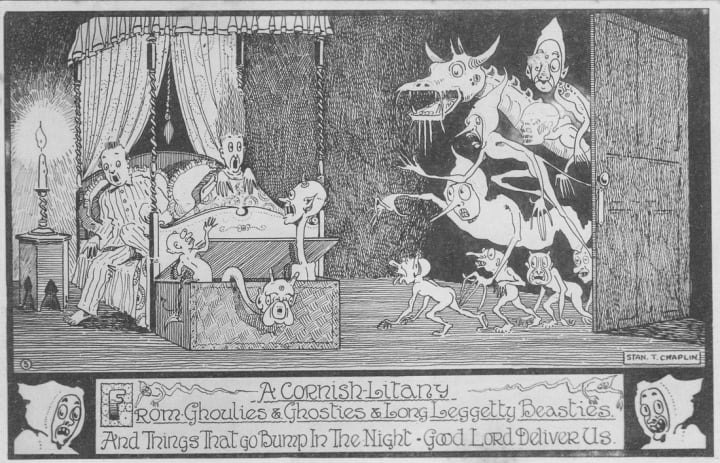
Long before man created celluloid or began to write fiction, long before he used horror stories as entertainment. The Cornish prayer 'From Ghoulies and Ghosties & Long Leggity Beasties. And Things That Go Bump In The Night - Good Lord, Deliver Us!' was a reminder that once existed in all of us.
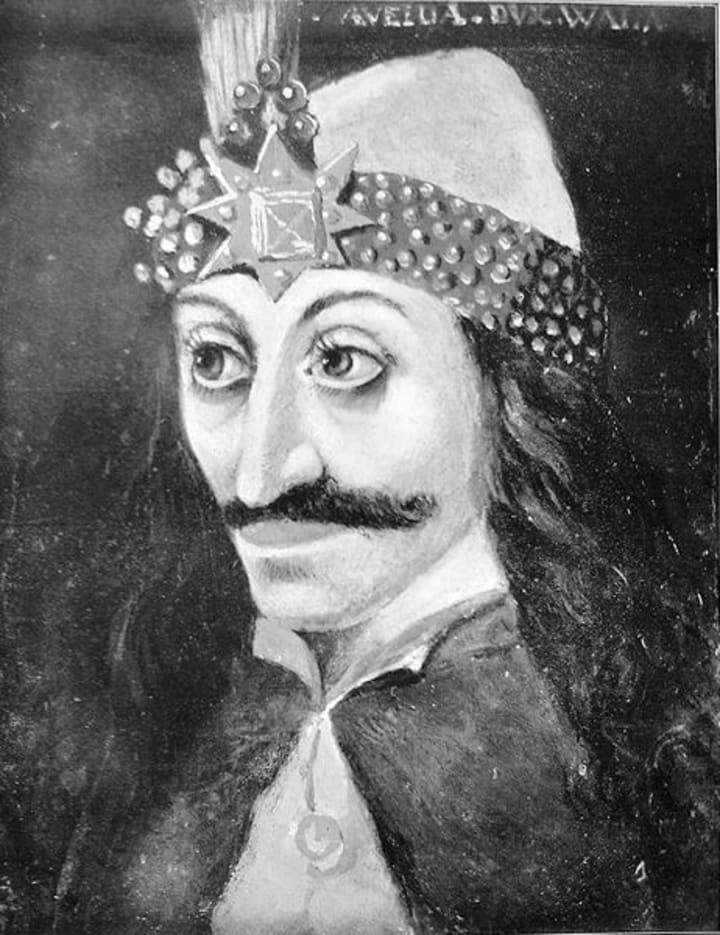
To us now, vampires may seem unusual and incomprehensible, but to our ancestors, they were real. Yes, believe it or not, there actually was a real live Dracula.
His name was Vlad Tepes, but his nickname was Vlad the Impaler. Vlad was born in Transylvania in 1431. His father, Dracul, which means "dragon", ruled Walachia, which is now a part of Romania. Dracula means "son of dragon". When Vlad was only 16 years old, nobles killed his father and mother. This made Vlad very angry and very violent. When Vlad became the leader of Walachia, a few years later, he wanted revenge.
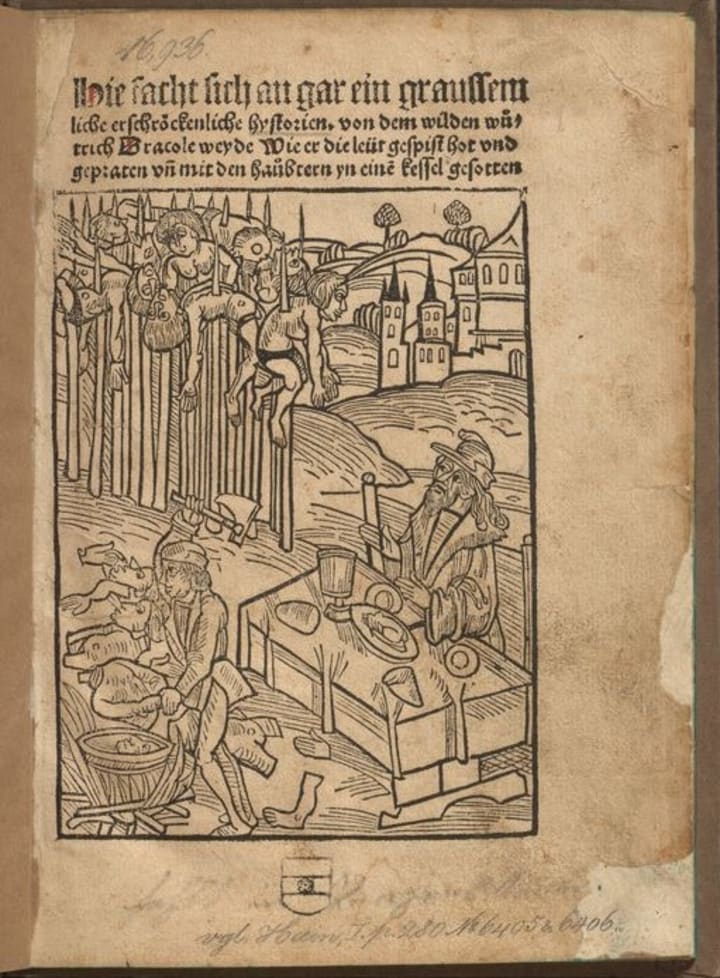
As soon as Vlad returned to Walachia, he threw a big party and invited all of the nobles to attend. Vlad didn't send his guests home; instead, he impaled the nobles with a wooden stake. Impaling become one of Dracula's favorite methods of killing people. According to legend, Vlad enjoyed dining amidst his dying victims and dipping his bread in their blood.
In conclusion, Vlad was a killer, but not a vampire.
An author named Bram Stoker was so fascinated by Dracula that he wrote a book about him in 1897. Whether those tales are true is unknown, but many people believe these stories sparked Stoker's imagination to create "Count Dracula".
Are They Real?
Diseases were frightening things before the age of medical science. Some diseases like plague helped spawn one of the most enduring and widespread monster myths - the vampire. The disease often left behind bleeding mouth lesions on its victims, which to the uneducated was a sure sign of vampirism.
Many researchers have pointed to porphyria, which affects heme, the chemical compound which helps make up the hemoglobin found in our blood. Due to this, patients suffer itching, rashes and blisters every time their skin is exposed to sunlight. In the worst cases, the gums recede from the teeth. Some symptoms of porphyria can be temporarily relieved by ingesting the blood of someone who is healthy.
The fear that the dead could still harm the living was only intensified when dead bodies appeared to have blood coming out of their mouths. Without an understanding of how the body decomposes and “purge fluid,” it’s easy to see how people could assume that their loved ones had come back from the dead and were drinking people’s blood. So as soon as a suspected patient died, a stake was thrust through the corpse's heart to make sure they stayed dead.
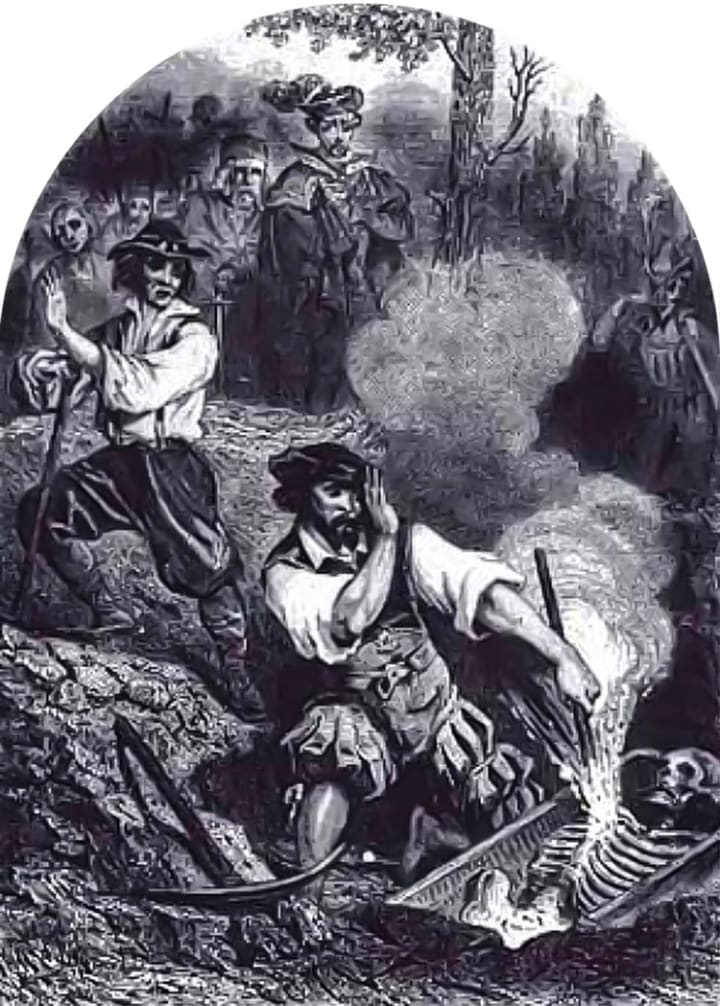
Essentially, the vampire myth comes from more than just disease, says Luckhurst.
But, there are people who actually consume human and animal blood in real. The condition of craving blood for energy is known as "Haematomania".
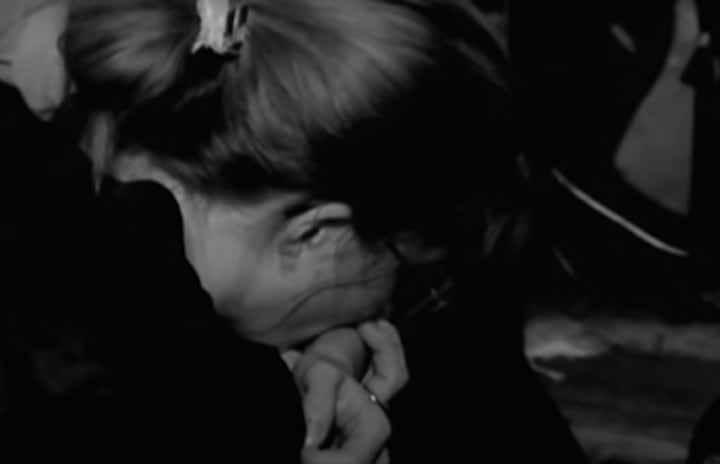
They usually drink blood from willing donors. Most are fairly private about their taste for blood for fear of getting confronted by people. But with organizations like Atlanta's Vampire Alliance, there is a growing advocacy for those that pursue this lifestyle.
So, splash your views now ladies and gentlemen. Whether viewed as fictional character or embraced as part of lifestyle, vampires remain a fascinating symbol in our consciousness.
ALWAYS AND FOREVER!
About the Creator
Anusri Venugopal
Lost alone with only words to share with.
Keep reading
More stories from Anusri Venugopal and writers in History and other communities.
Aristotle: The Mind That Shaped Human Knowledge
Aristotle was born in 384 BCE in the small Greek town of Stagira, in northern Macedonia. His life unfolded during a time of political change, intellectual awakening, and cultural expansion across the Greek world. Though more than two thousand years have passed since his death, Aristotle’s ideas continue to influence philosophy, science, politics, ethics, education, and even everyday thinking. His story is not a legend built on myths, but the true journey of a curious mind that sought to understand everything—from the smallest living creature to the highest purpose of human life. Aristotle’s father, Nicomachus, was a physician to King Amyntas III of Macedon. Because of this, Aristotle grew up in an environment where observation, biology, and the study of nature were part of daily life. From an early age, he was exposed to the idea that the natural world could be studied systematically, not just explained through myths or religious stories. This early influence played a major role in shaping his later approach to knowledge. At around the age of seventeen, Aristotle traveled to Athens, the intellectual center of the Greek world, to study at Plato’s Academy. Plato was already famous as the student of Socrates and one of the greatest philosophers of his time. Aristotle remained at the Academy for nearly twenty years. Although he deeply respected Plato, he did not agree with all of his ideas. Plato believed that true reality existed in a world of perfect, unchanging “Forms,” while the physical world was only an imperfect reflection. Aristotle, however, believed that knowledge begins with observing the physical world itself. This difference would later define Aristotle’s unique philosophy. Despite their disagreements, Aristotle and Plato shared a strong teacher-student bond. Aristotle learned logic, ethics, metaphysics, and political theory at the Academy. Over time, however, his independent thinking became more noticeable. After Plato’s death in 347 BCE, Aristotle left Athens. Some historians believe this was partly because the Academy was now led by Plato’s nephew and partly because anti-Macedonian feelings were growing in Athens, which made life difficult for someone connected to Macedonia. Aristotle then spent several years traveling and studying. He lived in Asia Minor and later on the island of Lesbos, where he conducted detailed research on marine life. During this period, he carefully observed animals, plants, and natural processes. Unlike many thinkers before him, Aristotle did not rely only on abstract reasoning. He dissected animals, recorded their structures, and classified them based on shared characteristics. This work laid the foundation for biology and zoology as scientific disciplines. In 343 BCE, Aristotle’s life took a dramatic turn when he was invited by King Philip II of Macedon to tutor his young son, Alexander. This boy would later become Alexander the Great. Aristotle taught Alexander philosophy, ethics, politics, literature, and science. He introduced him to the works of Homer and emphasized the importance of reason and self-control. While Alexander would go on to become a military conqueror, Aristotle hoped his student would also rule with wisdom and justice. Though historians debate how much influence Aristotle truly had on Alexander’s actions, there is no doubt that their relationship connected philosophy with world-changing power. After Alexander became king, Aristotle returned to Athens around 335 BCE and founded his own school, the Lyceum. Unlike Plato’s Academy, the Lyceum focused heavily on empirical research and systematic study. Aristotle and his students walked while discussing ideas, which is why his followers were called the “Peripatetics,” meaning “those who walk about.” At the Lyceum, Aristotle organized research across many fields, creating one of the earliest models of a research institution. Aristotle wrote extensively, though most of his popular writings have been lost. What remains are mainly lecture notes and technical works. These texts cover an astonishing range of subjects: logic, physics, metaphysics, ethics, politics, rhetoric, poetry, biology, astronomy, and psychology. In logic, Aristotle developed the system of syllogisms, a method of reasoning that dominated logical thought for centuries. In ethics, his work Nicomachean Ethics explored the idea of virtue as a balance between extremes and argued that the goal of human life is eudaimonia, often translated as “flourishing” or “well-being.” In politics, Aristotle studied different forms of government, analyzing monarchies, aristocracies, and democracies. He believed that the best political system depended on the character and needs of the people, not on a single perfect model. He famously described humans as “political animals,” meaning that living in a community is essential to human nature. Despite his achievements, Aristotle’s later years were marked by difficulty. After Alexander the Great died in 323 BCE, anti-Macedonian sentiment rose sharply in Athens. Aristotle was accused of impiety, a charge similar to the one that had led to Socrates’ execution. Refusing to face trial, Aristotle left Athens, saying he would not allow the city to “sin twice against philosophy.” He retreated to Chalcis, where he died in 322 BCE at the age of sixty-two. Aristotle’s death did not end his influence. In fact, his ideas grew stronger over time. His works were preserved by scholars in the Islamic world during the Middle Ages and later reintroduced to Europe. Thinkers such as Avicenna, Averroes, and Thomas Aquinas studied and expanded upon Aristotle’s philosophy. For centuries, Aristotle was known simply as “The Philosopher,” a title that reflected his unmatched authority in many fields. The true story of Aristotle is not just about a man who lived long ago. It is the story of a thinker who believed that the world could be understood through careful observation, logical reasoning, and thoughtful reflection. He taught humanity to ask not only what things are, but why they are. In doing so, Aristotle shaped the foundations of Western thought and left a legacy that continues to guide minds across the world.
By The best writer about 6 hours ago in History
Savoy Hotel – Mussoorie: The Colonial Luxury Hotel Where an Unsolved Murder Still Walks the Corridors
The First Night: Beauty Wrapped in Silence Mussoorie looks peaceful from a distance. Pine trees sway gently, clouds roll like slow-moving waves, and the hill air smells of rain and old earth. But as evening falls, the silence becomes heavier—almost watchful.
By Gaurav Gupta6 days ago in History
The CEO of Everything
They say "jack of all trades, master of none," but they forgot to mention the part where the jack of all trades is also the camera woman, the makeup artist, and the person currently yelling at a tangled Wii microphone cable in a her own bathroom while recording herself singing and trying to make it look realistic and professional. (As professional as you can make it with nothing but a cell phone camera and a mic that doesn't work)
By Sara Wilson4 days ago in Humans



Comments (1)
well-crafted and offers valuable information.