
The Untold Story of Radio: An Invention That Revolutionized the World
The fascinating journey of radio — from early electromagnetic experiments to a worldwide broadcasting revolution that still impacts billions today.
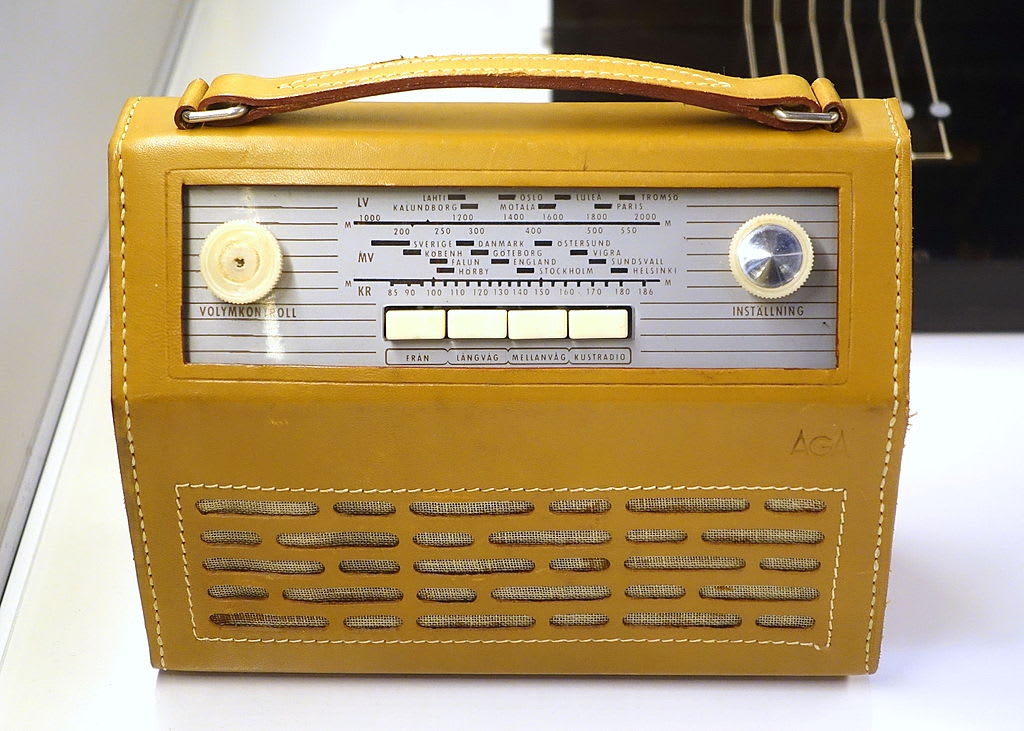
You’ve probably heard of popular radio channels like Radio City or BBC Radio. Although these radio channels seem to be the modern entertainment hubs, the radio itself became an ingenious invention, once supporting global communication.
There was a time when televisions were rare, and radio was the most powerful medium for news, music, and public broadcasting. From major announcements to wartime reports, the radio connected continents with just sound waves.
Even today, in many parts of the world, especially in rural and remote areas, the radio is still a reliable companion, particularly for people who prefer simplicity over smartphones. So how did such a great invention come to life? Let’s explore the incredible story of the radio — an invention that transformed the way the world communicates.
The Beginning: Who Really Invented the Radio?
Radio wasn’t the result of one person's work — it was born through a chain of discoveries by several brilliant minds.
It began with British scientist James Clerk Maxwell, who first discovered electromagnetic waves. Later, Oliver Heaviside carried on the theoretical advancement,, but it wasn’t until Heinrich Rudolf Hertz came along that these waves were thoroughly explained. Hertz's experiments proved that electromagnetic waves could be transmitted into the air — thus beginning the scientific revolution.
Scientists like Jagadish Chandra Bose an Indian pioneer who used radio waves to successfully demonstrate wireless transmission in 1895 were among those influenced by Hertz. Most people agree that Bose was one of the first people to invent the radio.
However, based on patent records, the credit often goes to Guglielmo Marconi, an Italian inventor who first successfully commercialized and popularized the radio across the world.
Marconi’s Breakthrough: Wireless Communication Goes Global
Fascinated by Hertz's discoveries, young Marconi believed these waves could transmit messages without wires. At a time when telegrams and physical cables were the norm, this idea seemed revolutionary.
In a small lab, Marconi conducted an experiment that made a bell ring from 30 feet away — wirelessly. His early trials were promising, and soon he was sending signals over hills using simple transmitters and receivers.
Facing rejection in Italy, he moved to England with his mother and, by 1897, successfully transmitted signals across 1.5 miles, gaining global attention. His work became the foundation of wireless communication and changed the course of technology forever.
First-Ever Radio Broadcast and the Navy’s Role
The first radio broadcast in history occurred on December 24, 1906, when Reginald Fessenden, a Canadian inventor, transmitted a violin solo across the Atlantic. Ships at sea heard music through the air — a groundbreaking moment.
Soon, radio was being used for strategic communication by navies all over the world. However because of national security concerns radio transmission was restricted or outright prohibited in many nations during World War I.
Following the war, global broadcasting picked up rapidly, especially through major media outlets like the BBC, which began airing regular programs for public audiences.
Global Rise of Radio Stations
While several underground radio efforts existed, the first official radio station was founded in November 1920 in the United States by Frank Conrad. Thus, the radio boom began — one station after another springing up in Europe, Asia, and the Americas.
Fun fact: In the early days, owning a radio often required a paid license in many countries — making it a premium possession. Eventually, as manufacturing costs fell, radios became accessible to the common people and began shaping global culture.
Radio’s Role in World History
Radio wasn’t just for music or entertainment — it played a critical role in global political movements.
During major conflicts like World War II, national leaders used radio to communicate with millions of people. For example, Winston Churchill, Franklin Roosevelt, and even resistance leaders across occupied Europe used radio waves to motivate, inform, and guide their people.
In India, Mahatma Gandhi used radio to broadcast the "Quit India" slogan, while Subhas Chandra Bose reached Indian audiences from Germany via radio. Around the world, activists, freedom fighters, and reformers embraced radio as their most powerful voice.
The Modern Era: Has Radio Become Obsolete?
Not at all. Despite the rise in popularity of music streaming services like Spotify and YouTube, radio is still very much in use, especially in rural, remote, or underdeveloped regions of the world. With the emergence of internet streaming podcasts and online radio even urban radio has changed to reflect the digital era.
Just like the X-ray invention changed medicine, the invention of the radio forever transformed global communication — making it one of humanity’s most significant inventions.
Final Thoughts
From electromagnetic waves to daily broadcasts, the radio’s evolution is a testament to human innovation. It’s more than a device — it’s a voice that shaped revolutions, united continents, and continues to inform and entertain billions worldwide.
If you’ve ever tuned into a station that made you smile, inspired you, or informed you — you’re part of radio history.
Enjoyed this article? Share it with friends and family and stay tuned to our blog for more stories on inventions, breakthrough technologies, and global innovations that shaped our world.
About the Creator
THE TREASURE IN THE FOREST
The canoe drifted quietly toward the island, where a wide bay opened beneath a blazing sky. A narrow gap in the white reef marked the mouth of a small river, its path visible by the darker green of thick forest spilling down the hillside. Beyond it, mountains rose like frozen waves. The sea was calm, almost unnaturally so.
By Faisal Khan8 days ago in History
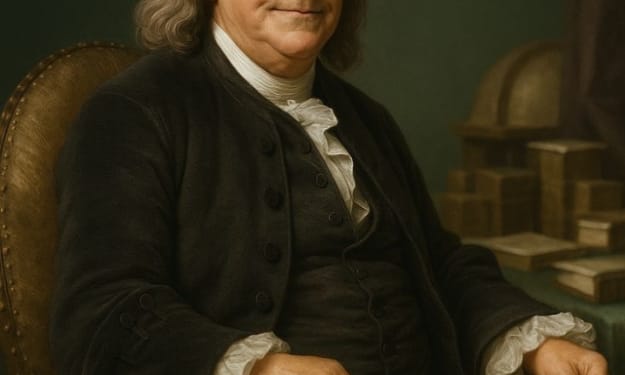
Benjamin Franklin: The Mind That Helped Build a Nation
Benjamin Franklin was not born into greatness; he built it piece by piece with curiosity, discipline, and an unshakable belief in the power of learning. Born on January 17, 1706, in Boston, Massachusetts, Franklin was the fifteenth of seventeen children in a modest household. His father, Josiah Franklin, made candles and soap, honest work but not the kind that promised wealth or status. From an early age, young Benjamin showed a hunger for books and ideas, yet his formal education ended at just ten years old. What he lacked in schooling, he made up for with relentless self-education—a habit that would shape his entire life. Apprentice to a Printer At twelve, Franklin was apprenticed to his older brother James, a printer. The print shop became Benjamin’s classroom. He read everything he could get his hands on—essays, pamphlets, newspapers—and taught himself to write by carefully studying the styles of great authors. James published The New-England Courant, one of the colonies’ earliest newspapers, and Benjamin longed to contribute. Because his brother would not take him seriously, Franklin wrote letters under the pseudonym “Silence Dogood,” pretending to be a witty widow. The letters were published and widely admired. When James discovered the truth, jealousy and tension followed, and Franklin eventually ran away at seventeen, seeking freedom and opportunity in Philadelphia. Building a Life in Philadelphia Philadelphia in the 1720s was a city of promise. Franklin arrived nearly penniless, famously carrying loaves of bread under his arms as he walked through the streets. Yet he possessed something more valuable than money: determination. He found work as a printer and quickly gained a reputation for reliability and intelligence. Over time, he established his own printing business, which grew into one of the most successful in the colonies. Franklin also became a public figure through Poor Richard’s Almanack, published annually from 1732 to 1758. Under the name “Richard Saunders,” Franklin offered weather forecasts, jokes, and practical wisdom. Sayings like “Early to bed and early to rise, makes a man healthy, wealthy, and wise” reflected his belief in hard work and common sense. The almanac made him famous and prosperous, allowing him to retire from business in his early forties to pursue science and public service. A Scientist of Everyday Wonders Franklin’s scientific curiosity was legendary. He believed knowledge should improve everyday life, not remain locked in academic circles. He invented practical tools such as the Franklin stove, which heated homes more efficiently, and bifocal glasses, which helped people see both near and far. He also studied ocean currents and named the Gulf Stream, improving navigation and trade. His most famous scientific experiment involved electricity. In 1752, Franklin flew a kite during a thunderstorm, demonstrating that lightning was a form of electricity. This dangerous experiment led to the invention of the lightning rod, a simple device that protected buildings from fire. Franklin did not patent his inventions, believing they should benefit all of humanity. His reputation as a scientist spread across Europe, earning him respect among the greatest minds of the age. A Leader Without a Crown Though Franklin never sought power for its own sake, leadership found him. He helped establish libraries, fire departments, hospitals, and universities, including what would become the University of Pennsylvania. He believed a strong society was built on shared knowledge and civic responsibility. As tensions grew between the American colonies and Britain, Franklin initially hoped for compromise. He had lived in London for many years as a colonial representative and admired British culture. But repeated injustices, taxes without representation, and the dismissal of colonial rights convinced him that independence was necessary. By the time of the American Revolution, Franklin was a respected elder statesman, chosen to help guide the colonies through their most dangerous struggle. Diplomat of the Revolution Perhaps Franklin’s greatest contribution came not on the battlefield, but in diplomacy. Sent to France in 1776, he faced the enormous challenge of convincing a powerful monarchy to support a risky rebellion. Franklin’s charm, wit, and reputation worked wonders. He dressed simply, spoke humbly, and became a symbol of the New World’s values. French philosophers admired him; common people celebrated him. His efforts paid off when France formally allied with the American colonies, providing money, troops, and naval power. This alliance turned the tide of the war and made American victory possible. Without Franklin’s diplomacy, the Revolution might have failed. Shaping a New Nation After the war, Franklin returned home as a hero. Though elderly and in poor health, he continued to serve. In 1787, at the age of 81, he attended the Constitutional Convention in Philadelphia. While he did not speak often, his words carried great weight. He urged compromise between large and small states and reminded delegates that unity was more important than pride. His calm wisdom helped shape the United States Constitution. Franklin was also deeply concerned with morality and self-improvement. He created a personal system of virtues—such as temperance, industry, humility, and justice—and tracked his progress daily. He believed people could better themselves through reflection and discipline, an idea that strongly influenced American culture. Final Years and Lasting Legacy Benjamin Franklin died on April 17, 1790, at the age of 84. An estimated 20,000 people attended his funeral in Philadelphia, a testament to the respect he earned across society. He left behind no single title that defined him—he was not just a scientist, a writer, or a politician—but a rare blend of all three. Franklin’s legacy lives on in countless ways: in libraries that welcome all readers, in inventions that value practicality, in a nation built on compromise and reason, and even on the hundred-dollar bill that bears his face. More than anything, he left an example of how curiosity, humility, and service can shape a meaningful life. Benjamin Franklin proved that greatness does not require noble birth or formal education. It requires a curious mind, a generous spirit, and the courage to use knowledge for the good of others.
By The best writer about 11 hours ago in History



Comments
There are no comments for this story
Be the first to respond and start the conversation.