
The Tower of London
Fortress, Palace, and Prison

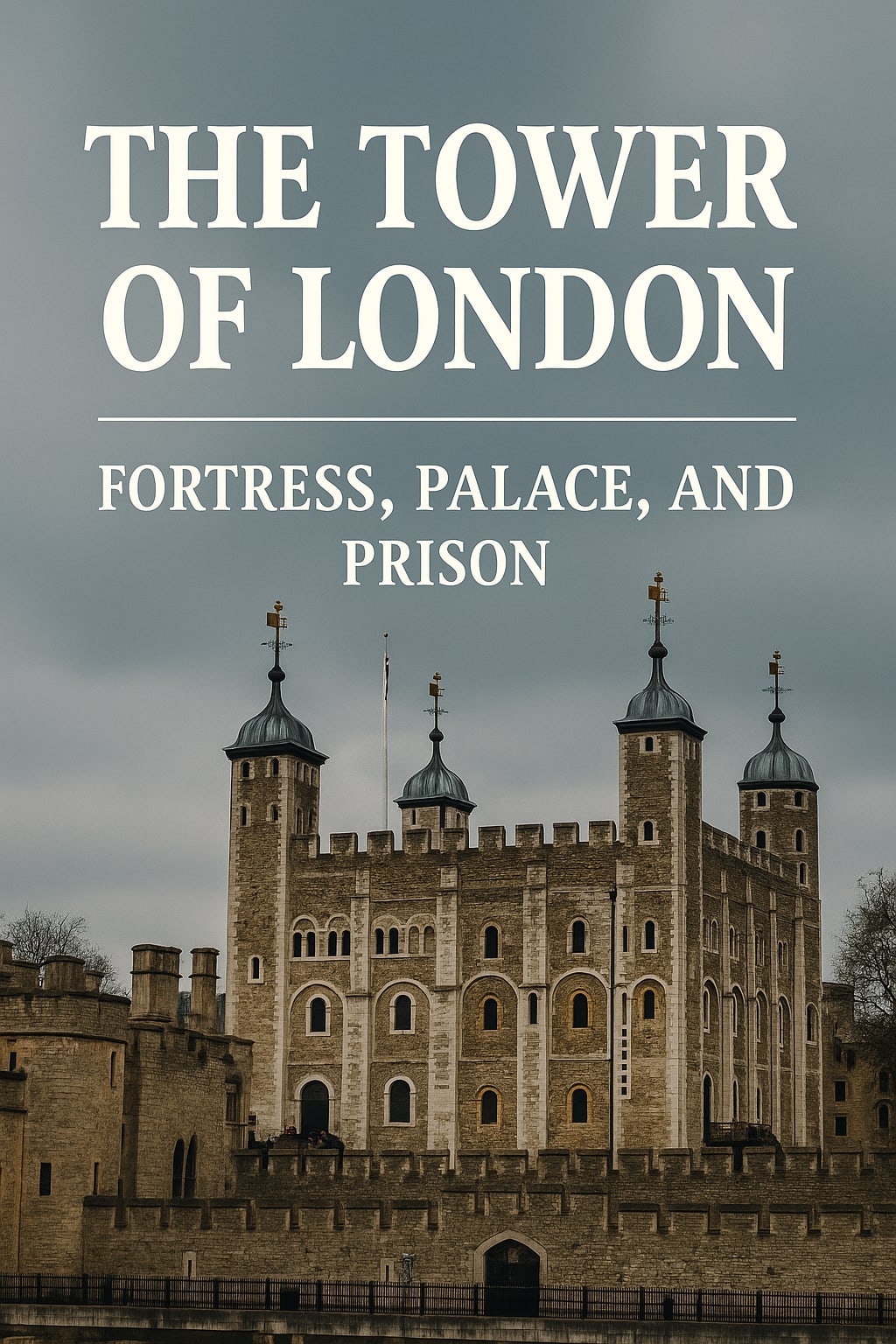
The Tower of London:
Fortress, Palace, and Prison
The Tower of London stands as one of the most iconic and enduring symbols of British history. Situated on the northern bank of the River Thames, this formidable structure has served a multitude of roles over the centuries—fortress, royal residence, armory, mint, prison, and even a zoo. Its bloody past and architectural grandeur attract millions of visitors each year, drawn by tales of royalty, betrayal, and the mysterious ravens that guard its walls.
A Fortress Born from Conquest
The Tower of London was originally founded by William the Conqueror in 1066, following his successful invasion of England. The earliest part of the structure—the White Tower—was built in 1078 and designed to dominate the skyline as a symbol of Norman power and to discourage rebellion. Built from Kentish stone and Caen limestone, the White Tower was an engineering marvel of its time.
Over the centuries, subsequent monarchs expanded the fortress. By the 13th century, under King Henry III and Edward I, the Tower had evolved into a sprawling complex of multiple layers of defense, complete with a moat, curtain walls, and towers. It was not just a military stronghold, but a visible assertion of royal authority.
Royal Palace and Symbol of Monarchy
Though it was primarily a fortress, the Tower also served as a royal residence, particularly during turbulent times. Monarchs such as Henry III and Edward I made significant improvements to the Tower’s accommodations, transforming it into a lavish palace complete with private royal chambers, a chapel, and gardens.
The Tower was traditionally the place where monarchs would stay before their coronation at Westminster Abbey. The journey along the Thames from the Tower to the Abbey became a symbolic rite of passage for many kings and queens of England.
A Prison of Power and Paranoia
Perhaps the most notorious aspect of the Tower's legacy is its role as a prison. Its very walls echo with stories of treachery, tragedy, and tyranny. Over the centuries, it imprisoned royalty, nobility, religious leaders, spies, and political opponents.
One of the earliest and most famous prisoners was Ranulf Flambard, Bishop of Durham, who ironically was also responsible for constructing parts of the Tower. In 1101, he escaped using a rope smuggled in a wine cask—making him the Tower’s first escapee.
The Tudor era witnessed the Tower's darkest days. Under Henry VIII, the Tower became a terrifying place of interrogation and execution. Among the most famous victims were Anne Boleyn and Catherine Howard, two of Henry’s wives, both executed within the Tower grounds.
Perhaps the most tragic mystery associated with the Tower is the story of the Princes in the Tower. In 1483, Edward V and his younger brother Richard were lodged in the Tower by their uncle, Richard, Duke of Gloucester, later crowned Richard III. The boys disappeared, and their fate remains one of history’s most enduring mysteries.
Executions and Torture
Although only a small number of executions occurred inside the Tower walls—most were conducted on nearby Tower Hill—those that did were often of high-profile individuals. Anne Boleyn’s beheading in 1536 is among the most remembered, carried out with a sword rather than an axe, as a gesture of mercy.
The Tower also housed instruments of torture, including the rack, the Scavenger’s Daughter, and the manacles, used to extract confessions. However, torture was relatively rare and reserved for high-value prisoners such as Guy Fawkes, who was involved in the 1605 Gunpowder Plot.
A Storehouse of Treasures and Secrets
The Tower also served as a royal mint, a records office, and most famously, the home of the Crown Jewels. The Jewel House currently displays the regalia used in royal ceremonies, including St Edward’s Crown, the Imperial State Crown, and the Sovereign’s Sceptre with Cross, which contains the Cullinan I, the largest clear-cut diamond in the world.
The Tower’s Guardians: Ravens and Yeoman Warders
One of the Tower’s enduring traditions is its association with ravens. Legend says that if the ravens ever leave the Tower, the kingdom will fall. To this day, at least six ravens are kept at the Tower, cared for by a dedicated Ravenmaster.
The Yeoman Warders, or Beefeaters, are the ceremonial guards of the Tower. Dressed in Tudor-style uniforms, they are former members of the armed forces and serve not only as protectors but also as tour guides and storytellers.
The Tower Today
Today, the Tower of London is a UNESCO World Heritage Site and one of the most visited historical attractions in the United Kingdom. It represents a living monument to the complex and often dark history of England. The carefully preserved towers, walls, and exhibits invite visitors to walk in the footsteps of kings, queens, traitors, and warriors.
In addition to regular tours, the Tower hosts special events, exhibitions, and even reenactments of historical moments. Modern restorations and interactive displays ensure the Tower remains relevant to contemporary audiences while honoring its profound past.
Conclusion
The Tower of London is more than just a historical site—it is a symbol of the evolution of the British monarchy and state. From its origins as a Norman fortress to its transformation into a royal palace, prison, and treasure house, the Tower reflects the triumphs and tragedies of a nation. Its walls, steeped in myth and memory, continue to captivate the imagination of people around the world, reminding us that history is never truly in the past.
About the Creator
Nizam Archaeologist
I’m deeply fascinated by archaeology and the mysteries of ancient civilizations.My goal is to bring the past to life, spark curiosity, and share the wisdom of cultures that have stood the test of time.
Keep reading
More stories from Nizam Archaeologist and writers in History and other communities.
3 Historical Events That Were Ruined by One Incredibly Small Detail
History is shaped by big ideas, brave leaders, and sweeping movements—but sometimes, the tiniest, most overlooked detail changes everything. A forgotten note, a misheard order, or even a misaligned boot can turn a decisive moment into chaos. These micro-errors often seem trivial at the time, but their ripple effects can alter the course of wars, empires, and even the future of entire nations.
By Enoch Sagini3 days ago in History
Pablo Escobar: The Man Who Declared War on Colombia
Pablo Emilio Escobar Gaviria was born on December 1, 1949, in Rionegro, Colombia, and raised in the nearby city of Medellín. He grew up in a modest household, the son of a farmer and a schoolteacher. From an early age, Escobar showed ambition and defiance. He dreamed of power, wealth, and influence—dreams far larger than his surroundings. In a country struggling with inequality and limited opportunity, Escobar believed the rules were written to keep people like him down. Instead of trying to change the system, he chose to dominate it.
By The best writer about 4 hours ago in History




Comments (1)
Nice history