
Jungles & Ruins: Exploring the Lost Cities of Central America
Unearthing Ancient Civilizations Hidden in the Heart of the Rainforest

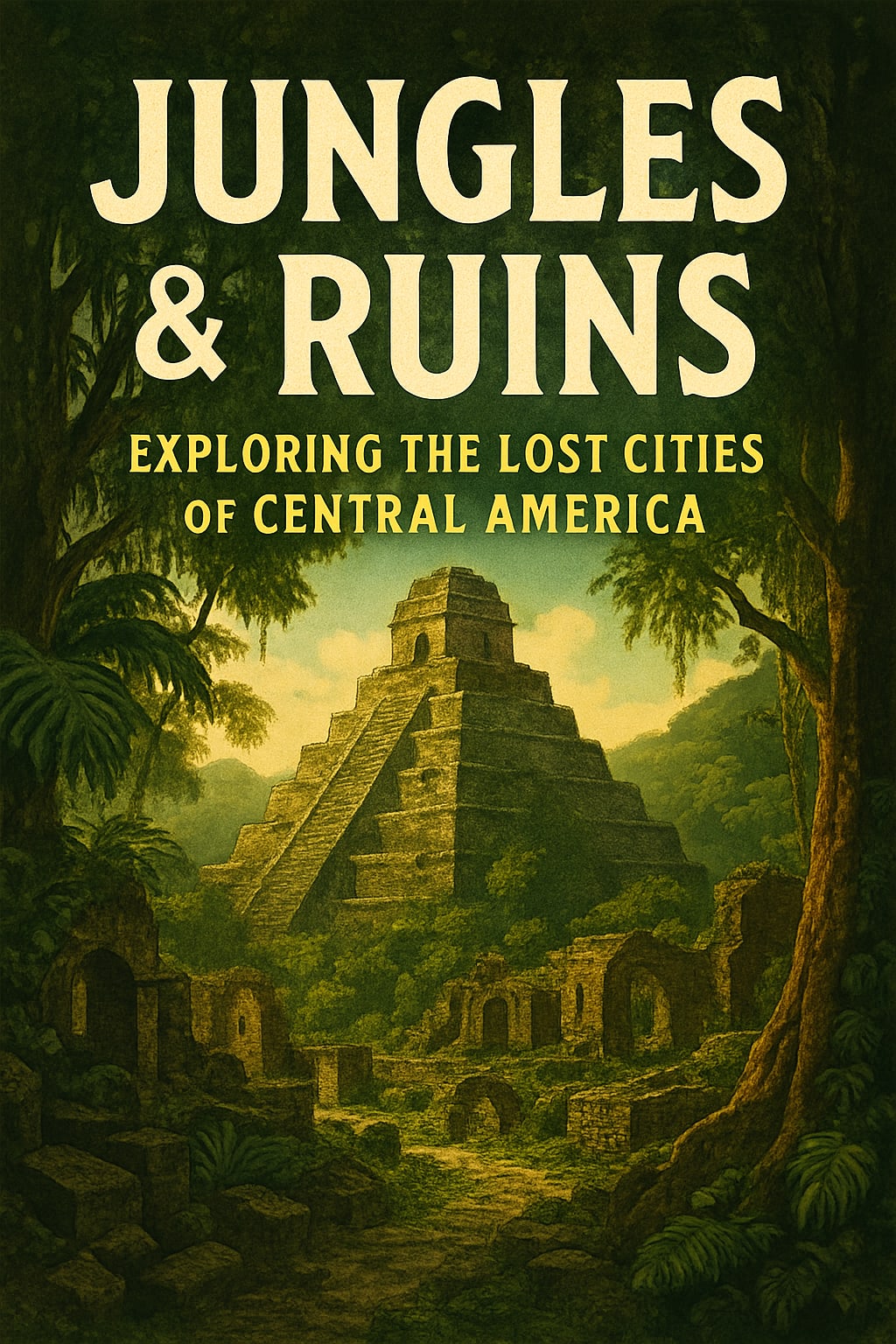
Jungles & Ruins: Exploring the Lost Cities of Central America
Unearthing Ancient Civilizations Hidden in the Heart of the Rainforest
Central America is a land of vibrant biodiversity, dense jungles, and rich cultural heritage. Beneath the thick canopy of tropical forests lie the ruins of powerful ancient civilizations that once thrived in these lands—cities built of stone, temples dedicated to gods, and monuments that echo the ingenuity of human civilization. Exploring these sites is like stepping into a lost world, where nature and history coexist in a mysterious harmony.
The Mysterious Maya Civilization
Perhaps the most renowned of the ancient Central American civilizations, the Maya were master astronomers, architects, and mathematicians. At their peak between 250–900 CE, the Maya built vast city-states deep in the jungle, each with palaces, plazas, observatories, and pyramids.
Tikal (Guatemala)
One of the largest archaeological sites of the Maya civilization, Tikal sits within the lush Tikal National Park. This UNESCO World Heritage Site was once a mighty city-state with a population of over 100,000. Visitors today can climb Temple IV—one of the tallest pre-Columbian structures in the Americas—for panoramic views above the rainforest canopy. The sound of howler monkeys and the sight of toucans flying past ancient stone temples creates an experience that feels truly otherworldly.
Copán (Honduras)
Less famous but equally fascinating, Copán was a significant Maya center known for its intricate stelae and altars. These stone monuments are engraved with detailed hieroglyphs and carvings that tell the stories of kings, rituals, and battles. Copán’s artistry is often considered the most sophisticated of all Maya cities, and its sculpture and inscriptions provide scholars with valuable insight into Maya society.
Nature Reclaims the Past
One of the most striking features of these ancient ruins is how seamlessly they blend with the jungle that has reclaimed them over centuries. Trees grow from temple walls, roots crack through stone stairways, and vines hang like curtains over ceremonial altars. The jungle isn't just a backdrop—it is an active participant in the story of these ancient cities.
Sites like Yaxchilán in Mexico, which can only be reached by boat along the Usumacinta River, exemplify this sense of isolation and mystery. Overgrown by forest and virtually untouched for centuries, Yaxchilán offers an intimate experience with both history and nature. Explorers find themselves face-to-face with sculpted lintels, palace ruins, and eerie silence—broken only by the calls of tropical birds and the rustle of leaves.
El Mirador: The Cradle of the Maya
In the remote Petén region of northern Guatemala lies El Mirador, one of the oldest and largest known Maya cities. Still being excavated, El Mirador predates Tikal and many other better-known sites. It was a bustling urban center as early as 600 BCE. What sets El Mirador apart is the sheer scale of its architecture. The La Danta pyramid, standing 230 feet tall, rivals the Egyptian pyramids in volume.
Reaching El Mirador is an adventure in itself. The site is accessible only by a multi-day hike or helicopter, preserving its untouched beauty. Trekking through the jungle to arrive at this hidden city is like walking through history, immersed in the sights and sounds of the rainforest, with every step drawing closer to ancient greatness.
The Legacy of the Olmec and Others
While the Maya often take center stage, they were not the only advanced civilization in the region. The Olmec, who flourished from around 1500 BCE to 400 BCE, are often considered the "mother culture" of Mesoamerica. Their colossal head sculptures, carved from basalt, are found in places like La Venta and San Lorenzo in modern-day Mexico. These heads, some weighing over 20 tons, suggest a highly organized society with significant engineering skill.
Preservation and Challenges
These ancient cities are not just archaeological marvels—they're also delicate treasures. Many sites are threatened by illegal logging, looting, and the effects of climate change. Governments, local communities, and international organizations are working together to protect these ruins and preserve their stories for future generations.
One notable effort is the use of LiDAR technology (Light Detection and Ranging), which allows researchers to scan dense jungle areas from above, revealing previously unknown cities, roadways, and terraces hidden beneath the forest. This non-invasive technique has revolutionized our understanding of the Maya world, suggesting that their civilization was far more expansive and interconnected than once believed.
Modern-Day Connection and Cultural Continuity
Today, the descendants of these ancient peoples still inhabit Central America. In Guatemala, Honduras, Belize, and southern Mexico, modern Maya communities maintain traditional customs, language, and beliefs. Visiting these sites is not just about viewing ancient stones—it is a chance to connect with a living culture that continues to thrive.
Conclusion:
Exploring the lost cities of Central America is more than a trip through history—it’s an expedition into the heart of a civilization that shaped the world in remarkable ways. The lush jungles conceal secrets waiting to be uncovered, and every stone, carving, and pathway tells a part of the story.
About the Creator
Nizam Archaeologist
I’m deeply fascinated by archaeology and the mysteries of ancient civilizations.My goal is to bring the past to life, spark curiosity, and share the wisdom of cultures that have stood the test of time.
Reader insights
Nice work
Very well written. Keep up the good work!
Top insights
Excellent storytelling
Original narrative & well developed characters
Heartfelt and relatable
The story invoked strong personal emotions
Keep reading
More stories from Nizam Archaeologist and writers in History and other communities.
The Indus Valley Civilization
The Indus Valley Civilization An Ancient Urban Marvel of South Asia The Indus Valley Civilization (IVC), also known as the Harappan Civilization, stands as one of the earliest and most remarkable civilizations in human history. Flourishing around 2600 BCE to 1900 BCE, it thrived along the fertile floodplains of the Indus River in what is now modern-day Pakistan and northwest India. The civilization’s achievements in urban planning, architecture, agriculture, and trade are not only astounding for their time but also evidence of a highly organized and sophisticated society.
By Nizam Archaeologist6 months ago in History
Mestre Best: The Warrior Who Taught Restraint
In the mountain city of Valenor, there was a name spoken softly, almost with reverence—Mestre Best. No statues were built in his honor, no songs officially recorded his deeds, yet every fighter, scholar, and traveler knew the legend. Some said he was the greatest master of combat the world had ever seen. Others claimed he was a philosopher disguised as a warrior. The truth was more complex than either tale.
By The best writer 18 minutes ago in History
Frozen Ground
Silence meant the guns were cooling. It meant men were waiting. It meant something was about to break. We were dug in along a frozen stretch of road near the Imjin River, the kind of place that didn’t look important until history decided otherwise. The cold wasn’t just uncomfortable—it was personal. It crept into your boots, your bones, your thoughts. At night, I dreamed of heat: radiators, kitchens, the smell of coffee. I woke up with frost on my helmet.
By Gaofeng Wang7 days ago in History
Miss Persephone's Manual to a Seemingly Ordinary Life
Miss Persephone was found at the dining table, her blue eyes swollen, her tears arriving and retreating like the tides of the ocean. Earlier that day, her family had visited her in the retirement home where she had lived for eight years. It was her eightieth birthday.
By Imola Tóth3 days ago in Fiction


Comments (1)
This article is very helpful in my knowledge sir G