
The Teacher of Andalusia: How Imam Al-Zahrawi Invented Modern Surgery and Uplifted the Muslim World
He wasn’t a warrior with a sword — but with a scalpel, a pen, and compassion, he changed medicine forever

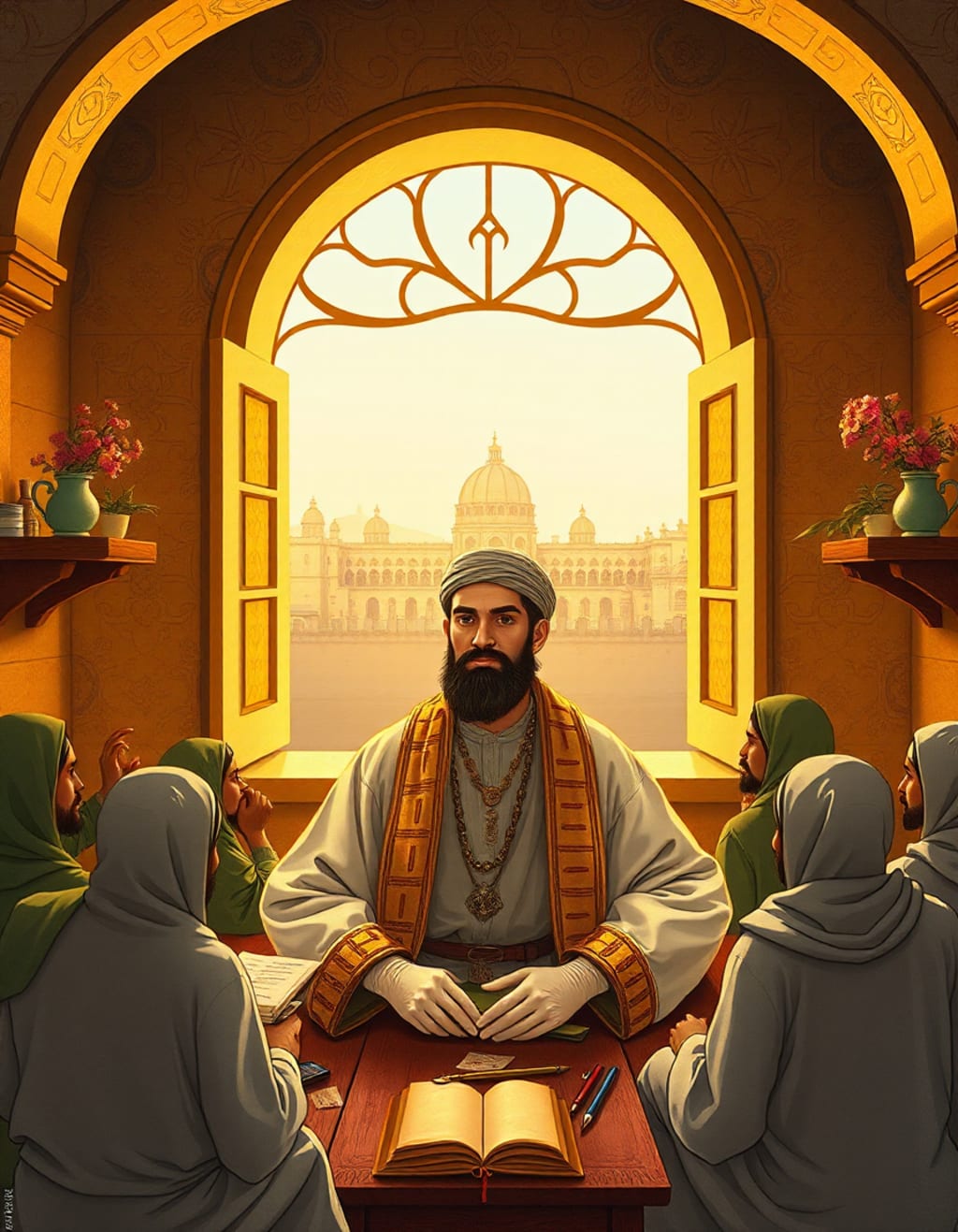
While swords conquered lands and kings built empires, there lived a Muslim man who conquered something far more powerful — ignorance.
He fought no wars.
He spilled no blood.
Yet, he became a savior for millions who would never even know his name.
That man was Abu al-Qasim Al-Zahrawi, the father of modern surgery.
I. The Light of Cordoba
In the golden age of Al-Andalus (Muslim Spain), while Europe was trapped in the Dark Ages, Cordoba shimmered as a beacon of knowledge.
With libraries holding over 400,000 books, and streets lit with oil lamps, Cordoba was the jewel of the Muslim world. And in this city, around 936 CE, was born a boy named Abu al-Qasim Khalaf ibn al-Abbas al-Zahrawi.
He would go on to change the world of medicine — one scalpel at a time.
II. A Doctor With a Mission
Al-Zahrawi wasn’t just a physician.
He was a servant of the sick, a teacher of the healers, and a pioneer of science guided by Islamic ethics.
He worked for decades in the royal court of the Umayyad caliphate in Cordoba, treating royals and peasants alike. But his true gift wasn’t just healing — it was teaching.
III. Al-Tasrif: A Book That Saved Millions
Al-Zahrawi's masterpiece was a medical encyclopedia called "Al-Tasrif li-man ‘ajaza ‘an al-ta’lif" (The Method of Medicine for Those Who Cannot Write).
It had 30 volumes, covering everything from dentistry and childbirth to psychology and surgery.
But it was the last volume, on surgery, that made him immortal.
He designed over 200 surgical instruments, many of which are still used in hospitals today — scissors, forceps, scalpels, and bone saws.
And here’s the miracle:
He didn’t keep his knowledge secret.
He shared everything freely — so that no patient would suffer because of a doctor’s ignorance.
IV. Inventor of Modern Surgery
Here are just a few things Al-Zahrawi gave to the world:
He performed the first thyroid surgery.
He described how to safely perform Cesarean sections.
He invented dissolvable catgut for internal stitches.
He wrote about cancer, migraines, and hemophilia centuries before Europe caught up.
He created surgical instruments specifically for women — respecting modesty while ensuring safety.
And all this, 1000 years ago — at a time when European doctors still relied on superstition and bloodletting.
V. Faith and Medicine
What made Al-Zahrawi different wasn’t just his genius — it was his faith.
He believed that serving the sick was an act of worship.
That a doctor should treat the poor with more care than the rich.
That knowledge without humility was dangerous.
In his writings, he constantly reminds his students:
“Practice medicine with kindness, mercy, and honesty. God will hold you accountable.”
This was not just science.
It was spiritual responsibility.
VI. Legacy That Crossed Oceans
For 500 years, Al-Tasrif was taught in the best universities in Europe.
Latin translations of Al-Zahrawi’s work became textbooks in Paris, Oxford, and Italy.
He was called Abulcasis in Europe and was respected by Christian and Jewish doctors alike.
Even Leonardo da Vinci referred to Al-Zahrawi’s surgical diagrams.
From Muslim Spain to the hospitals of Renaissance Italy — his knowledge saved lives across faiths and centuries.
VII. The Quiet Hero
Al-Zahrawi never led armies.
He never ruled a kingdom.
He never wore a crown.
Yet his tools, teachings, and taqwa built an empire of healing that continues to this day.
He showed the world that the pen is mightier than the sword — and that sometimes, the most powerful warriors wear white robes, not armor.
Final Reflection
In every hospital...
In every operating room...
In every stitched wound and healed bone...
The spirit of Imam Al-Zahrawi lives on.
He is proof that Islam was not just a religion of prayer, but a civilization of progress, mercy, and brilliance.
When the world turned its back on knowledge, he lit a candle.
And that candle became the light by which surgeons still see.
About the Creator
rayyan
🌟 Love stories that stir the soul? ✨
Subscribe now for exclusive tales, early access, and hidden gems delivered straight to your inbox! 💌
Join the journey—one click, endless imagination. 🚀📚 #SubscribeNow
When the Pyramids Learned to Breathe
The desert was silent in the way only ancient places can be—not empty, but listening. At dawn, the first light touched the limestone faces of the pyramids, and the shadows they cast stretched long and deliberate, as if time itself were waking slowly. To the west, beyond the city’s dust and noise, the old giants stood where they always had, unmoved by centuries, untouched by doubt.
By LUNA EDITHabout 4 hours ago in History
World War I
The morning fog lay thick over the trenches of northern France, clinging to the earth as if it too feared what was about to happen. Private Thomas Hale pulled his coat tighter around himself, though it did little to stop the cold from seeping into his bones. He had been in the trenches for six months, yet the damp smell of mud, smoke, and fear still felt unfamiliar, like a nightmare he could not wake from.
By Maavia tahir7 days ago in History


Comments (1)
Al-Zahrawi's story is truly inspiring. His work in Cordoba during the Dark Ages shows the power of knowledge. I'm amazed he designed so many useful surgical instruments. How do you think his ideas spread so effectively back then? His dedication to sharing knowledge is remarkable. It's great that his work still impacts medicine today. Do you think we can learn from his approach to teaching in modern healthcare?