
The Defender of Faith: How Salahuddin Ayyubi United Muslims and Defeated a Crusade
In a divided world, he rose as a symbol of unity, justice, and mercy — the warrior who reclaimed Jerusalem without spilling innocent blood

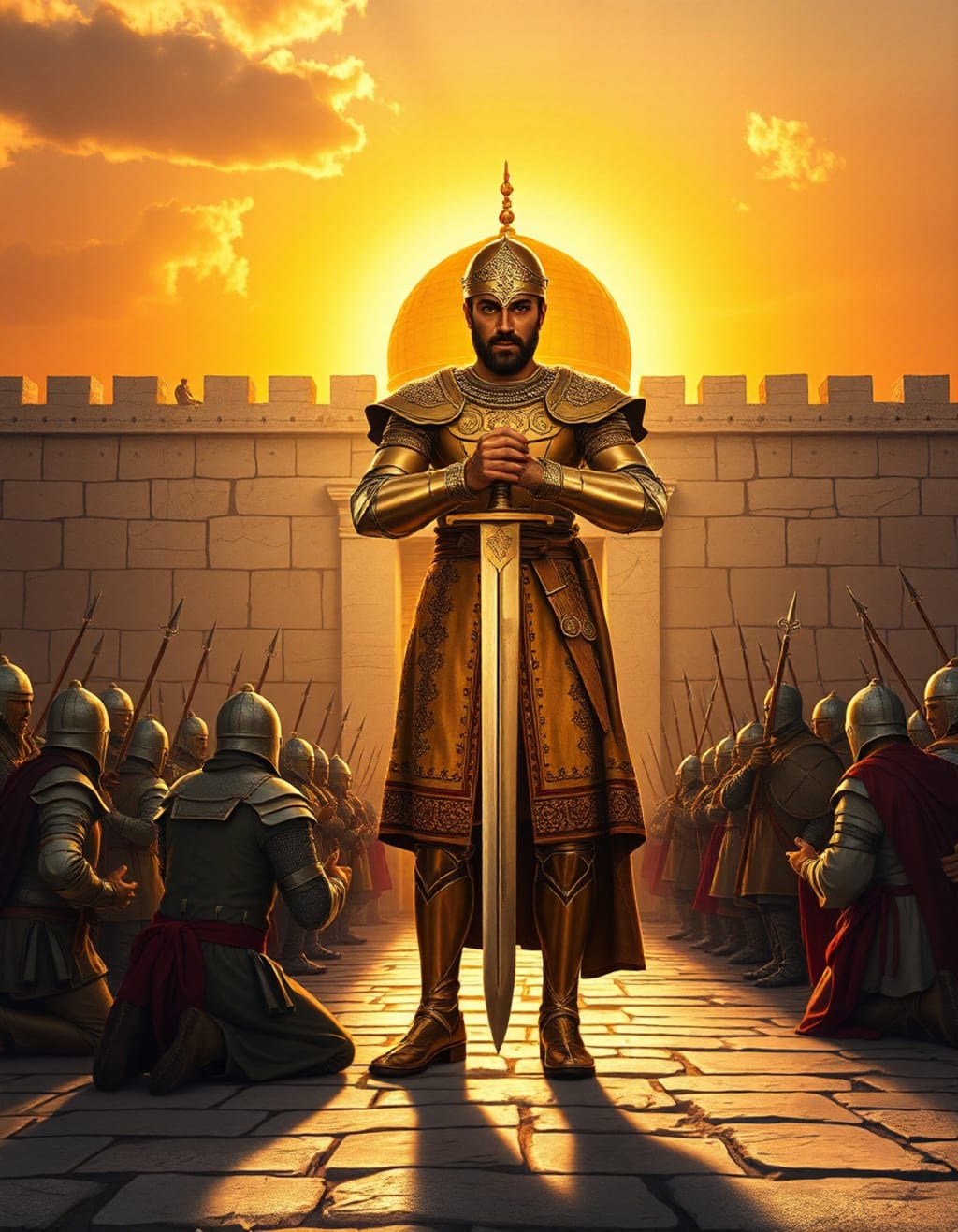
In an age torn by greed, war, and broken oaths, one man dared to dream of something greater — a world where justice stood above conquest, where faith was not used to kill, but to heal. His name was Salahuddin Ayyubi, known to the West as Saladin, and to Muslims as a savior.
I. Born of Humility, Raised by Struggle
Born in 1137 in Tikrit (modern-day Iraq), Salahuddin's childhood was spent in a world of conflict. The Muslim world was fragmented — empires at war, dynasties drunk on power, while the Christian Crusaders ravaged the Holy Land.
He grew not with luxury, but with taqwa — the fear and love of God. While trained as a soldier, his real strength lay in his character. He was gentle, soft-spoken, and loved poetry and the Quran more than bloodshed.
No one could predict that this quiet boy would one day reclaim Jerusalem, a city that had cried for peace for nearly a century.
II. Uniting a Shattered Ummah
The first miracle of Salahuddin’s rise wasn’t his military genius — it was his ability to unite Muslims.
Shia and Sunni. Arabs and Kurds. Syrians and Egyptians.
Where others saw division, he saw strength.
He became Vizier of Egypt under the Fatimids but quietly restored Sunni practice without bloodshed. When the dynasty fell, he ruled not as a tyrant, but as a guardian of the Ummah.
He built hospitals, schools, and mosques. He banned corruption, lowered taxes, and uplifted the poor — believing that a strong nation was one built on justice and unity, not just swords.
III. The Fire of the Crusades
But peace was not to last.
The Christian Crusaders, emboldened and violent, continued to occupy lands from Palestine to Syria. They desecrated holy sites, enslaved Muslims, and massacred innocents.
Salahuddin prepared for war — but not like the Crusaders.
He sent letters of warning, offered peace treaties, and waited patiently for the right moment. His war was not one of revenge, but of duty — to reclaim the sanctity of Al-Quds (Jerusalem).
IV. The Battle That Changed Everything: Hattin
In 1187, Salahuddin launched his campaign.
The Crusader king, Guy de Lusignan, and his army were lured to the Horns of Hattin, a scorching valley with no water. Trapped by heat and hunger, the Crusaders collapsed under Salahuddin’s disciplined forces.
It was not just a victory.
It was the turning point.
Jerusalem was now exposed — and the Muslims knew the dream of reclaiming Al-Quds was near.
V. Jerusalem, Without Blood
Unlike the Crusaders, who had painted the streets of Jerusalem with Muslim and Jewish blood in 1099, Salahuddin entered the Holy City peacefully.
On 2nd October 1187, the keys of Jerusalem were handed to him. There was no mass killing. No revenge.
He allowed Christian families to leave safely, spared churches, and even ensured Jewish people, long banished by the Crusaders, were allowed to return.
Even Western historians, like Sir Walter Scott, wrote:
“The character of Saladin approached nearer to perfection than any other celebrated warrior of his age.”
VI. A Warrior of Mercy
While Crusaders wore crosses, Salahuddin wore mercy.
He would send ice to enemy soldiers wounded in desert heat. He would return children lost in war to their mothers. Even when Richard the Lionheart challenged him in later battles, Salahuddin sent him horses when he lost his own.
He once said:
“Victory is changing the hearts of your enemies by gentleness and kindness.”
To Muslims, Salahuddin wasn’t just a liberator.
He was a living Sunnah — practicing the Prophet Muhammad’s ﷺ mercy, even on the battlefield.
VII. Death of a King, Legacy of a Saint
In 1193, Salahuddin died at the age of 55.
Despite ruling an empire from Egypt to Syria, he died with not enough money to even pay for his own funeral. He had given it all away in charity.
His tomb in Damascus carries a message that still moves hearts:
“Here lies Salahuddin, who united the Muslims and liberated Jerusalem.”
Final Reflection
In today’s world — divided by flags, sects, and politics — the story of Salahuddin Ayyubi is a reminder.
That unity is not a dream.
That power without mercy is empty.
That a single man, driven by faith, can change the course of history.
Salahuddin did not conquer with hatred.
He conquered with character.
And that, more than any sword, is what made him The Defender of Faith.
About the Creator
rayyan
🌟 Love stories that stir the soul? ✨
Subscribe now for exclusive tales, early access, and hidden gems delivered straight to your inbox! 💌
Join the journey—one click, endless imagination. 🚀📚 #SubscribeNow
The Accidents That Quietly Improved Aviation Forever
I used to think aviation history was a story of bold successes, record-breaking flights, sleek aircraft, and triumphant landings. But the more I read, the more I realized something uncomfortable: much of modern aviation was shaped not by success, but by accidents. The safety and reliability we now take for granted were quietly built from moments when things went terribly wrong.
By Beckett Dowhan4 days ago in History
"Game of Thrones: A Tale of Power, Betrayal, and Destiny"
In the vast and divided land of Westeros, power was everything. Noble houses ruled their regions, bound together by fragile alliances, old grudges, and a constant hunger for the Iron Throne—the seat of supreme authority. Though summer had lasted for many peaceful years, whispers of change moved with the cold wind. Winter, long feared, was coming.
By The best writer 6 days ago in History
Rachel Reviews: The Spiral Archive by Pieter Hendrik
It's difficult for me to know where to start with a review of this book as it was, for me, an entirely unique experience and one that I'll probably never have again. I don't want that to be interpreted as unenjoyable but it has left me scratching my head a little and ruminating on its content, its themes and its characters.
By Rachel Deeming2 days ago in BookClub


Comments (1)
Salahuddin's story is truly inspiring. It's amazing how he rose above the chaos of his time. His focus on unity among Muslims, despite their differences, is a great lesson. I wonder how he managed to convince people from different backgrounds to come together. And his approach to war, trying for peace first, shows a lot of wisdom. It makes me think about how we can apply these principles in our own, more modern, world.