
The Soul of the White House Foundation
A Poetic Journey Through Power, Legacy, and the Echoes Within America’s Most Iconic Home

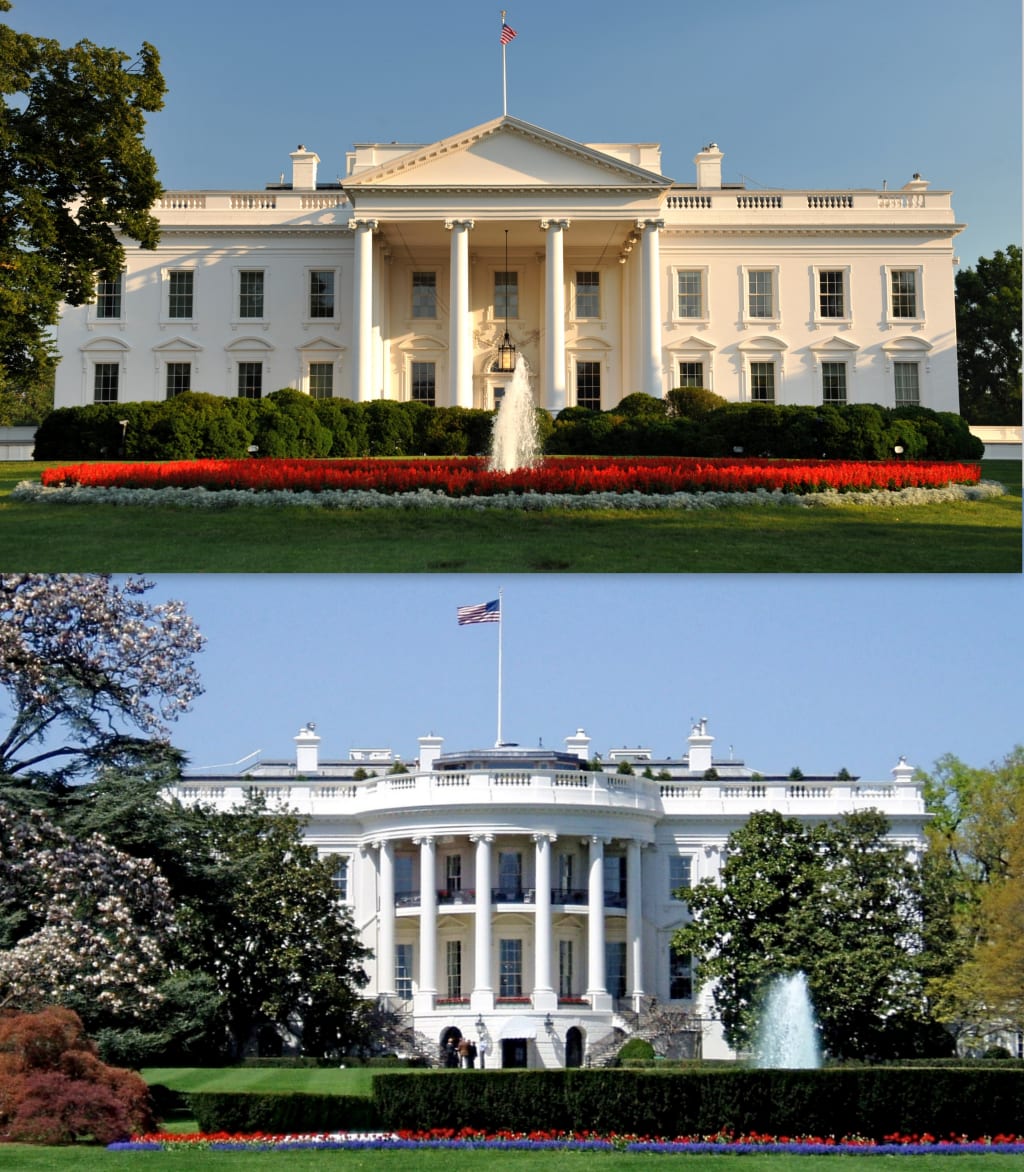
The White House is more than stone and story, it is a living breath of the Republic. Behind its neoclassical gaze and beneath the arching porticos lies a foundation not only of mortar and marble, but of ideas, unyielding, storm-tested, and ever-renewing.
Its roots dig deep into the soil of 1792, when George Washington, the first sentinel of the nation's promise, selected the site for a new house, one not just to dwell in, but to represent. Designed by James Hoban, an Irish-born architect whose vision blended ancient grace with democratic dignity, the White House rose from a plan that mirrored a new experiment: a government of the people.
Yet from the moment its cornerstone was laid, October 13, 1792, the house became more than architecture. It became identity. A place where the weight of decisions would be matched only by the silence of midnight pacing.
A Parade of Presidents, A Mirror of Time
Though George Washington oversaw its birth, he would never sleep beneath its beams. That honor fell to John Adams, the second President, who moved in during the final year of his term in 1800. Since then, more than forty leaders have passed through its halls: Jefferson’s ink-stained musings beneath candlelight; Lincoln, sleepless and hollow-eyed through the Civil War; Roosevelt, both Teddy and Franklin, expanding its reach and significance.
Each presidency marked it in quiet ways, the scent of Truman’s bourbon, the jazz that floated behind Kennedy’s charm, Obama’s towering bookshelves, Biden’s call for healing.
More than names etched into history books, these men, and the women, too, who stood beside or guided them, left traces like fingerprints on glass. Their hopes and failures, convictions and contradictions, still echo within the walls.
Why the White House? Why This Roof?
To govern a nation from the people's house is to be reminded that your authority is not inherited, but borrowed.
The White House sits not atop a hill but amid the people, a deliberate break from monarchies where kings looked down upon their subjects. Here, presidents walk to their podiums not crowned, but chosen, and their home reflects that humility.
Its hallways humble and ornate, its rooms both personal and public, the White House is paradox made manifest: a sanctuary for power, and a stage for accountability.
Within its walls, presidents find themselves at once elevated and enclosed. The weight of the office presses in, the Roosevelt Room whispering strategy, the Lincoln Bedroom breathing legacy, the Situation Room pulsing with urgency.
To be under this roof is not a reward, it is a calling.
The Foundation Beyond Stone: Values Set in Brick
And while we speak of the White House Foundation, let us not limit it to physical structure. The true foundation is belief: in peaceful transfer of power, in dignity through discourse, in the rhythm of democracy even when it falters.
No room exists here without metaphor.
The East Room, once filled with Lincoln’s grief, hosted dances during happier times. The West Wing, a symbol of grit and grind. The Rose Garden, blooms of diplomacy and politics alike
Each change, each restoration, each scar from fire or war, has made the White House more itself.
A Reflection on National Symbolism
In a world quick to doubt and quicker to divide, the White House endures not because it is invulnerable, but because it evolves.
Yes, it has been the stage of contradictions, some names who ruled from it have upheld injustice as well as liberty. Some foundations have cracked under strain. But from Truman’s integrated staff to LBJ signing the Civil Rights Act, from Roosevelt’s fireside chats to Carter’s solar panels, it has tried to grow with the people it houses.
And now, as we re-evaluate monuments and memory, perhaps we should also reflect on what it means to keep such a home, not for a president, but for the republic.
In the end, we must ask, what does it mean that every president since John Adams has walked under the same ceiling, stared from the same windows, and carried the same burden?
And if walls could speak, what would they say to us, the citizens who built it, not with stone, but with trust? Let me know in a comment section and don't forget to subscribe and like untill next time.
About the Creator
Keep reading
More stories from taylor lindani and writers in History and other communities.
The Truth About the Titanic Has Been Revealed
Scientists finally reveal the truth about the Titanic on April 14th 1912 at 11:40 p.m. RMS Titanic had a terrible accident that led to its ultimate demise three hours later by 2:20 a.m. in the early morning of April 15th the biggest ship of its time had completely disappeared under the ice-cold surface of the Atlantic Ocean the Titanic took more than 1500 lives with it as it sank to its watery grave that's more than two-thirds of all the people on board the cause of this horrible disaster leading to so many deaths was an iceberg the ship crashed into or so we've always been told but scientists most recent findings have debunked this theory in this article we'll tell you the whole truth that has been buried for over 100 years at 882 feet 9 inches long 92 feet wide 175 feet tall and with a usable volume of 46,000 328 tons. The Titanic seemed indestructible people could walk for miles along her myriad passages and decks even the ship's officers needed over two weeks to remember their way around this huge construction the Titanic had four massive smokestacks each of them weighed 60 tons and they extended 81.5 feet above the deck such an impressive height was necessary to avoid covering the passengers in 100 tons of soot blown off daily. The smokestacks were placed at a 30-degree angle to look even more astonishing and imposing no less inspiring was the cost of the ship its construction demanded 7.5 million dollars if we take into account modern exchange rates and inflation in 2016 they would be paying 166 million dollars surprisingly it would turn out cheaper than the production of the world-famous movie Titanic in 1997 cost 200 million dollars Harland and Wolff shipyard took on 3,000 men to build the ship even with a huge labor force working six days a week from 6:00 in the morning it still took 26 months to complete the monumental task it was a difficult and dangerous work imagine doing something at the height of a 20-story building with no safety ropes but these people needed money to support their families. The builders got 2 pounds a week which doesn't sound like much but it was a competitive wage back then unfortunately 8 people died during the building process and 246 were injured so it's really hard to fathom that such a complicated mechanism with all the work effort and money spent on its creation could just sank because of one iceberg well new findings give us reason to believe that the original cause of the catastrophe was not ice but fire journalist Sonam Maloney has been studying the fate of the Titanic for more than 30 years. It was he who discovered a huge 30-foot long black spot on the hull of the ship he noticed it after examining a photo taken before Titanic's departure the journalist got hold of an album of previously unpublished photographs that showed the construction of the ship and the preparations for her first and last journey the fire had to have been burning for three weeks at a very high temperature before somebody noticed it metallurgy experts are sure that such conditions could have easily weakened the metal reducing its strength by as much as 75 percent that's why the iceberg didn't have any problems tearing a hole in the side of the ship if not for the fire it would have been impossible but the fact that the iceberg hit exactly the spot with the compromised metal is one of the incredible links in the chain of the Titanic's tragic what-ifs the management of the project knew about the fire and the fact that the ship shouldn't have set off on that fateful voyage but it would have meant bankruptcy for the ship's owners the thing is that at the time miners all over the country were on strike. There was no coal to sustain the Titanic but the tickets had already been sold out and other ships had been cancelled since everybody wanted to be the first to sail on the largest ship known to mankind that's why the owners of the Titanic bought all the coal they could find and even the call from other ships canceling the trip seemed out of the question so to conceal the truth. The ship was turned in such a way that the marks from the fire faced away from the docks toward the sea therefore the passengers couldn't see them thus the journey began the interior of the Titanic was based on that at the Ritz Hotel in London the grand staircase went down seven out of the ten decks on the ship it was decorated with paintings bronze cherubs and oak paneling the facilities for the first-class passengers included a swimming pool with heated water a Turkish bath a gym a squash court and a beauty salon ladies could even order a stylist to help them get ready for dinner. They had an onboard newspaper called the Atlantic daily bulletin there was even a special place for first-class passengers dogs the pets were fed taken for walks and could even be trained during the voyage the meals for the first class included 13 courses each with its own wine they were a big occasion lasting about five hours there were one and a half thousand bottles of wine 20,000 bottles of beer and 8,000 cigars yet there were no binoculars why is this fact worth mentioning because having binoculars could have saved the Titanic here is another tragic coincidence in the chain of unfortunate events. There were no sonar systems in those times so to detect threats ahead of a liner special people kept watch using binoculars but the binoculars on the Titanic had been locked away in a special compartment the only person with the key to the locker second officer David Blair was replaced at the last minute he was in such a hurry to leave the ship that he forgot to hand the key over to his replacement this fateful forgetfulness was discovered only three days later when the ship was already at sea if the crew had gotten the binoculars they would have noticed the iceberg earlier and would have just enough time to avoid the crash perhaps the crash could also been avoided if the ship hadn't been breaking the speed limit. They were falling behind schedule and this was unacceptable as it could ruin the Titanic's reputation that's why the ship was moving at a speed much higher than the was designed for another criminal negligence was connected with the lifeboats in order to contain all the people on board the Titanic needed about sixty lifeboats the chief designer Alexander Carlyle planned to equip the ship with only 48 boats but eventually the number was reduced even more to 20 this was done purely for cosmetic reasons since the deck looked too cluttered with 48 these 20 boats could seat only 1/3 of all the people on the ship surprisingly such a hugely insufficient amount of lifeboats was technically legal according to the laws of that time the number of boats depended not on the number of passengers but on the tonnage of a ship what's more at the time of the Titanic's construction lifeboat drills were standard practice on ocean liners this way the crew could prepare passengers for an emergency should it occur but this type of drill never took place on the Titanic Captain Edward John Smith canceled the drill scheduled on the morning of the day. The Titanic sank nobody knows the reasons for his decision especially considering the fact that other ships had been passing on warnings about ice in the water in that vicinity perhaps this is why it took the crew over a half an hour to launch the lifeboats instead of the standard 10 minutes some people also blame captain Smith for allowing the first batch of lifeboats to leave half empty the first boat with 65 seats contained just 27 passengers why weren't they packed full in the beginning people were reluctant to leave the ship and didn't realize that they were in grave danger. In 2012 researchers found out that Captain Smith had failed his first exam in navigation eventually he passed but who knows maybe this too played its own role in the disaster as the Titanic was sinking the crew sent several distress signals however a ship sailing near by the California ignored the emergency flare shot in the sky the captain of the Californian later lost his job after this fact came out but modern researchers have managed to prove his innocence well better late than never the reason nobody noticed the signals from the Titanic could be due to the phenomenon of light refraction when layers of cold air are positioned below layers of warmer air it causes thermal inversion thermal inversion in turn leads to the light refracting abnormally in short all this creates mirages and such mirages had been recorded by several other ships sailing in that area historian Tim Moulton is also convinced that light refraction that night could be the reason why the lookouts missed the iceberg completely criminal negligence tragic and unfortunate chain of coincidences fire or ice whatever it was it took the lives of hundreds of people and still keeps the minds of scientists busy to this day what theory about the catastrophe do you believe share your opinion in the comments section.
By taylor lindani9 months ago in History
Father of Millions, Yet Not Always a Father to His Own Sons
Few figures in world history have left as profound a mark as Genghis Khan. Known for his extraordinary military genius and ruthless campaigns, he forged the largest contiguous empire the world had ever seen—the Mongol Empire. Yet beyond the battlefield and the politics of conquest lies a fascinating paradox: while Genghis Khan is believed to be the ancestor of millions of people today, his relationship with his own sons was complicated, strained, and sometimes filled with uncertainty.
By Irshad Abbasi 3 days ago in History
Why Didn't Anyone Tell Us
Men, move along. This is not for you. This is for the women. I was forty-five when I began menopause. It is pretty young for that to be going on in a woman’s life, but I had undiagnosed PCOS, my entire life. Thank you to all the gynecologists I had seen my entire life. That in itself should encourage women to keep seeking second opinions, especially when you are not getting correct answers or any at all.
By Alexandra Grant5 days ago in Humans


Comments
There are no comments for this story
Be the first to respond and start the conversation.