
The Solar Boat of Khufu: A Masterpiece of Ancient Egyptian Craftsmanship
Ancient Egypt History

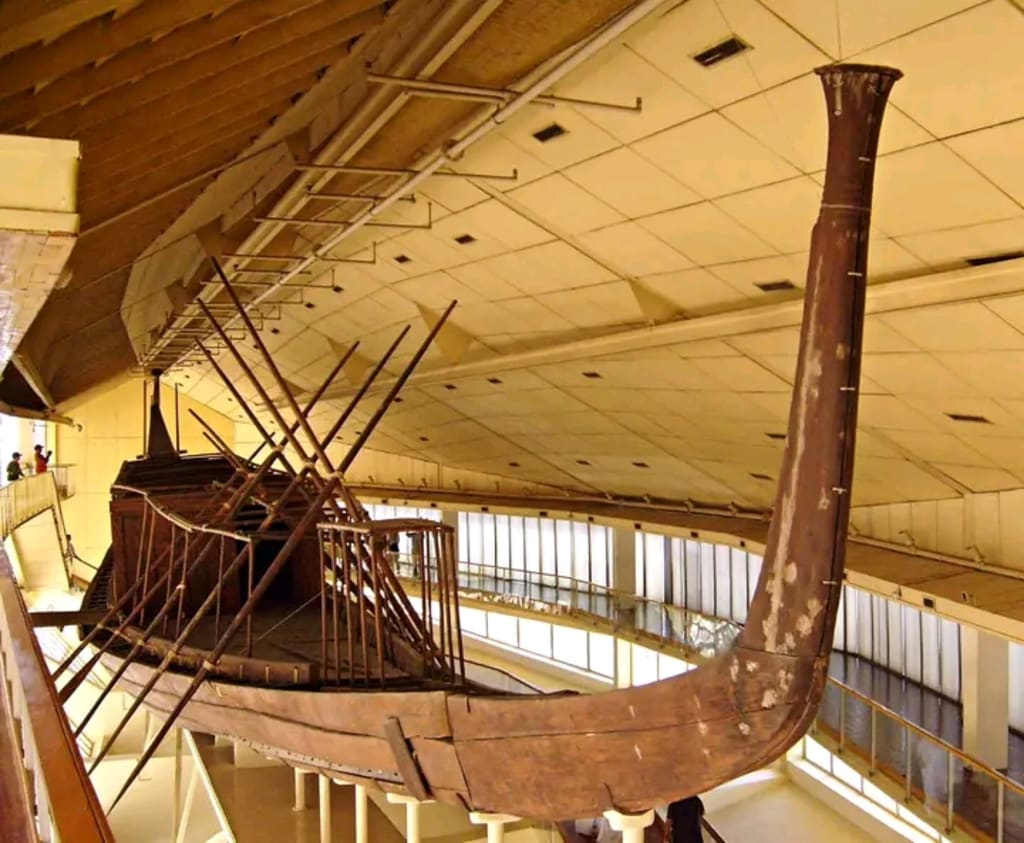
In 1954, a team of archaeologists working near the base of the Great Pyramid of Giza uncovered a discovery of monumental significance: a 4,600-year-old vessel hidden in a sealed pit beneath massive limestone blocks. Known today as the Solar Boat of Khufu, this artifact not only reflects the advanced craftsmanship of ancient Egypt but also offers a fascinating glimpse into the spiritual and practical life of the era.
Reconstructing the boat took 13 years and revealed a masterpiece of ancient engineering and symbolism. Crafted from Lebanese cedar and held together by an innovative rope-lashing technique, the solar boat stands as one of the most extraordinary relics of Egypt's Old Kingdom, traditionally associated with transporting Pharaoh Khufu's soul to the afterlife.
Discovery and Excavation
The solar boat was unearthed at the southern edge of the Great Pyramid of Giza, which was built as a tomb for Pharaoh Khufu, the second ruler of the Fourth Dynasty (circa 2589–2566 BCE). During routine excavation work, archaeologists stumbled upon two sealed pits concealed beneath massive stone blocks. Breaking into one of the pits, they discovered over 1,200 wooden fragments carefully disassembled and arranged.
The significance of this find was immediately apparent. These fragments, once reconstructed, would reveal a vessel unlike any other—a ceremonial boat built to serve the pharaoh in his journey to the afterlife.
Reconstruction of the Boat
The task of reconstructing the solar boat fell to Ahmed Youssef Moustafa, a skilled Egyptian restorer. The process was meticulous, requiring the careful study of ancient techniques and years of painstaking effort. With over 1,200 individual pieces of wood to examine and assemble, the work took 13 years to complete.
The reconstructed boat measures 44 meters (144 feet) in length and 6 meters (20 feet) in width, making it one of the largest and most elaborate vessels from the ancient world. Crafted primarily from Lebanese cedar, a prized material in ancient Egypt, the boat showcases extraordinary craftsmanship.
One of the most remarkable features of the solar boat is its construction method. Unlike modern vessels, the boat was built without nails. Instead, the planks of wood were meticulously shaped and then lashed together with ropes made from halfa grass. This technique ensured flexibility and durability, allowing the boat to withstand the stresses of water travel.
Purpose and Symbolism
The precise purpose of the solar boat remains a topic of scholarly debate, but its symbolic significance is universally acknowledged. Ancient Egyptians believed that the sun god Ra traveled across the sky in a solar boat during the day and through the underworld at night. The solar boat of Khufu is thought to have been a vessel designed for a similar journey, carrying the pharaoh's soul into the afterlife to join the gods.
This interpretation aligns with the ancient Egyptian belief in the afterlife as a continuation of life on earth, where the pharaoh would need provisions, companions, and transportation to fulfill his divine duties. The solar boat’s placement near the Great Pyramid—a monumental structure symbolizing the pharaoh's ascent to the heavens—further supports this theory.
Alternatively, some scholars propose that the boat may have served as a funerary barge, used to transport Khufu’s body across the Nile to his final resting place at Giza. Others suggest it could have been used during life for religious or ceremonial purposes.
Craftsmanship and Innovation
The solar boat exemplifies the advanced shipbuilding techniques of ancient Egypt. The use of rope-lashing to bind the planks together reflects a deep understanding of engineering principles. This method, though labor-intensive, allowed the boat to remain watertight and flexible, essential for navigating the Nile’s unpredictable waters.
The choice of Lebanese cedar for the boat’s construction highlights the extensive trade networks of ancient Egypt. Cedar was imported from the Levant, a region that maintained strong cultural and economic ties with Egypt. Its durability and resistance to decay made it ideal for constructing a vessel intended to endure eternity.
The boat also features a canopy to provide shade, a mast for a sail, and a cabin area, showcasing its dual functionality as both a practical and ceremonial craft. Its design is a testament to the ingenuity and artistry of the ancient Egyptians, who combined utility with profound symbolism.
Preservation and Display
Today, the solar boat is housed in the Grand Egyptian Museum, a state-of-the-art facility near the Giza Plateau. Its transfer to the museum from its original site in 2021 was a carefully orchestrated effort, reflecting the immense cultural and historical value of the artifact.
The solar boat remains one of the most well-preserved wooden vessels from antiquity. Its display allows visitors to appreciate its intricate construction and understand its role in ancient Egyptian culture.
Legacy of the Solar Boat
The Solar Boat of Khufu is more than an archaeological treasure—it is a bridge to a civilization that thrived over 4,000 years ago. Its discovery and reconstruction offer profound insights into the beliefs, technologies, and daily life of ancient Egypt.
The boat stands as a symbol of the ancient Egyptians’ quest for eternal life, their mastery of engineering, and their ability to transform practical objects into works of art imbued with spiritual meaning. As visitors gaze upon this magnificent relic, they are transported back in time to an era when the pharaohs ruled a land of unparalleled grandeur and innovation.
Through its enduring legacy, the Solar Boat of Khufu continues to inspire awe and admiration, reminding us of the timeless human drive to leave a mark upon the world.
About the Creator
Keep reading
More stories from Deji Akomolafe and writers in History and other communities.
Unearthing the Sedgeford Hoard: A Glimpse into Iron Age Britain
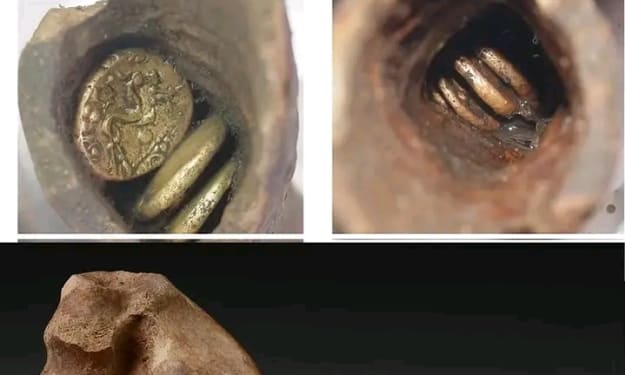
Archaeological excavations at Sedgeford, Norfolk, unearthed an extraordinary discovery: a hoard of gold coins from the 1st century BC. Known as the Sedgeford Hoard, this remarkable find consists of 39 Gallo-Belgic gold staters, coins linked to trade and cultural exchange between Britain and continental Europe during the Iron Age. Concealed within the distal end of a cow’s leg bone—a humerus—the hoard offers a fascinating glimpse into the ingenuity, economy, and social complexities of ancient Britain.
By Deji Akomolafeabout a year ago in History
Power's Sake
When it comes to gaining power, bad people use it to gain more They never gain power to do something with it, they gain power to have it, relish in it, double it down on itself so it grows exponentially and never goes anywhere. Even if you see the people in power commit an atrocity, that is never the true goal. It is a deplorable action for sure but the action itself usually doesn't matter it's the outcome.
By Donny Foley5 days ago in History
How Case Documents Are Maintained in Philadelphia County
Case documentation forms the backbone of judicial accountability in Philadelphia County. Every filing, order, transcript, and judgment plays a defined role in preserving procedural accuracy and historical reference. The methods used to preserve these materials reflect long-standing legal standards combined with structured administrative practice. This article explains how case documents are created, organized, stored, reviewed, and preserved within Philadelphia County, with a clear focus on factual processes rather than commentary or promotion.
By Owen Perryabout 3 hours ago in History



Comments
There are no comments for this story
Be the first to respond and start the conversation.