
Unearthing the Sedgeford Hoard: A Glimpse into Iron Age Britain
Ancient Discovery

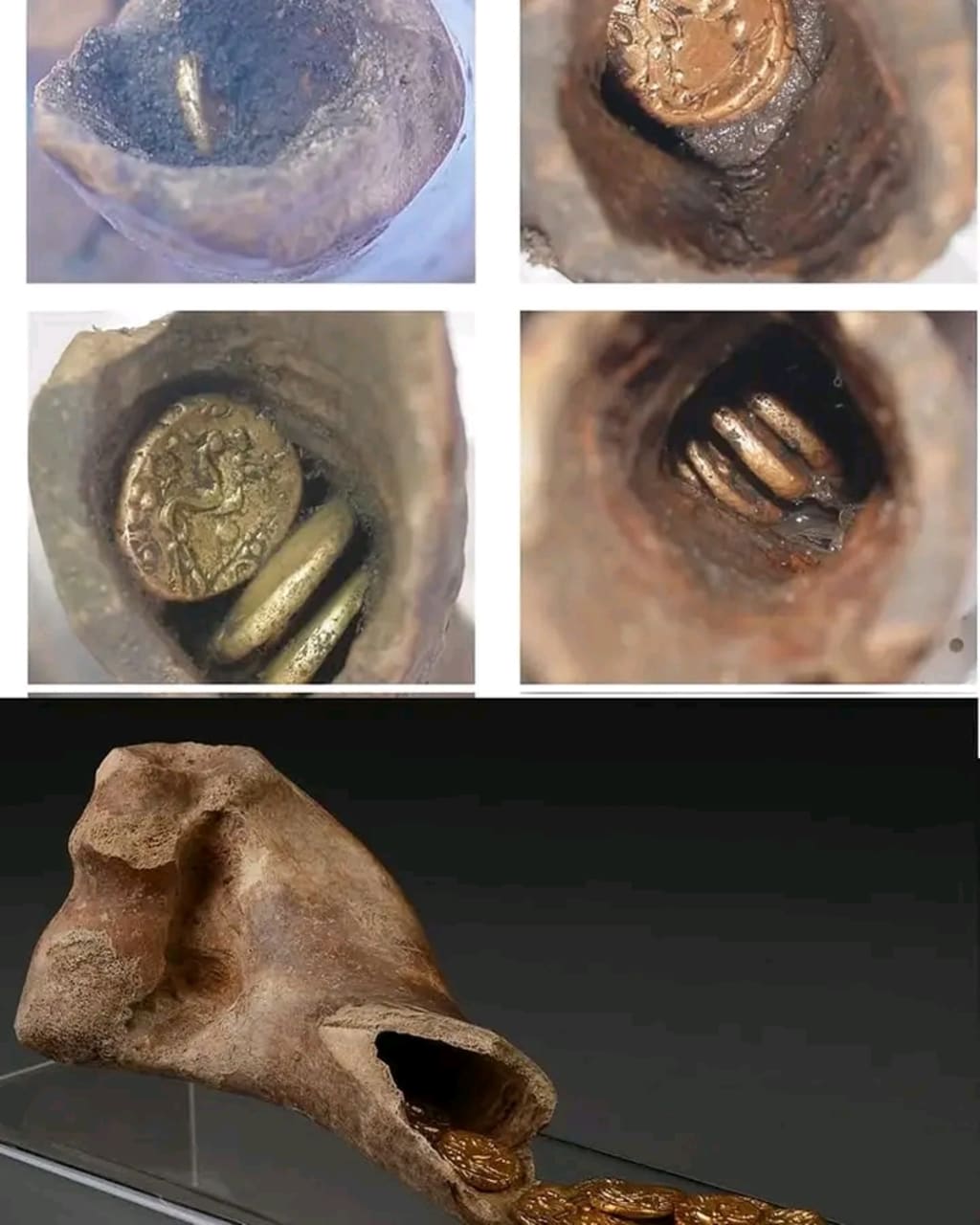
Archaeological excavations at Sedgeford, Norfolk, unearthed an extraordinary discovery: a hoard of gold coins from the 1st century BC. Known as the Sedgeford Hoard, this remarkable find consists of 39 Gallo-Belgic gold staters, coins linked to trade and cultural exchange between Britain and continental Europe during the Iron Age. Concealed within the distal end of a cow’s leg bone—a humerus—the hoard offers a fascinating glimpse into the ingenuity, economy, and social complexities of ancient Britain.
The Discovery
The Sedgeford Hoard was uncovered during routine archaeological excavations in Norfolk, a region rich in history and known for its significance during the Iron Age. The hoard was buried deep within the soil, hidden inside the hollow end of a cow’s leg bone. This unusual choice of container immediately captured the imagination of archaeologists, providing insights into the creativity and practicality of the people who lived over 2,000 years ago.
Gallo-Belgic Gold Staters: A Snapshot of Iron Age Economy
The gold coins in the hoard are known as Gallo-Belgic staters, a type of currency that originated in what is now modern-day France and Belgium. These coins were introduced to Britain during the late Iron Age, a period marked by increased trade and interaction between Britain and the European mainland.
Gallo-Belgic staters were typically made of high-quality gold and featured intricate designs. The coins in the Sedgeford Hoard bear symbols and patterns that reflect both local craftsmanship and continental influences. These designs often included depictions of horses, geometric patterns, and other motifs that held cultural or religious significance.
The presence of these coins in Britain highlights the dynamic trade networks that existed during this period. Goods, ideas, and cultural practices flowed freely between regions, facilitated by waterways and the evolving use of coinage. The hoard also underscores the importance of Norfolk as a hub for trade and interaction.
Why Hide a Hoard?
The concealment of the hoard inside a cow’s leg bone raises intriguing questions about its purpose. Why were these coins hidden in such an unusual manner, and what does this tell us about Iron Age society?
One theory suggests that the hoard was a form of savings or wealth storage. Gold coins were not only valuable but also portable, making them an ideal way to preserve wealth. Hiding them inside a bone may have been a way to protect the treasure from theft or prying eyes.
Another possibility is that the hoard was an offering to the gods. Ritual deposits of valuables were common during the Iron Age, reflecting the spiritual and religious beliefs of the time. The use of a cow’s leg bone—a symbol of sustenance and survival—may have added symbolic weight to the offering.
A third theory is that the hoard represents the spoils of conflict or a diplomatic gift. The Iron Age was a time of shifting alliances and occasional warfare, and coins such as these could have been used to pay warriors or solidify alliances.
Insights from the Cow’s Leg Bone
The choice to use the distal end of a cow’s humerus as a container offers insights into the practical and symbolic aspects of Iron Age life. Bone was a readily available material, often repurposed for tools, weapons, and other everyday objects.
The hollow interior of the bone made it an ideal hiding place for small, valuable items like coins. Its inconspicuous appearance also meant that it could be buried without drawing attention. This clever use of available resources highlights the ingenuity of Iron Age communities.
From a symbolic perspective, the use of a cow’s bone may reflect the importance of livestock in Iron Age society. Cattle were a cornerstone of the economy, providing meat, milk, and labor. Incorporating a cow’s bone into the hoard may have imbued the deposit with additional cultural or spiritual significance.
The Importance of the Sedgeford Hoard
The Sedgeford Hoard is more than just a collection of coins; it is a tangible link to a vibrant and dynamic period of British history. The hoard sheds light on the complex social, economic, and spiritual lives of Iron Age communities, offering a nuanced picture of a society that was far more sophisticated than commonly imagined.
The discovery also underscores the importance of Norfolk as a region of historical significance. The county’s fertile lands and proximity to the coast made it an ideal location for trade, settlement, and cultural exchange during the Iron Age and beyond.
Preservation and Study
The Sedgeford Hoard has been meticulously preserved and studied by archaeologists and historians. Each coin has been examined for its composition, design, and wear, providing insights into their origins, use, and circulation. The cow’s bone has also been analyzed, revealing details about its age and the methods used to hollow it out.
These findings contribute to a growing body of knowledge about Iron Age Britain, enriching our understanding of this pivotal period in history.
Conclusion
The Sedgeford Hoard is a testament to the ingenuity and complexity of Iron Age society. Hidden within a cow’s leg bone and buried in the fertile lands of Norfolk, this collection of gold coins speaks to a world of trade, wealth, and spiritual belief.
As archaeologists continue to study the hoard, it serves as a reminder of the enduring mysteries of our past. Each coin, each fragment of bone, tells a story of a time when Britain was a land of interconnected cultures, resourceful communities, and profound creativity. The Sedgeford Hoard invites us to look beyond the surface of history and uncover the rich tapestry of human ingenuity that lies beneath.
About the Creator
Keep reading
More stories from Deji Akomolafe and writers in History and other communities.
Unearthing the Past: Bone Needles and the Survival of the Clovis Culture
On November 27, 2024, archaeologists announced a groundbreaking discovery at the La Prele Mammoth site in Wyoming: 32 bone needle fragments dating back approximately 13,000 years. Unearthed nearly 15 feet underground in an area associated with the Clovis culture, these delicate tools provide an extraordinary window into the lives of some of the earliest inhabitants of North America. Known primarily for their distinctive stone tools and mammoth hunting, the Clovis people are now revealed as resourceful artisans who adapted to the harsh conditions of the last Ice Age with remarkable ingenuity.
By Deji Akomolafeabout a year ago in History
Can the United States Leave NATO?
Can the United States Leave NATO? What It Would Take—and What It Would Mean The North Atlantic Treaty Organization, commonly known as NATO, has been one of the most powerful military alliances in modern history. Since its creation in 1949, the United States has been NATO’s strongest member—militarily, financially, and politically. But in recent years, debates have grown louder about whether the U.S. should remain in the alliance. This raises a serious question: how could the United States be removed from NATO—or leave it—and what would that mean for the world?
By Wings of Time 5 days ago in History
Stanislav Kondrashov’s Oligarch Series: Renaissance Merchants and Their Support for the Arts
In his *Oligarch Series*, **Stanislav Kondrashov** examines how wealth has shaped political, economic, and cultural systems across history. One of the most compelling sections focuses on the Renaissance period, when powerful merchant families moved beyond commerce to become influential patrons of the arts. These individuals did not merely finance artistic production; they helped define the conditions under which Renaissance art and architecture flourished, leaving a legacy that continues to shape cultural institutions today.
By Stanislav Kondrashova day ago in History




Comments
There are no comments for this story
Be the first to respond and start the conversation.