
The Smallest House in Great Britain: A Charming Slice of History
England Architecture

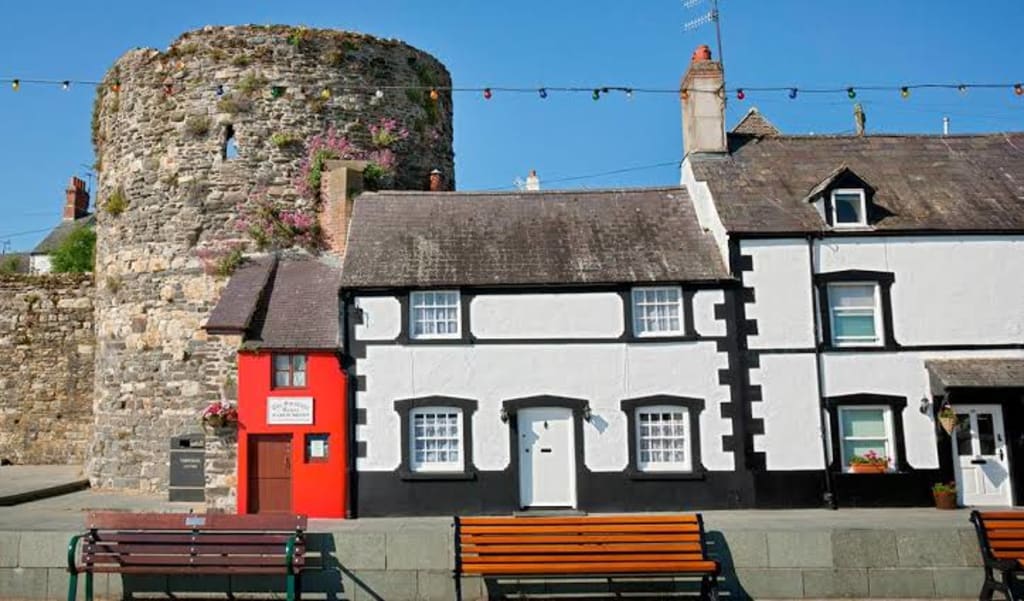
Nestled along the quay in the picturesque town of Conwy, Wales, lies an architectural curiosity that has captured the imagination of visitors for centuries. Known as the Smallest House in Great Britain, or Quay House, this tiny structure stands as a testament to the ingenuity of historical living spaces and the charm of Welsh heritage.
With a floor area of just 3.05 by 1.8 meters (10.0 by 5.9 feet) and a height of 3.1 meters (10 feet 2 inches) to the eaves, the Smallest House is as diminutive as it is fascinating. Built into the medieval walls of Conwy Castle, it served as a residence from the 1500s until 1900, providing a home to a series of occupants despite its modest dimensions. Today, it stands as a beloved tourist attraction, drawing visitors from around the world who are eager to step inside and experience its unique history.
---
A Peek Into Its Dimensions
The Smallest House is exactly as its name suggests—a minuscule dwelling that is smaller than most modern bathrooms. Its dimensions were dictated by its unique location along the medieval Conwy Castle walls, making use of the available space in a highly resourceful manner.
The interior of the house is divided into two levels. The ground floor features a simple living area with just enough space for a fireplace, a single chair, and a small table. A steep ladder leads to the upper floor, where the bedroom contains little more than a single bed and a tiny nightstand. There is no bathroom, as outdoor facilities were used during its time of occupancy.
While the house's small size may seem impractical by today’s standards, it speaks to the resilience and adaptability of its former inhabitants, who managed to make the space their home.
---
A History of Remarkable Occupants
The Smallest House’s history stretches back to the 16th century. Over the years, it provided shelter for a variety of residents, including fishermen, laborers, and tradespeople. The house’s most famous resident, however, was Robert Jones, a fisherman and coal merchant who lived there until 1900.
What makes Jones’s story particularly astonishing is that he stood at a towering 6 feet 3 inches (1.91 meters). How a man of such stature managed to live comfortably in such a confined space remains a mystery, but it is a testament to his resourcefulness and perhaps a bit of humor about his living situation.
In 1900, local authorities declared the house unfit for habitation, largely due to its lack of modern amenities. However, instead of being demolished, the house was preserved as a historical curiosity and opened to the public as a tourist attraction.
---
Built Into History: The Connection to Conwy Castle
The Smallest House is uniquely tied to the medieval walls of Conwy Castle, which date back to the late 13th century. Constructed under the reign of King Edward I, the castle and its surrounding walls are among the finest examples of medieval fortifications in Europe.
By integrating the Smallest House into the castle walls, its builders demonstrated how medieval townspeople maximized available space in densely populated areas. The house’s location also provides stunning views of the Conwy estuary, making it not only a historical gem but also a scenic one.
---
A Tourist Attraction Like No Other
Today, the Smallest House is one of Conwy’s most popular tourist attractions. Visitors are welcomed by guides dressed in traditional Welsh costume, who share the history of the house and its former occupants. Despite its small size, the house has an outsized ability to charm and captivate.
The experience of stepping inside the Smallest House is like taking a step back in time. The simple furnishings and modest layout offer a glimpse into the lives of its past residents, showcasing how people once lived with far fewer material possessions than we have today.
---
Symbolism and Legacy
The Smallest House is more than just a quirky tourist attraction—it is a symbol of the resilience and adaptability of past generations. Its very existence challenges our modern notions of space and comfort, reminding us of a time when practicality often trumped luxury.
It also serves as a poignant reminder of the importance of preservation. Instead of being lost to time, the Smallest House has been lovingly maintained, allowing visitors to connect with a tangible piece of history and better understand the lives of those who came before.
---
Planning Your Visit
If you’re planning a trip to Conwy, a visit to the Smallest House is a must. The house is conveniently located on the quay, just a short walk from other attractions such as Conwy Castle and the town’s charming high street.
The house is open to visitors during the warmer months, and the modest entrance fee helps support its upkeep. While it only takes a few minutes to tour the house, its story and charm will stay with you long after you leave.
---
Conclusion: A Tiny House With a Big Story
The Smallest House in Great Britain may be small in size, but it holds a giant place in the hearts of those who visit. Its unique history, connection to Conwy’s medieval heritage, and enduring charm make it a must-see attraction for anyone exploring Wales.
As you step into this tiny abode, you’ll find yourself transported to a simpler time, marveling at how such a small space could contain so much history and character. Whether you’re a history enthusiast, a lover of unique architecture, or simply curious, the Smallest House is sure to leave a big impression.
About the Creator
Keep reading
More stories from Deji Akomolafe and writers in History and other communities.
Titian’s Ecce Homo: A Renaissance Masterpiece in Romania
In the heart of Romania lies a masterpiece that connects the region to the grandeur of the Italian Renaissance. Titian’s Ecce Homo, painted in 1543, is not only an artistic marvel but also a cultural treasure of unparalleled significance. As the only work of the Venetian master in Romania and Eastern Europe, this painting represents a bridge between two worlds: the opulence of Renaissance Italy and the rich heritage of Eastern Europe.
By Deji Akomolafeabout a year ago in History
Hidden Void Discovered Inside the Great Pyramid of Khufu
For centuries, the Great Pyramid of Khufu in Egypt has fascinated historians, archaeologists, and travelers from around the world. Built more than 4,500 years ago during the reign of Pharaoh Khufu, the pyramid is the largest and oldest of the three pyramids of Giza. Despite decades of research and exploration, many secrets of this ancient structure remain hidden. Recently, scientists revealed one of the most intriguing discoveries yet — a large hidden void inside the pyramid that had remained unknown for thousands of years.
By Irshad Abbasi 6 days ago in History
Hottest in the Office
Dear Rafi, You’re very distracting to work around. For the first second I saw you the other day, I thought you were some type of executive. It took a moment to realize no, you were just the new guy, dressed up for the job he wants. Be still, my heart.
By Gabriel Shames6 days ago in Pride



Comments
There are no comments for this story
Be the first to respond and start the conversation.