
The Silk Road and Global Trade
The Silk Road and Global Trade

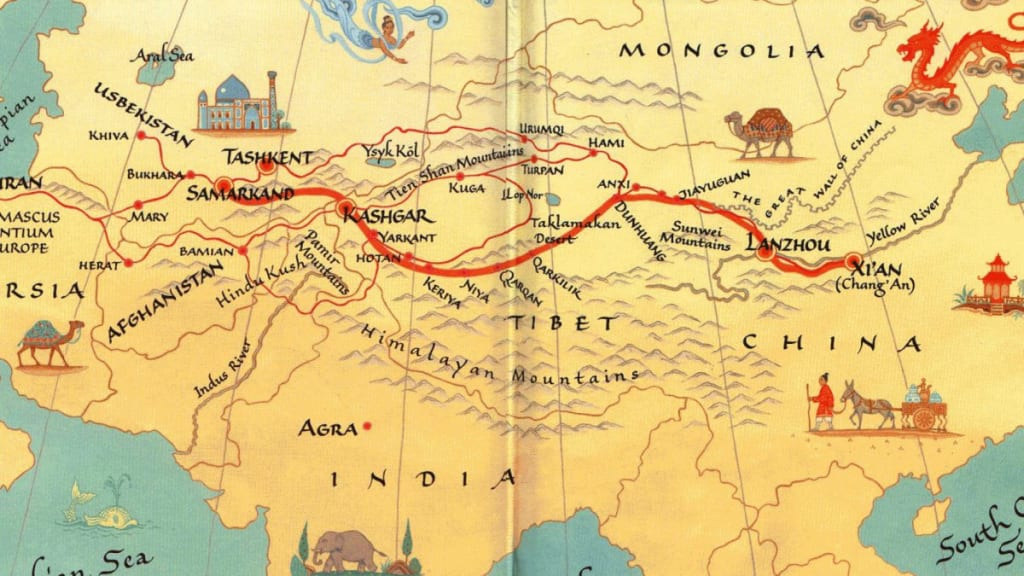
The Silk Road stands as one of the most iconic and influential trade routes in history, connecting the East and West for centuries. Spanning over 6,000 kilometers, this ancient network of interconnected trade routes facilitated the exchange of goods, ideas, and culture between the diverse civilizations of Asia, Europe, and Africa. The Silk Road was not just a conduit for commodities; it was a conduit for knowledge, innovation, and cross-cultural understanding. This article explores the significance of the Silk Road in shaping the world's history and highlights the profound impact of cross-cultural exchange on human civilization.
I. Origins of the Silk Road:
The term "Silk Road" was coined in the 19th century by German geographer Ferdinand von Richthofen, referring to the lucrative trade in silk from China to the Mediterranean region. However, the roots of this trade network can be traced back to much earlier times. The Silk Road emerged during the Han Dynasty in China (206 BCE - 220 CE) as a series of interconnected routes that extended to the Roman Empire.
Caravan Routes and Cultural Diffusion:
The Silk Road was a network of overland caravan routes, sea routes, and maritime connections that facilitated trade and cultural interactions between the great empires of China, India, Persia, Rome, and beyond. Along with goods like silk, spices, precious metals, and gems, knowledge, religious beliefs, art, and technology also traveled between these distant lands.
Prominent Trade Hubs:
Several bustling trade hubs emerged along the Silk Road, such as Chang'an (modern-day Xi'an), Samarkand, Baghdad, Constantinople (Istanbul), and Alexandria. These cities became cosmopolitan centers, fostering cross-cultural interactions that left an indelible mark on the societies they touched.
II. Goods and Merchandise Traded on the Silk Road:
The Silk Road was primarily known for the trade of silk from China, but it served as a conduit for numerous other commodities that shaped the global economy and cultural landscape.
Chinese Silk and Luxury Goods:
Silk, produced exclusively in China at the time, was in high demand throughout the ancient world. The luxurious fabric represented wealth, status, and exotic allure, making it a prized commodity in both the East and the West.
Spices and Aromatics:
Spices such as pepper, cinnamon, and cardamom were sought after in the Mediterranean world for their culinary and medicinal uses. They were traded along the maritime routes, connecting the Indian subcontinent with the Persian Gulf and beyond.
Precious Metals and Gems:
Gold, silver, and various precious gems were exchanged along the Silk Road, enriching the economies of both East and West.
Textiles and Dyes:
Apart from silk, various textiles and dyes, including cotton and indigo, were traded, leading to the cross-cultural diffusion of weaving and dyeing techniques.
III. Cross-Cultural Exchange and Knowledge Transfer:
The Silk Road facilitated more than just economic transactions; it acted as a conduit for the exchange of knowledge, ideas, and technology, profoundly impacting the development of civilizations along its routes.
Cultural Diffusion and Artistic Influences:
Artistic styles, architectural techniques, and religious beliefs blended and influenced each other as they traveled along the Silk Road. For instance, Greco-Buddhist art emerged as a fusion of Hellenistic and Buddhist artistic traditions.
Scientific and Technological Advancements:
Alongside trade goods, knowledge of astronomy, mathematics, medicine, and engineering also traversed the Silk Road. This knowledge exchange significantly influenced scientific progress in both the East and the West.
IV. Decline and Legacy of the Silk Road:
The Silk Road thrived for centuries, but various factors contributed to its gradual decline, including the rise of maritime trade routes, the fall of empires, and the expansion of other overland routes.
Shift to Maritime Trade:
The opening of maritime routes during the Age of Exploration in the 15th century provided safer and faster trade options, leading to a gradual decline in overland Silk Road trade.
The Mongol Empire and Pax Mongolica:
The Mongol Empire's vast domain facilitated the safe passage of goods and ideas across its territories during the Pax Mongolica (Mongol Peace), fostering trade and cultural exchange.
The Silk Road remains a symbol of human ingenuity and resilience, testifying to the power of trade and cultural exchange in shaping the course of history. This vast network of interconnected routes facilitated the movement of goods, ideas, and people, leaving an enduring legacy of cross-cultural influences and mutual understanding between distant civilizations. Today, the spirit of the Silk Road continues to thrive through modern global trade and interconnectivity, reminding us of the shared heritage and interconnectedness of human societies across time and space.
About the Creator
Reynol Brennan
A small blogger who shares emotions, life, life insights, and short stories, and provides everyone with happiness, growth, and common sense of life.
Keep reading
More stories from Reynol Brennan and writers in History and other communities.
The Enigmatic Civilization of the Maya, Inca, and Aztec
The ancient civilizations of the Maya, Inca, and Aztec have captivated the imaginations of historians and archeologists for centuries. Flourishing in different regions of the Americas, these cultures achieved remarkable advancements in architecture, art, astronomy, agriculture, and governance. While their legacies are evident in modern Latin American societies, their mysterious declines continue to spark debate and exploration. This article delves into the rise, achievements, and enigmatic decline of these fascinating civilizations.
By Reynol Brennan2 years ago in History
A Psychological Study of Hitler’s Personality
Whenever Adolf Hitler’s name arises in discussions of the darkest chapters of human history, the mind tends to conjure a terrifying image—something bordering on a supernatural monster or a madman pushed to the extremes of insanity. Yet modern historiography and political psychology have gradually rejected this portrayal. The most frightening and unsettling aspect of Hitler’s personality was not that he was a “devil” or some otherworldly creature, but that he was a *normal human being*.
By Taimur Kazmi7 days ago in History
Wild Card Weekend Recap: What Happens Now?
I think I figured out why I love Wild Card Weekend so much. It's because it's the first playoff anything of the calendar year. The NFL season starts in the fall, and once upon a time, the champion was crowned either on or slightly before New Year's. The evolution of the NFL schedule has resulted in the playoffs starting just into the New Year, and currently, the final week of the season falls on the first weekend of the New Year, with Wild Card Weekend coming a week after that. So yes, chronologically, the NFL's Wild Card Weekend serves as the first playoff anything of the calendar year.
By Clyde E. Dawkins2 days ago in Unbalanced



Comments
There are no comments for this story
Be the first to respond and start the conversation.