
The Silent Force Behind the Crusades
A Chronicle of Leadership, Faith, and Resistance During the Crusader Era


Nur ad-Din Mahmud Zangi, born in 1118 CE in Aleppo, Syria, was one of the most significant Muslim leaders during the era of the Crusades. Known for his deep piety, sense of justice, and military acumen, Nur ad-Din played a foundational role in resisting the Crusader presence in the Levant and laid the groundwork for the eventual victories of Saladin. As a ruler of both Aleppo and later Damascus, his reign marked a turning point in Muslim unity and resistance, and his legacy continues to inspire.
Early Life and Rise to Power
Nur ad-Din was the son of Imad ad-Din Zangi, a powerful Turkish atabeg (governor) of Mosul and Aleppo who had begun the task of resisting the Crusaders and uniting the Muslim lands of Syria and Iraq. Raised in a political and military household, Nur ad-Din was trained in both Islamic scholarship and martial disciplines. After his father was assassinated in 1146, Nur ad-Din inherited the city of Aleppo while his brother, Saif ad-Din Ghazi, took control of Mosul.
From the outset, Nur ad-Din proved to be a determined and effective leader. His vision extended beyond mere survival in a fractured Muslim world—he sought unity under Islam and justice under law. He also recognized the existential threat posed by the Crusader states and dedicated himself to the jihad (struggle) against foreign occupation.
Campaigns Against the Crusaders
Nur ad-Din’s early campaigns focused on the Principality of Antioch and the County of Edessa, two Crusader strongholds in northern Syria. In 1149, he decisively defeated Prince Raymond of Antioch at the Battle of Inab, a turning point that signaled Muslim resurgence. Unlike some of his contemporaries, Nur ad-Din did not sack the cities he captured, often showing mercy and emphasizing Islamic governance.
In 1154, Nur ad-Din achieved one of his most important political goals: the peaceful annexation of Damascus. The unification of Aleppo and Damascus gave him control over most of Syria and created a strong, centralized Muslim front against the Crusaders. This consolidation was not just military—it was also spiritual and administrative, as Nur ad-Din improved legal systems, built madrasas, and promoted Sunni orthodoxy.
Domestic Reforms and Justice
One of Nur ad-Din’s most enduring legacies was his commitment to justice. He was known to walk the streets in disguise to observe the conditions of his people and held his own officials to high standards of accountability. His court was open to commoners, and his reputation as a just ruler spread across the Islamic world.
He commissioned public works including mosques, hospitals, schools, and caravanserais. These efforts weren’t simply to gain popularity; Nur ad-Din sincerely believed that Islamic governance had to be rooted in moral legitimacy and the welfare of the people. His administration was notably free of the corruption that plagued many contemporary courts.
Piety and Religious Revival
Nur ad-Din was deeply religious and saw his mission not just in political or military terms, but as a divine duty. He surrounded himself with scholars and jurists and was known to pray, fast, and study the Qur’an regularly. He built the famous Nur al-Din Madrasa in Damascus and supported the Hanbali and Shafi’i schools of Islamic thought.
His commitment to Sunni Islam also served a political function: he used religion as a unifying force against both Crusaders and the declining Shi’a Fatimid caliphate in Egypt. In doing so, he set the ideological and institutional foundations for the later Ayyubid state under Saladin.
Influence in Egypt and the Rise of Saladin
By the 1160s, Nur ad-Din had his eyes on Egypt, which was under Fatimid control and weakened by internal strife. The Crusaders also sought influence there, and Nur ad-Din recognized that control over Egypt was essential to secure the Muslim world.
In 1164, he sent his general Shirkuh to intervene in Egypt, accompanied by Shirkuh’s young nephew—Salah ad-Din Yusuf ibn Ayyub, later known simply as Saladin. After a series of complex political maneuvers and military campaigns, Shirkuh became vizier of Egypt in 1169, and upon his death, Saladin assumed the post.
Though Saladin owed his rise to Nur ad-Din’s support, the relationship between the two grew strained in later years, especially as Saladin consolidated power in Egypt. However, Nur ad-Din’s influence on Saladin’s ideology, particularly the emphasis on unity and jihad, remained profound.
Death and Legacy
Nur ad-Din died suddenly in 1174 at the age of 56, likely due to a fever. His death created a temporary power vacuum, but Saladin quickly moved to fill the void and unite Egypt and Syria under his rule. It was under Saladin that the goals Nur ad-Din had worked toward for decades—unity, resistance to the Crusaders, and Islamic governance—would be realized on a grand scale.
Yet, Nur ad-Din’s role was far more than that of a predecessor. He was a master strategist, an able administrator, and a genuinely devout Muslim ruler. He was respected even by his enemies, and many Crusader chroniclers noted his nobility and wisdom.
Conclusion
Nur ad-Din Zangi’s life was a blend of spiritual devotion, military brilliance, and administrative reform. He emerged from the chaos of 12th-century Syria as a leader who not only defended the Muslim world from external threats but also revitalized its internal structures. His reign marked the beginning of the Muslim counter-crusade and laid the intellectual and political groundwork for Saladin’s later triumphs.
Though often overshadowed in popular memory by Saladin, historians recognize Nur ad-Din as the true architect of the Islamic revival during the Crusades. His emphasis on justice, unity, and piety left a lasting impact on the Muslim world. In every sense, he was not merely a warrior or ruler—but a just guardian of Islamic civilization during one of its most challenging periods.
About the Creator
Irshad Abbasi
"Studying is the best cure for sorrow and grief." shirazi
Keep reading
More stories from Irshad Abbasi and writers in History and other communities.
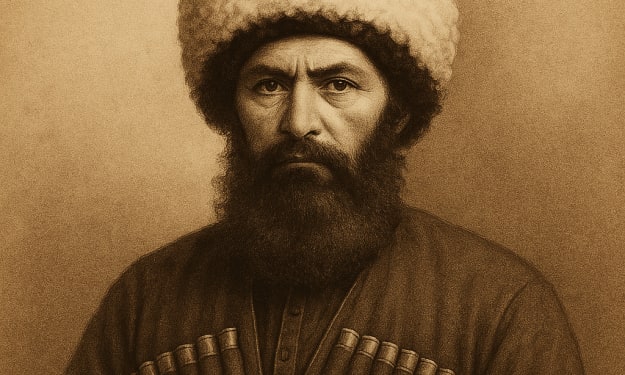
The Lion of Dagestan and the Spirit of Caucasian Resistance
Imam Shamil, the legendary Avar warrior and spiritual leader of the Caucasus, remains one of the most iconic figures in the history of resistance against imperial domination. Born in 1797 in the mountain village of Gimry, in present-day Dagestan, Shamil rose from humble origins to lead a decades-long struggle against the expanding Russian Empire during the 19th century. Revered as a military genius and a deeply devout Muslim, he unified disparate Caucasian tribes under a single banner of resistance, leaving behind a legacy that continues to inspire nationalists, scholars, and freedom fighters alike.
By Irshad Abbasi 7 months ago in History
World War I
The morning fog lay thick over the trenches of northern France, clinging to the earth as if it too feared what was about to happen. Private Thomas Hale pulled his coat tighter around himself, though it did little to stop the cold from seeping into his bones. He had been in the trenches for six months, yet the damp smell of mud, smoke, and fear still felt unfamiliar, like a nightmare he could not wake from.
By Maavia tahir2 days ago in History
📢 Raise Your Voice Thread: 01/08/2026
Our “Raise Your Voice Threads” are hosted most alternating Thursdays at 12PM ET to offer creators more avenues to uncover exceptional stories on Vocal. As we are continuously searching for fresh creators and inspiring stories, this thread provides an opportunity to exchange and discuss the stories that have moved and motivated us on Vocal.
By Raise Your Voice by Vocal7 days ago in Resources


Comments
There are no comments for this story
Be the first to respond and start the conversation.