
The Silent City
A speculative story set in a future world where nature has reclaimed a city abandoned due to climate catastrophe

The wind whispered through the skeletal remains of the city, carrying with it the scent of moss and blooming wildflowers. Buildings that had once reached for the heavens now bent under the weight of creeping vines, their steel skeletons encased in green. Roads were fractured and split apart, their crevices filled with rainwater, ferns, and clusters of mushrooms. It was as if the earth itself had swallowed the city whole, erasing humanity's fingerprints.
Nina stood at the edge of what had once been the busiest boulevard of Newhaven. She remembered it bustling with cars, laughter, and life. Now, only the rustling of leaves and the occasional call of birds filled the void. The silence was deafening, a poignant reminder of what had been lost.
She tightened her grip on the photograph in her hand—a sun-faded image of her family standing in front of the old library. Her father’s arms were around her and her younger brother, both of them grinning, oblivious to the storm clouds brewing on the horizon. That library was now just a skeleton of its former self, the windows shattered, the once-grand facade crumbling under the weight of nature's reclamation.
Her boots crunched over the debris as she made her way toward it. Every step felt like a betrayal. She had promised herself she would never come back, but the dreams wouldn’t let her rest. They came in flashes: her brother's laughter echoing through the aisles, the smell of her father’s old jacket, the way sunlight streamed through the library's massive windows. It was as if the city itself was calling her back, demanding to be remembered.
The climate crisis had come slowly at first—a whisper of rising temperatures, longer droughts, and unpredictable storms. By the time Newhaven realized it was on borrowed time, the rivers had risen, swallowing neighborhoods whole. The final blow came when a hurricane, more massive than any on record, tore through the city, leaving destruction in its wake. The survivors fled inland, abandoning the ruins to nature. Nina’s family had been among the last to leave.
“Why are we leaving?” her younger brother, Caleb, had asked, clutching his favorite book as they packed up the car.
“We have to, sweetheart,” her mother had said, tears in her eyes. “We can’t stay here anymore.”
They had driven away, the city disappearing in the rearview mirror. Caleb had cried for days, mourning the loss of his home, his friends, his world. Nina had tried to console him, but her own grief was a heavy weight in her chest.
Years passed. Caleb grew up, but he never stopped talking about the city. “One day, I’ll go back,” he’d say, his eyes alight with determination. But he never got the chance. A sudden fever, a hospital visit, and then he was gone, leaving Nina to carry the burden of memories alone.
Now she was here, standing in the ruins of their childhood, fulfilling a promise she had never made aloud.
Inside the library, sunlight streamed through gaps in the ceiling, casting dappled patterns on the floor. Books lay scattered, their pages yellowed and curling. Some had been claimed by moss, others by water. Nina ran her fingers over the spines of those still intact, imagining Caleb’s small hands doing the same.
She sank to her knees in the center of the room, pulling the photograph from her pocket. “I’m sorry,” she whispered, her voice cracking. “I should’ve come back sooner.”
The silence pressed in around her, broken only by the distant chirping of crickets. She closed her eyes, letting the memories wash over her—the warmth of her father’s laugh, the way Caleb’s face lit up when he discovered a new book, the sense of safety and belonging she had once taken for granted.
A gust of wind stirred the air, carrying the faint scent of saltwater. It was a reminder of the ocean, now encroaching even closer to the city’s edges. Soon, even these ruins would be swallowed, erased forever.w
But as Nina sat there, she realized something: the city wasn’t truly silent. It was alive in a way it had never been before. Plants thrived where asphalt had once suffocated the earth. Animals darted through alleyways, finding refuge in the ruins. The city had transformed, becoming something new, something resilient.
Perhaps, she thought, that was the lesson Newhaven had to teach. Humans had left scars on the earth, but nature had healed them, reclaiming what was hers. The city wasn’t a graveyard; it was a testament to survival and renewal.
Nina stood, wiping her tears. She placed the photograph on a moss-covered shelf, a small offering to the past. “I’ll remember you,” she said softly, her voice steady now. “I promise.”
As she stepped back into the sunlight, she felt a weight lift from her shoulders. The city might have been abandoned, but it wasn’t forgotten. It lived on in her memories, in the stories she would tell, and in the vibrant life now flourishing within its ruins.
For the first time in years, Nina felt a sense of peace. She turned and began the long walk back to her new home, the sounds of the silent city fading behind her. But in her heart, Newhaven would always remain, not as a place of loss, but as a symbol of hope and resilience.
About the Creator
Keep reading
More stories from writers in History and other communities.
Reform or Replace? The Future of Global Governance
Reform or Replace? The Future of Global Governance Global governance stands at a critical crossroads. Institutions created after World War II—especially the United Nations—were designed to prevent another global catastrophe. For decades, they provided platforms for dialogue, coordination, and conflict management. But today, many people question whether these institutions still work as intended. The growing debate is no longer just about reform. It is about whether global governance should be repaired or replaced entirely.
By Wings of Time 5 days ago in History
Wealth Reserves and Economic Power of the Madurai Rulers during the First Sangam Age
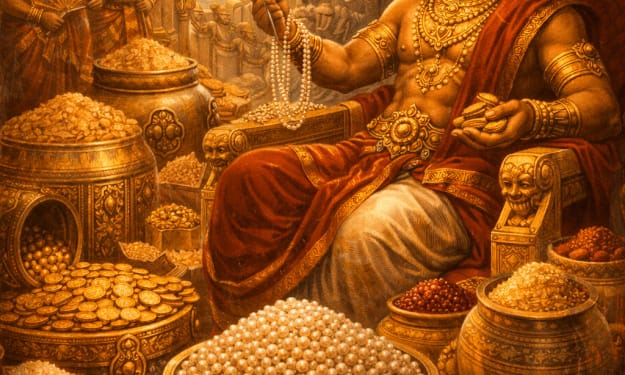
The Madurai rulers of the Sangam Age possessed immense wealth derived from trade, agriculture, tribute, and natural resources, making them among the richest monarchs of ancient India.
By Say the truth 2 days ago in History



Comments (1)
The city is not fully abandoned