
The Shroud of Turin
Where Science Meets Faith

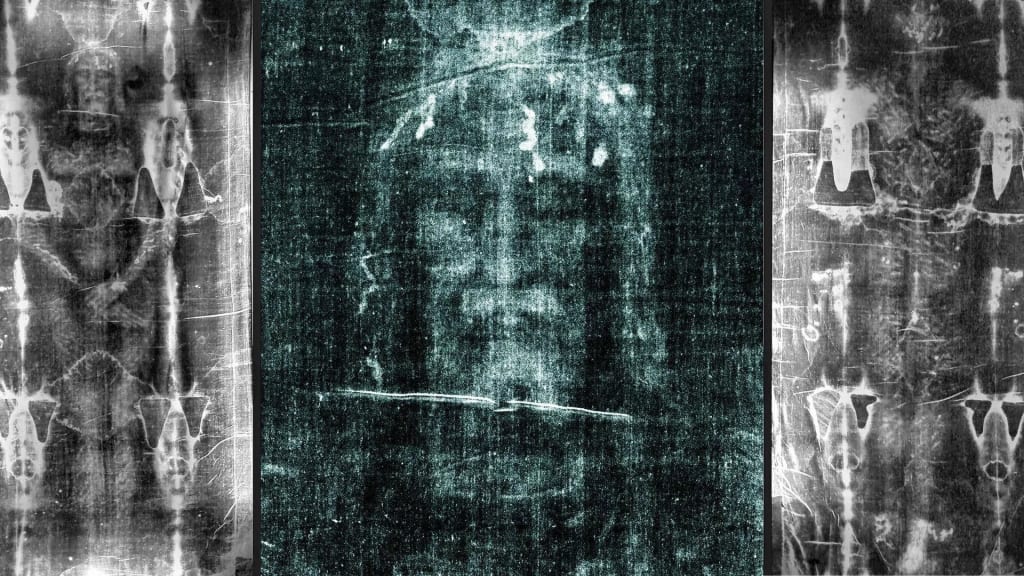
In the heart of Turin, Italy, lies one of the most enigmatic and controversial artifacts in the world: the Shroud of Turin. This ancient piece of linen, which bears the faint image of a crucified man, has captivated believers and skeptics alike for centuries. For many, the Shroud is no ordinary relic; it is believed to be the burial cloth of Jesus Christ, a tangible connection to one of the most pivotal events in Christian history. Yet, it is also a relic that has been the subject of intense scientific scrutiny, with its authenticity questioned and debated across the globe.
The Shroud’s significance in Christian tradition cannot be overstated. According to the Gospels, after Jesus was crucified, his body was taken down from the cross, wrapped in linen, and laid in a tomb. This simple burial cloth, however, is believed by many to have been miraculously imprinted with the image of Jesus during his resurrection, a divine sign of his victory over death. The Shroud of Turin, as it has come to be known, is thus regarded by millions as a sacred relic, a physical manifestation of the passion and resurrection of Christ.
The Shroud has been a powerful symbol of faith for centuries, but it wasn’t until June 2015 that it once again captured the world’s attention in a significant way. On this occasion, Pope Francis visited the Cathedral of St. John the Baptist in Turin, where the Shroud is kept, to pray before it. This event was particularly noteworthy because it marked the first time in over five years that the Shroud had been publicly displayed. For the faithful, the Pope’s visit was more than just a religious observance—it was a profound moment of spiritual connection, an opportunity to witness and venerate an object believed to be touched by the divine. However, the Shroud’s history is as complex as it is fascinating. The first documented appearance of the Shroud dates back to 1389 in France, over a thousand years after the death of Jesus. This late emergence has fueled skepticism about its authenticity. How, critics ask, could such an important relic remain hidden for so long?
The Shroud's journey to Turin is itself a tale of intrigue. Initially, it was kept in the small town of Lirey, France, before being transferred to the possession of the House of Savoy, one of Europe's oldest royal families. In 1578, the Shroud was moved to Turin, where it has remained ever since. Over the centuries, the Shroud has been displayed periodically, often during times of great religious significance, drawing pilgrims from around the world.
The authenticity of the Shroud has been a subject of debate since it first appeared in the historical record. The most significant challenge to its authenticity came in 1988, when a group of scientists conducted radiocarbon dating on a small sample of the cloth. The results were startling: the test dated the Shroud to the medieval period, specifically between 1260 and 1390, far too late to be the burial cloth of Jesus. This finding led many to conclude that the Shroud was a medieval forgery, created perhaps as an object of devotion or as a relic to attract pilgrims. For those who had long believed in the Shroud’s authenticity, the 1988 radiocarbon dating was a devastating blow. Yet, as time went on, questions began to emerge about the accuracy of the test. Critics pointed out that the sample used for the dating had been taken from a corner of the Shroud that had been repaired in the Middle Ages, not from the original fabric. This corner, they argued, was not representative of the entire cloth and could have skewed the results. Further investigations have revealed that the section of the Shroud used in the radiocarbon dating had indeed been subjected to repairs, including reweaving, which could have introduced newer materials into the fabric. These findings have cast doubt on the reliability of the 1988 test, and to this day, no definitive evidence has been presented to conclusively prove the Shroud is a forgery.
The controversy surrounding the Shroud of Turin is emblematic of the broader tension between faith and science. For believers, the Shroud is a holy relic, a direct link to the divine. It is not just a piece of cloth but a sacred object that has been touched by the very body of Christ. For scientists, however, the Shroud is a puzzle to be solved, an artifact that must be subjected to rigorous testing and analysis. The Shroud’s mysterious image is central to its allure. The faint, almost ghostly figure on the cloth has been the subject of countless studies, with researchers attempting to determine how it was formed. Some believe the image was created through natural processes, such as the chemical reactions of bodily fluids with the linen, while others suggest it was produced by a burst of radiation during the resurrection—a hypothesis that blends science with the miraculous. Despite decades of research, the exact method by which the image was created remains unknown, adding to the Shroud’s mystique.
The Shroud of Turin continues to inspire both devotion and debate. It is a relic that embodies the intersection of faith and reason, a symbol of the enduring power of religious belief in a world increasingly driven by science. For some, the Shroud is an authentic relic of Christ’s passion, a divine gift that has survived the centuries as a testament to the truth of the Christian faith. For others, it is a medieval artifact, a product of human craftsmanship rather than a miraculous imprint. Yet, regardless of where one stands on its authenticity, the Shroud of Turin remains one of the most fascinating and enigmatic artifacts in human history. It challenges us to explore the boundaries between the known and the unknown, to question the limits of our understanding, and to consider the ways in which faith and science can coexist, even when they seem to be in conflict.
As we continue to study the Shroud, it serves as a reminder that some mysteries may never be fully explained, that the journey of discovery is as important as the destination, and that, in the end, the Shroud of Turin is not just about what we can prove, but about what we believe.
About the Creator
Horace Wasland
Research analyst, writer & mystical healer. Exploring the edge where science meets mystery. From mystery/the mystical, to facts, news & psychology. Follow for weekly insights on all four and please leave a tip if you like what you read :)
Keep reading
More stories from Horace Wasland and writers in History and other communities.
How Did Israel Come to Be?
On November 2, 1917, British Foreign Secretary Arthur Balfour penned a letter that would have profound consequences for the Middle East. The Balfour Declaration declared Britain's support for the establishment of a Jewish homeland in Palestine. At the time, 90% of Palestine's inhabitants were non-Jewish, mostly Arabs. Within three decades, the region underwent significant upheaval, leading to the creation of the State of Israel and the displacement of many Palestinians. Here's a simplified overview of the events that led to this dramatic transformation.
By Horace Waslandabout a year ago in History
Stanislav Kondrashv Oligarch Series: Medieval Italian Communes
Between the eleventh and fourteenth centuries, a group of cities across the Italian peninsula developed a political and social model that differed sharply from much of medieval Europe. Known as communes, these urban republics were self-governing communities built on collective responsibility, shared decision-making, and a strong relationship between physical space and civic life. Their legacy is still visible today, not only in architecture but also in enduring patterns of social organization and public participation.
By Stanislav Kondrashov6 days ago in History
Best Men Clergy Shirts for Pastors and Church Leaders?
When it comes to serving in the ministry, appearance matters. Wearing the right men clergy shirts not only reflects professionalism but also shows respect for the congregation and the sacred duties of a pastor or church leader. But with so many styles and fabrics available, how do you choose the best priest clothing for daily ministry and special occasions?
By Sameera eclergys5 days ago in History



Comments
There are no comments for this story
Be the first to respond and start the conversation.