
The Secret Lives of History’s Most Notorious Villains
Even monsters had hearts — but history chose to hide them

We grow up hearing their names whispered like curses.
Men and women so cruel that the world remembers them only for their sins.
But behind every dark legend, there was once a child, a dream, a reason — twisted by power, pain, or fear.
This isn’t about forgiving them.
It’s about understanding how they became what history made them.
Act 1 — Adolf Hitler: The Failed Artist
Before he became a symbol of terror, Adolf Hitler was just a struggling artist in Vienna.
He spent his early twenties wandering the streets, painting postcards to survive.
He applied — twice — to the Academy of Fine Arts Vienna. Both times, he was rejected.
Rejection turned to resentment.
Resentment grew into ideology.
And ideology, mixed with power, birthed a monster that cost the world over 70 million lives.
Historians later studied his art — quiet landscapes, cathedrals, empty streets —
and wondered what would’ve happened if someone had simply accepted his work instead of rejecting it.
Act 2 — Elizabeth Báthory: The Blood Countess Who Feared Age
In the 1600s, Countess Elizabeth Báthory was one of the most powerful women in Hungary.
She had everything — wealth, beauty, and influence.
But inside, she carried a secret obsession: youth.
According to legend, she believed that bathing in the blood of young girls would preserve her beauty.
Over time, she was accused of torturing and killing hundreds of servants.
Yet, historians later found that many of these “witnesses” were political rivals.
The king owed her family money — and by branding her a monster, he could seize her lands.
Was she truly evil, or simply a woman destroyed by power and rumor?
The truth lies somewhere between nightmare and manipulation.
Act 3 — Joseph Stalin: The Man Who Smiled Too Much
To most of the world, Stalin was a paranoid dictator — cold, ruthless, and responsible for millions of deaths.
But privately, those close to him described a man who loved poetry.
He wrote verses as a child, gentle and melancholic.
Yet, the man who once wrote about love and freedom became obsessed with control.
He trusted no one.
Even his own friends vanished into prisons or graves.
Power, once obtained, replaced his humanity — and the poet died long before the man did.
Act 4 — Rasputin: The Saint Who Became a Sin
Few figures are more misunderstood than Grigori Rasputin, the “mad monk” of Russia.
He was said to heal the sick, curse his enemies, and seduce queens.
But the truth? Rasputin was a peasant mystic who gained the favor of the Russian royal family after seemingly saving the young heir, Alexei, from a deadly illness.
His influence over the Tsarina sparked jealousy and fear among nobles.
They painted him as a demonic figure — hard to kill, harder to understand.
In 1916, they poisoned, shot, and drowned him… yet his legend refused to die.
Behind the madness was a man who believed he was chosen to guide the empire —
but history only remembers the monster they made him out to be.
Act 5 — Humanity Behind Horror
Every villain has two faces — the one history records, and the one it buries.
They laughed. They loved. They cried.
And somewhere along the way, they chose darkness.
Maybe that’s what makes them unforgettable.
Not because they were born evil…
But because they remind us how close anyone can come to becoming the villain in their own story.
Quick Fact:
Rasputin’s death took so many attempts that Russian assassins joked he was “the devil who refused to check out.”
If you found this glimpse into the human side of history’s monsters intriguing, tap the ❤️ to support.
And hit Subscribe — because the next story might just change how you see the past forever.
About the Creator
OWOYELE JEREMIAH
I am passionate about writing stories and information that will enhance vast enlightenment and literal entertainment. Please subscribe to my page. GOD BLESS YOU AND I LOVE YOU ALL
Keep reading
More stories from OWOYELE JEREMIAH and writers in History and other communities.
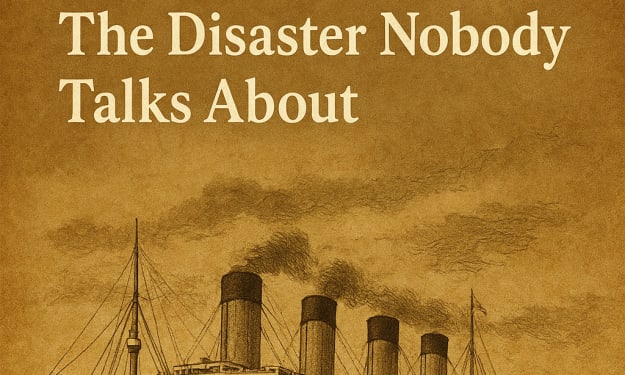
The Titanic’s Sister Ship: The Disaster Nobody Talks About
Everyone knows the story of the Titanic — the unsinkable ship that sank. But almost no one talks about her older sister, the Britannic, a ship built with the same luxury, the same pride, and the same destiny.
By OWOYELE JEREMIAH3 months ago in History
Don't Forget us when you become a Londoni
The Weight of the Suitcase The air in Sylhet was thick with the scent of damp earth and woodsmoke on the morning Alif Shorif left. At twenty-four, he was the eldest son, and the weight of his family’s future was packed into a single, battered polyester suitcase. Inside weren't just clothes, but a jar of his mother’s mango pickle, a prayer mat, and the collective hope of a household that had sold two plots of land to pay for his visa.
By Alif Shorif4 days ago in History
The Night Walk of Justice
During the golden age of the Islamic Caliphate, when Umar ibn Al-Khattab (RA) was the leader of the Muslim world, the city of Madinah was known for its peace, discipline, and justice. Umar (RA) was not only a powerful ruler but also a humble servant of Allah who feared accountability more than authority.
By The best writer 5 days ago in History


Comments
There are no comments for this story
Be the first to respond and start the conversation.