
The Samurai
Outsiders Who Turned into Legends

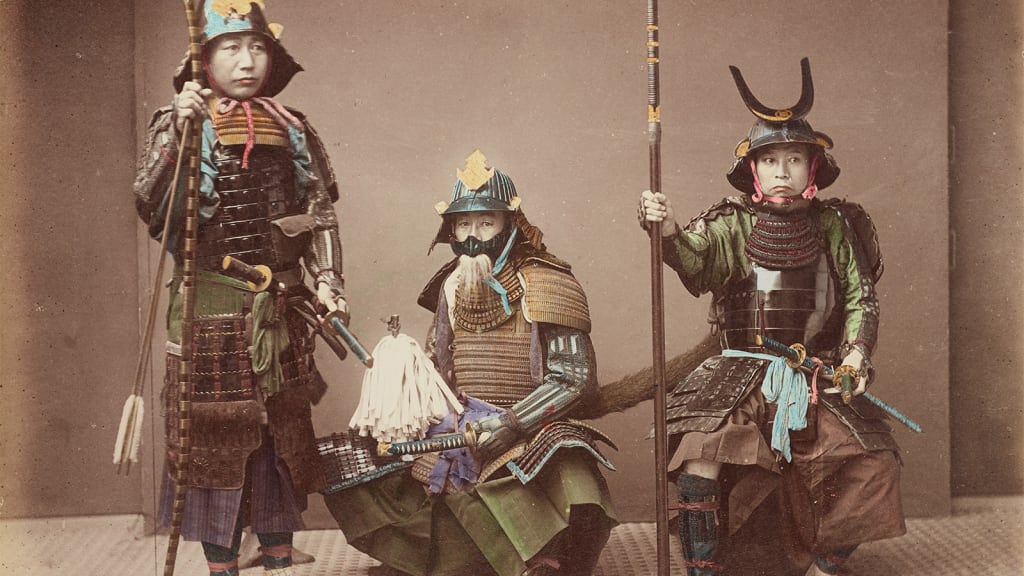
When most people think of samurai, they envision stoic warriors epitomizing honor, integrity, and martial prowess. While this image is captivating, it oversimplifies the complex reality of the samurai’s role in Japanese society. To understand the samurai’s true legacy, we must explore their origins, rise to power, and evolution through different historical periods.
Origins of the Samurai
The samurai emerged in a unique geographical and historical context. Japan, an archipelago situated just off the Korean Peninsula and the Asian mainland, was profoundly influenced by China, a dominant regional power. During the early Heian period, Japan modeled its military on the Chinese heavy infantry of the Tang Dynasty. However, when Japanese forces encountered the Amis, a group from northeastern China with advanced horse archery tactics, they struggled to cope. This led to the adoption of these tactics and the formation of early samurai. Initially, the term "samurai" was used pejoratively by capital warriors to describe provincial fighters, highlighting their perceived lack of sophistication.
Rise to Power
As the central government in Kyoto became increasingly disengaged, the samurai began to gain more autonomy and power. By the late 12th century, internal revolts and power struggles led to the establishment of the Kamakura Shogunate, Japan’s first military government. Although the Shogun was officially a high-ranking samurai ruling in the Emperor's name, the Shogunate functioned as a military dictatorship, with the Emperor serving as a figurehead. The samurai played a crucial role during the Mongol invasions of the Yuan Dynasty, using unconventional tactics and benefiting from the destruction of the Mongol fleets by typhoons. These invasions underscored the samurai’s strategic importance in defending Japan.
Samurai vs. Knights
The samurai are often compared to medieval European knights due to their elite status and codes of conduct. Unlike knights, who were a small elite group within larger armies, samurai comprised the majority of Japanese feudal forces. This distinction became particularly evident during the Mongol invasions. The Kamakura Shogunate’s eventual decline led to the rise of the Ashikaga Shogunate in 1338, which struggled to maintain control over local daimyo (feudal lords). This instability set the stage for the Sengoku Jidai, or Warring States period, a time of intense feudal conflict and shifting allegiances.
Sengoku Jidai and Beyond
The Sengoku era was marked by legendary battles and complex rivalries, such as that between Uesugi Kenshin and Takeda Shingen. While some aspects of this period, including gentlemanly conduct and honor codes, were romanticized, it was also an era of brutal warfare and strategic innovation. The introduction of firearms, brought by European traders, revolutionized Japanese combat. Contrary to popular belief, samurai did not reject firearms due to notions of dishonor. Many daimyo adopted them, recognizing their strategic advantages. For example, Takeda Shingen, a prominent warlord, purchased 300 firearms in 1571 for his campaigns.
The Tokugawa Era
The Tokugawa Shogunate, established after Tokugawa Ieyasu’s victory at the Battle of Sekigahara in 1600, brought about a long period of peace. This era marked a significant shift for the samurai, who transitioned from warriors to bureaucrats and civil servants. Their role evolved from battlefield leaders to administrators, resulting in a focus on ceremonial and symbolic aspects of their status. Samurai martial training became more of an art form, with styles such as kendo (the way of the sword) taking precedence over practical combat training. The samurai’s stipend diminished over time, leading to economic disparity and unrest among the poorer members of the class.
Decline and Legacy
With the advent of the Meiji Restoration and the modernization of Japan, the samurai’s role as a warrior class diminished. The feudal system was dismantled, and the samurai were sidelined, transitioning into historical and symbolic figures. Despite this, the samurai’s legacy persisted in Japanese culture. The values of Bushido, the samurai code of conduct, continued to influence Japanese society, symbolizing dedication, discipline, and honor. This romanticized view of the samurai, while rooted in historical reality, evolved into a symbol of Japan’s cultural heritage.
Conclusion
The samurai’s journey from fierce warriors to symbolic figures illustrates the complex nature of their role in Japanese history. Far from the static image of honor and valor, the samurai were dynamic individuals who adapted to Japan’s changing socio-political landscape. Their legacy, while idealized, reflects their profound impact on Japanese history and culture, continuing to inspire admiration and respect in the modern era.
About the Creator
Horace Wasland
Research analyst, writer & mystical healer. Exploring the edge where science meets mystery. From mystery/the mystical, to facts, news & psychology. Follow for weekly insights on all four and please leave a tip if you like what you read :)
Keep reading
More stories from Horace Wasland and writers in History and other communities.
The Black Samurai Yasuke
In the late 16th century, Japan was a land of intense conflict and political upheaval. Amidst this chaos, an extraordinary individual emerged—a mysterious black man named Yasuke, who would become the first foreigner to achieve the esteemed status of samurai. Yasuke's journey from obscurity to legend is a remarkable tale of courage, intrigue, and cultural fusion.
By Horace Waslandabout a year ago in History


Comments (1)
Interesting