
The Royal Aesthetic of Queen Amina
Hausa Beauty Traditions

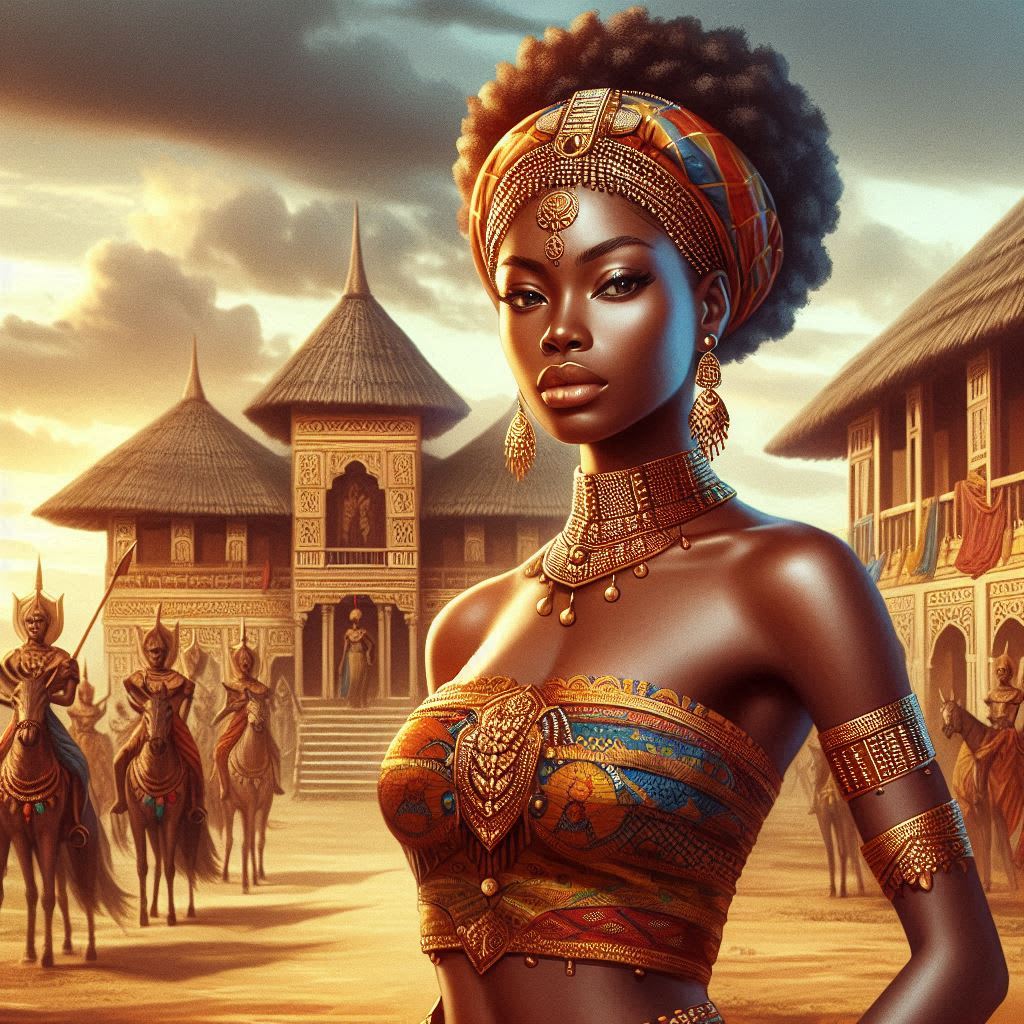
In the heart of West Africa, where the savannas stretch as far as the eye can see, a legendary queen once ruled over the Hausa kingdom of Zazzau. Queen Amina, a name that echoes through the annals of history, was a force to be reckoned with. Her remarkable life, marked by bravery, intelligence, and beauty, has inspired generations of Africans and beyond.
Born in the 16th century, Queen Amina was the daughter of King Nikatau, the ruler of Zazzau. From a young age, she was groomed for leadership, receiving training in warfare, diplomacy, and governance. Amina's intelligence, courage, and determination quickly earned her the respect and admiration of her people.
As queen, Amina's beauty was celebrated throughout the kingdom. Her physical appearance, characterized by a statuesque figure, smooth dark skin, and piercing eyes, was considered the epitome of Hausa beauty. Her hair, styled in intricate braids and adorned with cowry shells and beads, was a symbol of her royalty and status.
But Queen Amina's beauty was not just skin-deep. She was a fierce warrior, leading her armies to victory against rival kingdoms and expanding the borders of Zazzau. Her strength, courage, and resilience inspired her people, and her legacy has endured for centuries.
Despite her many accomplishments, Queen Amina's story has often been overshadowed by that of her male counterparts. However, in recent years, there has been a growing recognition of her importance in African history and her influence on Hausa beauty traditions.
As we delve into the story of Queen Amina, we will explore the rich cultural heritage of the Hausa people, their beauty traditions, and the enduring legacy of this remarkable queen. We will discover how Queen Amina's royal aesthetic, characterized by intricate hairstyles, fine clothing, and precious jewelry, continues to inspire beauty enthusiasts and artists around the world. And we will examine how her legacy serves as a powerful reminder of the importance of celebrating African beauty standards and promoting cultural diversity.
In the 16th century, in the heart of West Africa, a legendary queen ruled over the Hausa kingdom of Zazzau, in what is now modern-day Nigeria. Queen Amina, a fierce warrior and shrewd leader, was renowned for her exceptional beauty, intelligence, and strength. Her royal aesthetic, deeply rooted in Hausa beauty traditions, continues to inspire and influence beauty standards in Africa and beyond.
Born around 1533, Queen Amina was the daughter of King Nikatau, the ruler of Zazzau. From a young age, she was groomed for leadership, receiving training in warfare, diplomacy, and governance. Amina's intelligence, courage, and determination quickly earned her the respect and admiration of her people.
As queen, Amina's beauty was celebrated throughout the kingdom. Her physical appearance, characterized by a statuesque figure, smooth dark skin, and piercing eyes, was considered the epitome of Hausa beauty. Her hair, styled in intricate braids and adorned with cowry shells and beads, was a symbol of her royalty and status.
Hausa beauty traditions, as embodied by Queen Amina, emphasized the importance of cleanliness, grooming, and adornment. Women in Hausa society were expected to maintain a high level of personal hygiene, using natural ingredients like shea butter, coconut oil, and henna to moisturize and soften their skin.
Intricate hairstyles, like the "Kwandonki" and "Turkudi," were an integral part of Hausa beauty culture. These styles, often adorned with beads, cowry shells, and other ornaments, were not only aesthetically pleasing but also conveyed social status, marital status, and cultural identity.
Queen Amina's royal aesthetic was also characterized by her love of fine clothing and jewelry. She was particularly fond of wearing intricately embroidered robes, adorned with gold and silver thread, and precious stones like diamonds and rubies.
As a warrior queen, Amina's beauty was not just about physical appearance but also about strength, courage, and resilience. She was known for her bravery in battle, leading her armies to victory against rival kingdoms and expanding the borders of Zazzau.
Despite her many accomplishments, Queen Amina's legacy has often been overshadowed by that of her male counterparts. However, in recent years, there has been a growing recognition of her importance in African history and her influence on Hausa beauty traditions.
Today, Queen Amina's royal aesthetic continues to inspire beauty enthusiasts and artists around the world. Her legacy serves as a powerful reminder of the importance of celebrating African beauty standards and promoting cultural diversity.
In conclusion, Queen Amina's story is a testament to the enduring power of beauty and the importance of celebrating African cultural heritage. Her royal aesthetic, deeply rooted in Hausa beauty traditions, continues to inspire and influence beauty standards in Africa and beyond. As we reflect on her legacy, we are reminded of the importance of promoting cultural diversity and celebrating the beauty and strength of African women.
About the Creator
Henry Lucy
Thanks for reading my story,I am the type that love's penning down words rather than speaking it out and I believe you will enjoy every bit of what I will pen down feel free to check out other stories because I love writing different topic
Keep reading
More stories from Henry Lucy and writers in History and other communities.
The Aba Women's Riot of 1929
The dawn of December 1929 arrived with a quiet mist settling over the bustling markets of Aba, a town in southeastern Nigeria. The women moved through the streets with baskets balanced on their heads, their voices blending in harmonious exchanges of trade and laughter. But beneath their daily routines, frustration simmered. The British colonial government had stretched its hands too far, tightening its grip on the Igbo people, and now it threatened the women’s very existence.
By Henry Lucy11 months ago in History
Alexander the Great’s Looted Wealth from India: A Historical and Economic Estimation
While his campaigns reshaped the ancient world politically and culturally, one of their most lasting impacts was the massive wealth he acquired from conquered territories, especially during his Indian campaign. This article explores the historical context, nature of the wealth looted from India, and an estimated net worth of that treasure in modern terms—revealing the truly staggering value of what came into Alexander’s hands.
By Say the truth 5 days ago in History
A woman from a vanished female dynasty was discovered buried with 270,000 beads.
In a Copper Age tomb close to Seville, Spain, the Montelirio bead assemblage contains over 270,000 beads that identify the ladies buried there as elites. The discovery is the biggest collection of beads ever
By Francis Dami2 days ago in History


Comments
There are no comments for this story
Be the first to respond and start the conversation.