
“The Rising of America”
The Rising of America: A Story of Courage, Freedom, and Faith

The sea was dark that night — not from storm or cloud, but from the weight of uncertainty. The ship Mayflower, small and fragile against the vast Atlantic, creaked beneath the feet of those who dared to dream of a different world. They were not warriors, nor conquerors. They were believers — in God, in freedom, and in the chance that a man’s soul could be his own.
When they first sighted the rocky shores of a new land, it was not gold that glittered before them, but promise. The soil was hard, the winters cruel, and yet in the hearts of those settlers burned something stronger than cold — conviction. They had left kings and crowns behind to found something nobler: a land where liberty would not be granted by rulers, but owned by every person who dared to stand upright and free.
Years turned into decades. Outposts became towns, and towns became colonies. Yet even as the New World grew, the shadow of the old one still loomed. Across the ocean, a king demanded obedience; across the land, his soldiers enforced it. But a whisper began to move through the colonies — a whisper that became a roar. Why should a free people bow to a distant throne?
From Boston’s harbor to the farms of Virginia, men and women began to ask that question aloud. Pamphlets spread ideas faster than muskets could silence them. In taverns and churches, ordinary people found extraordinary courage. They spoke of rights — unalienable and divine — and of a destiny that could not be ruled by tyranny.
In 1775, the first shots were fired. Smoke rose over Lexington and Concord, and with it, the dawn of a revolution. Farmers stood shoulder to shoulder with scholars, blacksmiths with poets, all bound by a single, unyielding dream: that freedom was worth fighting for, even dying for.
The war that followed was not one of glory, but of grit. There were defeats — brutal winters, hunger, and despair. Washington’s men bled and froze in the snows of Valley Forge. Yet even in their darkest hour, they did not surrender. They were fighting not merely for land, but for an idea — that all men are created equal, and that government derives its power from the consent of the governed.
And when victory finally came, when the British ships faded over the horizon and the ink dried on the Declaration, a new chapter began. The United States of America — a fragile, newborn nation — had risen from rebellion into being. But freedom, they soon learned, was not won once and forever. It had to be built, protected, and renewed with every generation.
The years that followed tested that resolve. The Constitution, written with trembling hands and blazing minds, became the compass of a people still finding their way. It was not perfect — far from it — but it was alive with possibility. It promised a more perfect union, one that would grow stronger through struggle and self-correction.
America expanded westward, chasing horizons and hope. The frontier called to dreamers and drifters alike — to those who sought a new beginning under an open sky. Towns rose where buffalo once roamed; railroads stitched the nation together with lines of steel. Yet progress came with a cost. Native voices were silenced, and fields that had once been sacred were turned to profit. Freedom, it seemed, was still learning its meaning.
Then came the storm of the Civil War — a conflict that nearly tore the nation apart. Brother against brother, state against state, America was forced to confront its own contradictions. Could a nation born in liberty continue to live in slavery? In the thunder of cannon and the cries of the fallen, that question demanded an answer.
When the smoke cleared, the answer was written in blood: freedom must belong to all, or it belongs to none. The Union stood, battered but unbroken, and a new dawn rose again.
Through the centuries that followed, America continued to rise — not in an unbroken climb, but in fits and trials. Waves of immigrants crossed oceans, bringing with them languages, dreams, and faiths that enriched the nation’s soul. Factories hummed, cities glittered, and the world began to look toward the West not with pity, but with wonder.
The twentieth century tested America’s courage anew. From the trenches of Europe to the beaches of Normandy, from the civil rights marches of Selma to the steps of the Lincoln Memorial, each generation had to decide what kind of America it wished to rise toward. Courage, freedom, and faith — the same pillars that had carried the settlers and soldiers — guided them still.
When men walked on the moon, the world saw the reach of the American dream. But it was not the rockets that defined the nation’s rise — it was the will of a people who believed that the impossible could be achieved through unity and determination.
Even now, in the twenty-first century, the rising continues. America is no longer a wilderness or a battlefield; it is an idea — vast, diverse, imperfect, but enduring. Its strength is not in its wealth or armies, but in the millions who dare to believe that tomorrow can be better than today.
Freedom is not a gift handed down through time — it is a torch, passed from one generation to the next. And each must choose whether to guard its flame or let it fade. The story of America is not finished; it is written every day, in classrooms and courthouses, in protests and prayers, in acts of kindness and courage too small for history books but large enough to shape the world.
So when the flag rises in the morning light, it does not merely mark a country. It marks a journey — from hope to hardship, from struggle to strength, from dream to destiny.
This is the rising of America — a story still unfolding, a promise still kept, and a faith that endures through every trial. For as long as there are hearts that believe in freedom, the rise will never end.
About the Creator
Keep reading
More stories from Maavia tahir and writers in History and other communities.
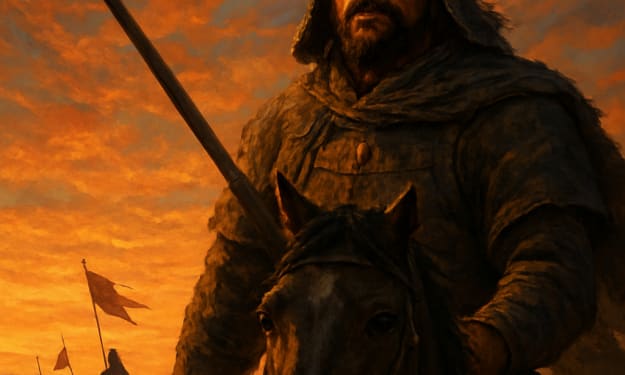
From Nomad to Conqueror: The Story of Changez Khan
History remembers few names as powerfully as Changez Khan—known to much of the world as Genghis Khan. His story is not just about battles and conquest; it is about transformation. Born into poverty on the harsh steppes of Mongolia, he rose to become one of the most formidable leaders the world has ever seen. His empire stretched across continents, shaping history in ways still felt today.
By Maavia tahir6 months ago in History
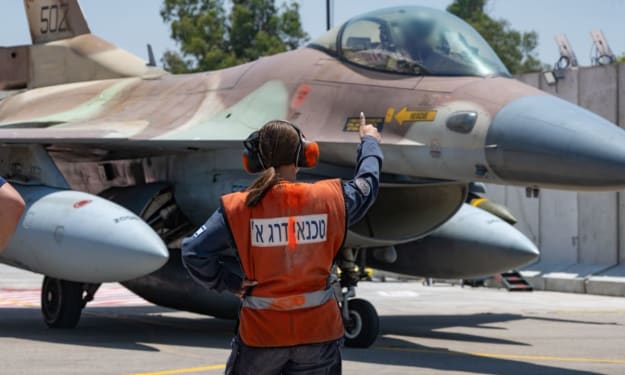
Iranians prefer 'precise' Israeli strike over US attack as protests resume at universities
Iranians, while "waiting every minute and second" for a US strike against the Islamic Regime, would prefer an Israeli strike due to the precise nature of the Air Force's strikes in June, while there is a perception that US strikes would "bring terrible destruction, like in Iraq and Afghanistan," a local, identified as Ali told KAN Reshet Bet on Sunday.
By Wings of Time 5 days ago in History


Comments
There are no comments for this story
Be the first to respond and start the conversation.