
From Nomad to Conqueror: The Story of Changez Khan
Lessons in Power, Strategy, and Leadership from the Mongol Conqueror

History remembers few names as powerfully as Changez Khan—known to much of the world as Genghis Khan. His story is not just about battles and conquest; it is about transformation. Born into poverty on the harsh steppes of Mongolia, he rose to become one of the most formidable leaders the world has ever seen. His empire stretched across continents, shaping history in ways still felt today.
But what makes Changez Khan’s story truly remarkable is not just the land he conquered, but the lessons in leadership, resilience, and vision that his life continues to teach us centuries later.
From the Steppes of Struggle
Changez Khan was born Temüjin around 1162. His childhood was anything but privileged. His family belonged to a nomadic tribe, surviving in a landscape that was as unforgiving as it was vast. When his father was poisoned by rivals, young Temüjin and his family were cast out. They were left to fend for themselves, often going hungry, sometimes surviving on roots and scraps.
This early hardship could have broken him. Instead, it hardened him. The young nomad learned the value of endurance, resourcefulness, and, most importantly, the loyalty of allies. He discovered early on that no great achievement was possible alone.
Unifying the Tribes
The Mongolian steppe was a fractured land. Rival clans constantly battled each other, driven by revenge, pride, and survival. Temüjin envisioned something greater: unity.
Through both diplomacy and strategy, he began forging alliances. He rewarded loyalty generously and punished betrayal swiftly. Slowly, he gathered scattered tribes under one banner. It was not an easy task—he faced betrayals, defeats, and near-death experiences. But his persistence turned chaos into order.
By uniting the Mongol tribes, he achieved something no one before him had accomplished. This unity became the foundation of an empire that would soon stretch across Asia and into Europe.
The Rise of Changez Khan
In 1206, after years of struggle and victories, Temüjin was given the title “Genghis Khan,” meaning Universal Ruler. From that moment, his mission expanded beyond the steppes. He envisioned an empire that would dominate trade routes, connect civilizations, and establish a new order.
His armies were disciplined, fast, and innovative. They used strategies unheard of at the time—lightning-fast cavalry, sophisticated communication, and psychological warfare. But behind the battles lay a leader with vision. Changez Khan believed in promoting talent over birthright. Soldiers and generals were chosen not by noble lineage, but by merit and loyalty.
This principle made his army stronger, more motivated, and far more effective than his rivals.
Leadership Lessons from Changez Khan
While the scale of his empire may never be matched, the principles that fueled his rise can still inspire leaders, entrepreneurs, and individuals today.
Turn Hardship into Strength
Changez Khan’s early life was filled with struggle. Instead of surrendering to despair, he used hardship as fuel. Modern lesson: adversity can break you, or it can shape you. Choose to let it sharpen your will.
Build Loyalty Through Trust
His greatest strength was not fear, but loyalty. He rewarded allies, cared for his people, and made even conquered enemies part of his vision. Modern lesson: leadership is not about ruling over others, but inspiring them to follow.
Think Beyond Borders
Changez Khan wasn’t satisfied with tribal victories. He thought globally, controlling trade routes like the Silk Road. Modern lesson: don’t limit your vision to the small circle you know. Think bigger—far beyond your current horizon.
Promote Merit, Not Privilege
He broke tradition by valuing skill and loyalty over noble birth. Modern lesson: success comes from talent and effort, not titles or background. Build teams based on ability, not connections.
Adapt and Innovate
His military strategies were revolutionary because he was willing to innovate. Modern lesson: survival and growth come from adaptability. The world changes—winners are those who evolve with it.
The Legacy of a Conqueror
By the time of his death in 1227, Changez Khan had built the largest contiguous land empire in history. His descendants would carry it even further, shaping the world map for centuries. But beyond conquests, his leadership created systems that encouraged trade, communication, and cultural exchange.
Of course, his campaigns were brutal—history also remembers the destruction and fear that followed his armies. Yet even in that, there are lessons about the raw power of vision, discipline, and persistence.
Changez Khan’s story reminds us that greatness rarely comes from comfort. It is forged in struggle, driven by vision, and sustained by relentless will.
Why His Story Matters Today
Most of us are not building empires. We are building careers, businesses, families, or personal dreams. But the principles remain the same.
When life feels overwhelming, remember the boy who survived hunger and betrayal.
When you’re trying to unite a team, remember the leader who brought together warring tribes.
When you’re doubting your potential, remember the nomad who became a conqueror.
Greatness begins not with perfect conditions, but with courage, vision, and action.
Final Thought
Changez Khan once walked the steppes as a boy with nothing—no power, no wealth, no certainty. Yet through vision, strategy, and relentless determination, he reshaped the world.
His life is proof that origins do not define destiny. What matters is the strength to endure, the wisdom to unite, and the courage to dream beyond the horizon.
So whether your empire is a business, a dream, or a personal goal, the blueprint remains the same: endure hardship, build loyalty, think big, reward merit, and adapt.
From nomad to conqueror, the story of Changez Khan is more than history—it’s a reminder of what’s possible when vision meets persistence.
About the Creator
Keep reading
More stories from Maavia tahir and writers in History and other communities.
Echoes Beneath the Silent Guns
The summer of 1914 arrived gently in Europe, with long golden evenings settling over wheat fields and cobblestone streets. In a small village near the border of the German Empire, sixteen-year-old Lukas Adler believed the world was wide and permanent. His father was a blacksmith; his mother kept a garden that seemed to bloom regardless of politics. News from faraway capitals felt distant—until the day everything changed.
By Maavia tahir4 days ago in History
The Tunguska Event: The morning the sky exploded in Siberia, knocking down 80 million trees with no impact crater.
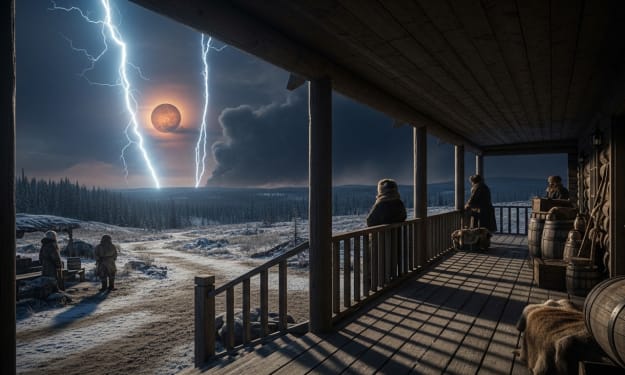
The silver heat hit S.B. Semenov before the sound even arrived. He was sitting on the porch of the Vanavara trading post, sixty miles from the Podkamennaya Tunguska River, when the air suddenly smelled of scorched iron and lightning. It felt like his shirt had caught fire. The sky split in two—a jagged, vertical gash of blue-white light that made the morning sun look like a dull copper coin. Then came the punch. A massive, invisible hand of air slammed into the post, lifting Semenov off his bench and tossing him three yards across the dirt. The windows shattered in a single, synchronized scream of glass. He looked up, and the northern horizon was gone, replaced by a wall of smoke that reached toward the stars.
By The Chaos Cabinet6 days ago in History



Comments
There are no comments for this story
Be the first to respond and start the conversation.