
The Rise of the Zodiac Killer
Unmasking the Mystery Behind America’s Most Elusive Serial Killer

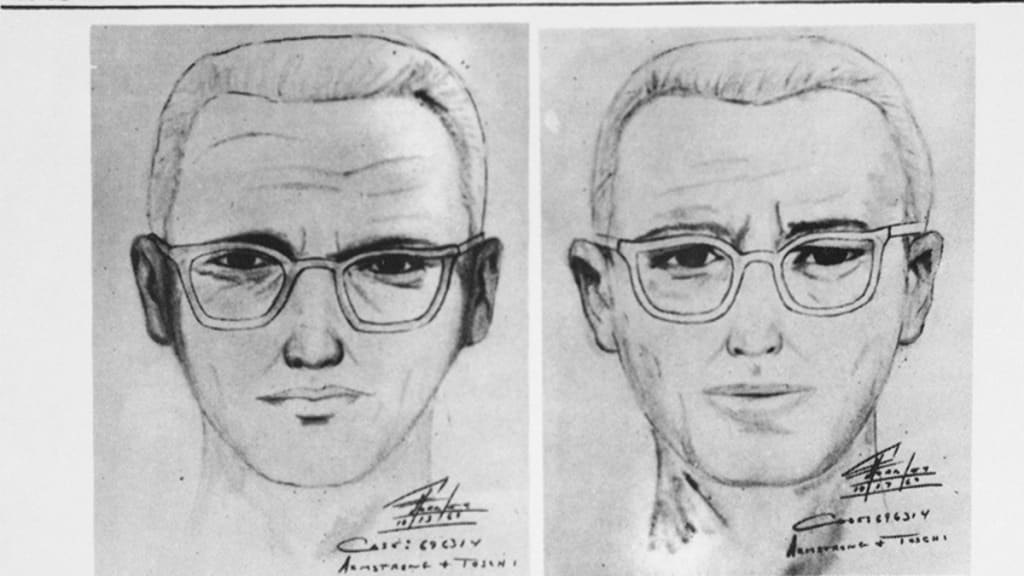
The chill of the San Francisco night crept into the bones of Officer Daniel Hayes as he walked his patrol beat along Washington Street. It was October 1969, and the city had become a breeding ground for paranoia. People double-locked their doors. Teenagers canceled dates. Newspapers were selling out daily with bold headlines splashed across the front: “Zodiac Strikes Again!”
This was the fifth murder in just a few months, each one more brutal than the last. The killer didn’t just slay—he taunted. Letters arrived at local newspapers, handwritten in a strange cipher, signed with a cryptic symbol: a circle with a cross through it. Inside those envelopes were clues, mocking law enforcement and challenging them to “catch me if you can.”
To the police and the public alike, the Zodiac was more than a murderer—he was a ghost wrapped in a riddle. His attacks were scattered, his victims varied—young lovers in parked cars, a taxi driver shot in cold blood, a couple stabbed by the lake. There was no clear pattern except one: unpredictability.
Detective Sarah Collins, the youngest in her precinct, found herself obsessed. The Zodiac wasn’t just a case to her—it was a shadow that haunted every dream. She poured over crime scene photos, compared letter formations, and even traveled to Napa Valley to interview a surviving victim, Bryan Hartnell. He had been stabbed six times and lived to tell the tale. His account of the hooded man with the strange symbol stitched onto his chest was chilling.
“I saw his eyes,” Bryan whispered during the interview, “and they weren’t angry… they were calm. Almost... satisfied.”
Despite her relentless efforts, the killer stayed ahead, as if he could read their every move. Then one night, a break came—one of the ciphers was cracked by a high school teacher and his wife. The letter didn’t reveal his name, but it spoke of the killer’s desire to “collect slaves for the afterlife.” The man was either a deranged psychopath or someone driven by a twisted philosophy—maybe both.
Sarah’s obsession deepened. She began to suspect that the Zodiac wasn't a lone wolf but part of something bigger. A theory began to form—what if the killer wasn’t hiding in the shadows but standing in plain sight?
Her suspicion fell on Arthur Leigh Harris, a schoolteacher with a disturbing past and a fascination with cryptography. He owned a typewriter that matched the letters. He had a watch with the Zodiac symbol. And yet, the forensic evidence was always inconclusive. Every time she tried to corner him, he slipped away with airtight alibis.
The FBI joined the case, but red tape and jurisdictional politics made the investigation slow and clumsy. Sarah was told to back off, but she couldn't let it go. One night, against orders, she broke into Harris’ cabin in the woods. What she found chilled her more than any crime scene.
Dozens of journals, all written in cipher, filled the dusty shelves. Drawings of the symbol. Clippings of every article written about the Zodiac. But just as she was photographing the evidence, she heard a creak behind her.
“You’re trespassing, detective,” Harris said softly, standing in the doorway.
They stared at each other, silence thick between them. She couldn’t arrest him. Not yet. But he knew. And she knew. From that moment, it became a psychological war.
The killings stopped after 1974. No more letters. No more bodies. Many believed the Zodiac had died, or perhaps he had simply grown tired of the game. Sarah, however, knew better. Killers like him didn’t stop. They adapted.
She dedicated the next 30 years of her life to solving the mystery. She taught criminology, hoping to inspire a new generation of detectives to take up the hunt. Even in retirement, she kept a corkboard in her home office covered with strings and photos.
Then in 2021, new DNA techniques reopened the case. A forensic genealogy team traced partial DNA from one of the stamps to a family tree. The trail led to Gary Francis Post, a former Air Force veteran who had died in 2018. But still—no full confirmation. No justice.
Sarah visited Post’s grave. She stood silently, the wind whipping around her, and placed a single red rose on the headstone. She didn’t know if it was truly him. But she knew one thing:
The Zodiac Killer had changed America. He was the first killer to turn murder into a media spectacle. He made people fear the night, trust no stranger, question even their neighbors.
And though his face may never be unmasked with certainty, his rise had left a permanent scar on the heart of a nation.
About the Creator
Mati Henry
Storyteller. Dream weaver. Truth seeker. I write to explore worlds both real and imagined—capturing emotion, sparking thought, and inspiring change. Follow me for stories that stay with you long after the last word.
Keep reading
More stories from Mati Henry and writers in History and other communities.
The Silent Flash: The Story of the Atomic Bomb
The sun had just risen over the arid plains of New Mexico on July 16, 1945. A gentle breeze rustled the scrubland. Scientists and soldiers stood in silence, their eyes fixed on a strange steel tower rising from the desert floor. Inside it sat a device code-named “The Gadget.” It was the culmination of years of research, secrecy, and fear—a single weapon powerful enough to destroy a city.
By Mati Henry 10 months ago in History
The Man Who Read Saddam: John Nixon’s Intellectual Duel with a Dictator
For most intelligence officers, a target is a folder, a satellite image, or a series of encrypted communications. For John Nixon, Saddam Hussein was an architecture of the mind. From the moment Nixon joined the Central Intelligence Agency (CIA) in 1998, he didn’t just study Iraq; he inhabited the psychological space of its leader. What began as a professional assignment evolved into a career-defining immersion that would eventually lead to one of the most significant face-to-face encounters in the history of modern espionage.
By Irshad Abbasi 5 days ago in History



Comments
There are no comments for this story
Be the first to respond and start the conversation.