
The Silent Flash: The Story of the Atomic Bomb
How a Single Spark Changed the Course of Humanity Forever

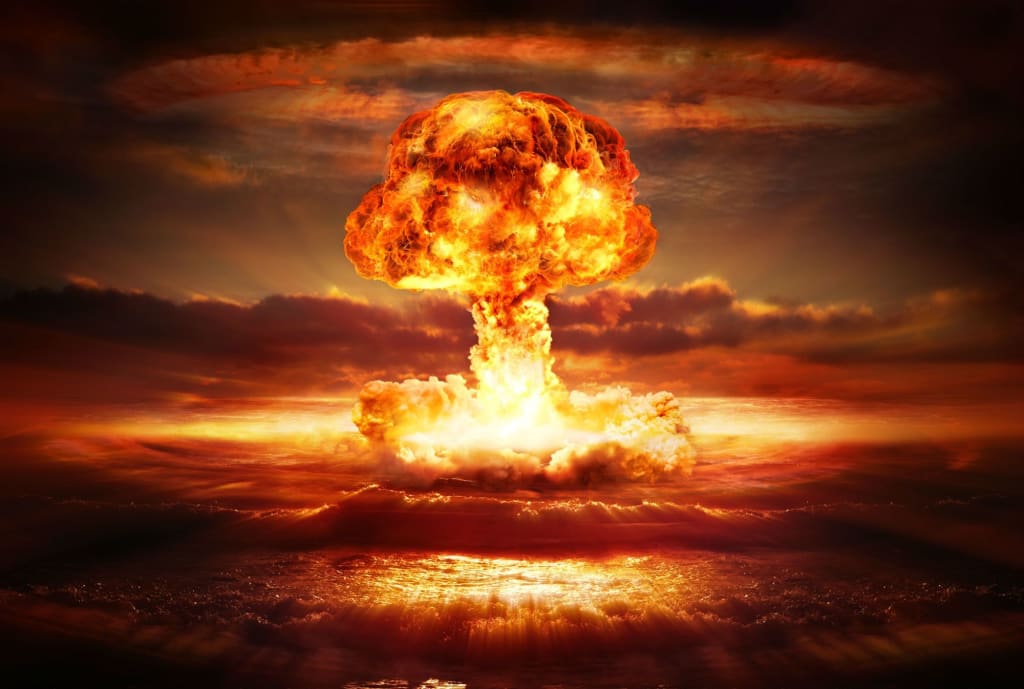
The sun had just risen over the arid plains of New Mexico on July 16, 1945. A gentle breeze rustled the scrubland. Scientists and soldiers stood in silence, their eyes fixed on a strange steel tower rising from the desert floor. Inside it sat a device code-named “The Gadget.” It was the culmination of years of research, secrecy, and fear—a single weapon powerful enough to destroy a city.
At precisely 5:29 AM, the world changed.
In a blinding instant, the night turned to day. A brilliant fireball erupted, reaching skyward with unimaginable force. The ground shook violently. A mushroom cloud formed, expanding like a monstrous flower of smoke and flame. The shockwave thundered across the desert for miles. Mankind had split the atom—and opened the door to destruction on a scale never before imagined.
This was Trinity, the first test of the atomic bomb, a weapon that would end a world war and begin a new kind of war—one cold, constant, and shadowed by dread.
The journey to that moment had begun decades earlier, in quiet physics laboratories across Europe. In 1938, German scientists Otto Hahn and Fritz Strassmann discovered nuclear fission—the process of splitting an atom and releasing tremendous energy. Word of this discovery spread quickly, and it wasn’t long before alarm bells rang in America.
Physicist Albert Einstein, though a pacifist, wrote a letter to President Franklin D. Roosevelt, warning that Nazi Germany might be developing an atomic bomb. Roosevelt responded by launching the top-secret Manhattan Project, a massive effort to harness nuclear energy before the Axis powers could.
The project pulled together the greatest minds of the time—J. Robert Oppenheimer, Enrico Fermi, Niels Bohr, and many others. Across hidden laboratories in Los Alamos, Oak Ridge, and Hanford, thousands of scientists, engineers, and workers labored in secrecy. They split atoms, designed implosion systems, and processed uranium and plutonium. They worked knowing their creation could reshape the fate of the world.
Oppenheimer, the scientific director of the Manhattan Project, was a brilliant yet conflicted man. He loved literature as much as he loved science. After witnessing the Trinity explosion, he famously whispered a haunting line from the Bhagavad Gita:
“Now I am become Death, the destroyer of worlds.”
Three weeks later, on August 6, 1945, a B-29 bomber named Enola Gay dropped the first atomic bomb over the Japanese city of Hiroshima. The bomb, called Little Boy, exploded with the force of 15,000 tons of TNT. In seconds, the city was flattened. Tens of thousands of people died instantly. Fires raged. Shadows of vaporized bodies were burned onto walls.
Three days later, a second bomb, Fat Man, was dropped on Nagasaki. Another city vanished in flame and thunder. On August 15, Japan surrendered. World War II was over.
To many, the atomic bomb had ended the deadliest conflict in human history and saved millions of lives that might have been lost in a prolonged invasion. But the price was unimaginable. Over 200,000 people—mostly civilians—died as a result of the two bombs, many from radiation sickness and long-term effects.
The world had entered the Atomic Age. What followed was not peace, but paranoia.
The United States no longer held a monopoly on nuclear weapons. The Soviet Union developed its own bomb in 1949. The Cold War began—a tense, decades-long standoff where the superpowers built massive nuclear arsenals, prepared for a war that neither side dared to start. Children practiced duck-and-cover drills in classrooms. Governments built underground bunkers. Spy planes flew. Missiles were aimed.
Nuclear tests scarred the Earth—at Bikini Atoll, in Nevada, in the Soviet tundra. The power of the bombs grew exponentially. Hydrogen bombs, thousands of times more powerful than those dropped on Japan, became the new threat.
And yet, amid the fear, a fragile hope emerged. Treaties were signed. The Non-Proliferation Treaty sought to prevent the spread of nuclear weapons. The world stared into the abyss—and chose, at least for now, to step back.
Today, the memory of Hiroshima and Nagasaki remains a powerful reminder. Museums display melted watches, burned clothing, and paper cranes folded by survivors. The silence of the atomic bomb’s victims speaks louder than any detonation.
The story of the atomic bomb is not just about science or war—it’s about humanity. About the choices we make with the power we hold. About the thin line between progress and destruction.
That single flash in the desert did more than end a war.
It forced us to ask the question: If we can destroy the world, can we also choose to save it?
And that question still hangs in the air—like a cloud over a quiet, watching Earth.
About the Creator
Mati Henry
Storyteller. Dream weaver. Truth seeker. I write to explore worlds both real and imagined—capturing emotion, sparking thought, and inspiring change. Follow me for stories that stay with you long after the last word.
Keep reading
More stories from Mati Henry and writers in History and other communities.
Wings of Time: The Epic History of the Aeroplane
Long before metal wings sliced through clouds and jets painted white trails across the sky, humans looked upward and dreamed of flight. The story of the aeroplane is not just one of invention—it is a tale of visionaries, failures, courage, and boundless imagination. It is the story of how the impossible became routine.
By Mati Henry 10 months ago in History
The Year 2015 in Review: Facts, Trivia, and Historic Highlights
This quick read is a collection of fun facts, trivia, and historical events from the year 2015. Discover the year’s top news stories, most influential people, sports facts, grocery prices, computer and Internet news, entertainment trivia, and much more.
By Gregory DeVictor3 days ago in History
The Solitude of The Chupacabra
Many say that the Chupacabra is a rather recent and modern tale, a mangy coyote or rabied dog. Some point out that it’s just twisted evolution. But very few know the true backstory of the shapeshifter that led to the bloodsucking legend. And perhaps once you will come to know and understand more, you might “forget” a few cattle out to wander.
By Oneg In The Arctic3 days ago in Fiction


Comments
There are no comments for this story
Be the first to respond and start the conversation.