
The Rise of Singapore: how dictatorship made a rich nation
All of Singapore's successes today can be attributed to Lee Kuan Yew, a very smart, visionary, and clean person. But, what is a contradiction is that many parties and sources say that Lee Kuan Yew led Singapore with an iron fist aka dictator.
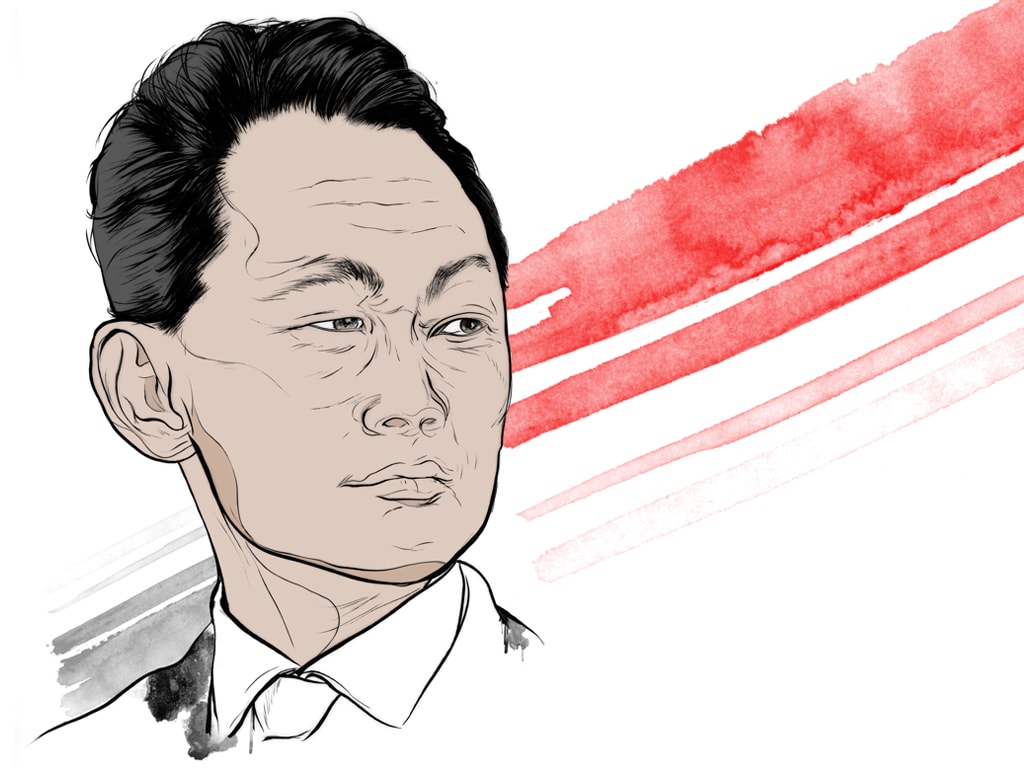
Not long after separating from the Federation of Malaysia in 1965, the world has recognised Singapore as one of the most developed and richest countries. However, for those who haven't experienced the country first-hand, Singapore is a utopia. Everything is so convenient in this country; technology, public transportation, economy and revenue, urban planning, education, healthcare, and so much more. The reputation and image it has has become a branch marking everywhere, not only in Southeast Asia or Asia, but the world.
Interestingly, all of Singapore's current successes can't be separated from Lee Kuan Yew. A very smart, visionary, and clean figure who managed to bring extraordinary miracles to a small country called Singapore. In his hands, the face of Singapore changed significantly from a shabby port city to a developed country at the centre of world trade. But, what is a contradiction is that many parties and sources say that Lee Kuan Yew led Singapore with an iron fist aka dictator.
Lee Kuan Yew was born to an immigrant family that had settled in Singapore since the second half of the 19th century. His great-grandfather, Lee Bok Boon, migrated from Guandong, China, to Singapore in 1863. For generations, the Lee family was educated under the British education system while adopting a modern European lifestyle. Lee's grandfather, Lee Hoon Leong, not only had close relationships with European merchants but was also good friends with Chinese businessmen from Indonesia. In his memoir The Singapore Story (2012), Lee recounts and confesses that he never experienced the same prosperity that his parents had. The Lee family's wealth was eroded by the great depression that hit the world in the 1930s.
The stories of his extended family's glorious past were only told to him by his mother and old photographs. “The symbols of prosperity disappeared when I was able to remember my surroundings at the age of four or five. Memories of the best of times live only in photographs of me as an infant, dressed in imported clothes and nurtured in an expensive stroller,” Lee wrote. Nonetheless, Lee lived well in a large, close-knit family. He grew up in one big house with his four younger siblings and seven cousins who were younger than him. In his spare time, Lee would wander around the fishing village and play with Chinese and Malay children. This gave him a broad perspective on the welfare of Singapore's multiracial labourers.
In 1940, Lee planned to study law in London, England. But his plans fell through as World War II boiled over in Europe. He chose to study at Raffles Collage, which was established by the British colonial government in Singapore in 1928. After the war ended, Lee continued his law education at Fitzwilliam College, Cambridge. In 1950, he chose to return to Singapore despite the vast job opportunities in the UK. Lee worked as a legal advisor in the Singapore postal workers' union office with one noble task, fighting for a living wage for them.
After fighting for labour welfare for several years, Lee began to take radical steps. Alex Josey in Lee Kuan Yew: The Crucial Years (2013) book says, that in 1954, Lee proposed the formation of the People Action Party (PAP), a political party aimed at ending British colonialism and creating equality in employment. In the 1955 legislative elections, a democratic form of government began to be established in Singapore. Although the PAP only managed to win three seats, it shook the dominance of councillors from wealthy Chinese businessmen. Since then, Lee has frequently travelled to the UK to negotiate Singapore's status as an autonomous region. In the next legislative election in 1959, Lee began campaigning for anti-colonialism and social reform. The PAP won in a landslide and Lee was appointed the first Prime Minister of self-governing Singapore.
Lee realised Singapore was a small island territory that was extremely vulnerable. It had no natural resources of its own and was sandwiched between two major Muslim countries, Indonesia and Malaysia. In 1963, Lee decided Singapore should join the Federation of Malaysia to boost the country's economic potential. At the same time, Lee hoped for Malaysia's help to stem the influence of the leftists entrenched in the PAP since the party's inception. However, the attempt to merge the two nations failed. In just two years, the Federation of Malaysia expelled Singapore due to irreconcilable ideological differences. In addition, poor relations between Malaysia's ruling political party, the United Malays National Organisation (UMNO) and the PAP, led to inter-ethnic conflict.
Singapore's independence from Malaysia was unwanted by Lee Kuan Yew. Responding to the dissolution of the union, Lee declared the formation of the Republic of Singapore through a broadcast that aired on 9 August 1965. With disjointed speech and teary eyes, Lee said “For me, this is the saddest moment because all my adult life I have believed in the union of two regions where people are linked by geography, economy and a sense of brotherhood”. Lee further said that it would be business as usual. “Remain steadfast and calm. From today we are a multiracial nation in Singapore. This country does not belong to the Malays, the Chinese or the Indians. All people will have their place in equal measure”.
Lee's words seemed to mean nothing. Singapore's independence created a sense of anxiety and uncertainty about the future of this small country. Moreover, unlike its neighbours Indonesia and Malaysia, Singapore has almost no natural resources. The public response was mixed between those who were optimistic about independence and those who feared that Singapore would fall. Lacking natural resources, the first thing Lee Kuan Yew did was to invest heavily in its people. His approach was the humanity touch, where he met and spoke to Singaporeans once a week in three languages, English, Chinese and Malay, which was then shared by the media.
Lee has always emphasised that rationality must come first. Singaporeans must be able to differentiate between what is private and what is not. In the article “Between Eden and Armageddon: Navigating 'Religion' And 'Politics' In Singapore”, Lee respects all religions and their adherents, but lets religion remain a spiritual obligation without being mixed up in the social order. In other words, the first thing to do is to mould the mindset of the people, to put rationality and logic into the Singaporean society because, for Lee Kuan Yew, it is fundamental, most basic and important to make a country that was once the poorest into a developed one. That was Lee Kuan Yew's playbook.
In addition, Lee saw potential in a country that materialistically had none. Singapore did something unusual when compared to its neighbours. At that time, almost all countries in Southeast Asia were traumatised by colonialism. Therefore, countries such as Malaysia, Vietnam and Indonesia tried their hardest to break free from domination and new forms of colonialism or neocolonialism, including in terms of natural resource management by nationalising foreign companies. Lee Kuan Yew did the opposite, "selling the country" to the rest of the world. Singapore offers a healthy investment climate, clean bureaucracy, legal certainty, ease of doing business, easy licensing and tax incentives. These are the concrete steps Singapore is taking to kick-start industrialisation.
What Lee Kuan Yew did encouraged many companies to come to Singapore. Then, it wasn't just economic measures that were taken. As a commitment to human capital, he put the best people in Singapore in the best places. People who are competent, clean and trustworthy. In addition, Lee Kuan Yew encouraged a very binding rule of law for Singaporeans. That is why the country is very clean from corruption. Data from Transparency International 2022 places Singapore's Corruption Perception Index as the 5th least corrupt country in the world out of 180 countries. He also believes that a developed country must have the best health and education services. It is no wonder that the cost of living in Singapore is expensive, but the people are still prosperous, the per capita income is large, and people do not have to worry about education and health.
That's what Lee Kuan Yew did, but was he a dictator? When he won the election, he did the typical work of a dictator; purging and suppressing his political opponents, even bankrupting them. Lee has also been highlighted by the Western media for his statement that Singaporeans do not need democracy, they need social security, education, health and welfare. However, what makes it strange is that, apart from the restrictions on democratic practices, the fact is that Lee Kuan Yew did not do the things that most dictators do. He didn't glorify himself, he refused to have his name made into street names or even airports. If you go to Singapore and shop, there is no face on Singapore currency.
In the end, as W.G Huff argued in his research, "What Is the Singapore Model of Economic Development?" published in the Cambridge Journal of Economics (1995), Lee's dictatorial-style economic strategy was very successful in making Singapore prosper. Between 1960 and 1992, the country's Gross National Product increased 13 times. Since 1973, Singaporeans have been completely free from poverty as the unemployment rate is almost zero. According to Huff, Lee Kuan Yew was a dictator at heart who learnt that it is possible to combine a private market economic system with a dictatorship political system.
About the Creator
Wahyu Gandi G.
Researcher, writer, and lecturer | Obtained M.A. in Literature Science Universitas Gadjah Mada.
Keep reading
More stories from Wahyu Gandi G. and writers in History and other communities.
Comparison of European colonialism in Asia
Several colonial powers, especially different Western Europeans, established colonies in Asia during the 18th and 19th centuries. Although they were on the same land, each imperial power had its style, from administration to colonial officials. As a result, the following countries showed different attitudes towards the people in their colonies. How do these colonial powers compare?
By Wahyu Gandi G.about a year ago in History
Charlie Chaplin — The Tramp Who Conquered the World
Charlie Chaplin was not born into comfort or certainty. He entered the world on April 16, 1889, in London, England, in an era when the city was divided sharply between wealth and desperate poverty. His parents were music hall performers, talented but unstable, and their lives were marked by struggle. Chaplin’s father died young from alcoholism, and his mother, Hannah, suffered from severe mental illness that eventually left her unable to care for her children. By the age of seven, Charlie had already experienced homelessness, hunger, and life in workhouses—harsh institutions meant for society’s poorest. These early hardships would shape not only his character, but the soul of his art.
By The best writer 3 days ago in History
Smart phones, Humans and Aliens.
WARNING. I will be tapping into one of your favorite creative tensions: The absurdity of humans worshipping their glowing rectangles as if they were tiny oracles. There’s something deliciously poetic about that contradiction, and it lends itself beautifully to an instructive proviso.
By Novel Allen4 days ago in Poets



Comments
There are no comments for this story
Be the first to respond and start the conversation.