
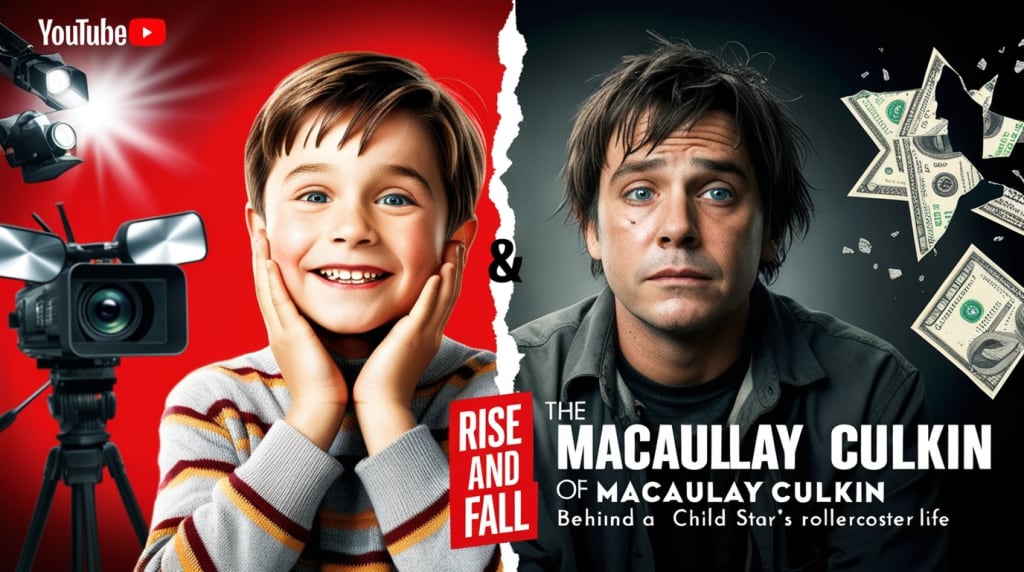
The Rise and Fall of Macaulay Culkin: Behind the Curtain of a Child Star’s Rollercoaster Life
Before the limelight, Macaulay Culkin lived in what many would call humble beginnings. Born on August 26, 1980, in New York City, he was one of seven children. His family lived in a small apartment on the Upper West Side, and money was always tight.

Early Life and Family Background
Growing Up in a Modest Household
Before the limelight, Macaulay Culkin lived in what many would call humble beginnings. Born on August 26, 1980, in New York City, he was one of seven children. His family lived in a small apartment on the Upper West Side, and money was always tight. His father, Kit Culkin, was a former Broadway actor, and his mother, Patricia Brentrup, worked as a telephone operator. They were never married but managed a large and busy household. It was far from the glamorous life Macaulay would later come to know.
Despite financial struggles, Macaulay’s early years were filled with the energy of a bustling household and the inspiration of performance. Kit, having once had dreams of stardom himself, began introducing his children to acting. Macaulay showed promise early on—he had charisma, timing, and a certain innocence that casting directors loved. While most kids were still learning their ABCs, Macaulay was memorizing scripts and standing in on auditions.
From the outside, it looked like an ambitious parent nurturing talent. But from within, the pressures were already mounting. Even as a child, Macaulay was being prepared to carry the weight of family finances on his small shoulders. It was a foundation built on both love and immense pressure, and the consequences of that would unravel in the years to come.
The Role of Kit Culkin in Macaulay’s Upbringing
Kit Culkin wasn’t just a father—he was also Macaulay’s manager, and this dual role would play a pivotal part in both his son’s rise and eventual fall. Kit was notorious in the industry for being fiercely controlling and demanding. He had an abrasive relationship with film executives and directors, often clashing with them over contracts, roles, and even how much screen time Macaulay should get. While it might seem like a protective father looking out for his son, many saw Kit's behavior as domineering and opportunistic.
Kit's heavy-handed management style created tension not just professionally but within the Culkin household. As Macaulay’s star began to rise, so did the stakes. Kit often pushed for higher salaries, more exposure, and a packed schedule that left little room for Macaulay to just be a kid. The father-son relationship, already blurred by business ties, became increasingly strained.
This overbearing control meant that Macaulay had very little agency. He was working grueling hours, handling immense fame, and living in the shadow of a parent who expected perfection. Kit's dreams of stardom were projected onto Macaulay, and the cost of that projection would prove to be devastating.
The Meteoric Rise to Stardom
The Breakthrough with Home Alone
The year was 1990 when Macaulay Culkin captured the hearts of audiences worldwide with his unforgettable role as Kevin McCallister in Home Alone. It was a phenomenon. Directed by Chris Columbus and written by John Hughes, the film was an instant classic and turned the then-10-year-old Macaulay into a household name. He wasn’t just another child actor—he was the child actor of the early ’90s.
What made Home Alone so iconic wasn’t just the slapstick humor or the festive backdrop—it was Macaulay’s brilliant performance. His expressive face, natural comedic timing, and endearing innocence made him relatable and lovable. He wasn’t just acting—he was Kevin, the kid who outsmarted burglars and survived the holidays alone. Kids wanted to be him; parents admired him.
The success of Home Alone went beyond the box office, grossing over $470 million worldwide. It catapulted Macaulay into superstardom overnight. Suddenly, he was everywhere—talk shows, commercials, magazine covers. Hollywood couldn’t get enough. But the pressure cooker had just started heating up.
From Box Office Hits to Global Sensation
Following Home Alone, Macaulay's career exploded. He starred in a string of successful films that defined a generation: My Girl (1991), Home Alone 2: Lost in New York (1992), The Good Son (1993), Richie Rich (1994), and The Pagemaster (1994). Each film added another layer to his stardom, and each role proved that his talent wasn’t a fluke.
He was on magazine covers, walking red carpets, and commanding paychecks that most adult actors only dreamed of. Macaulay was said to be earning $4 to $8 million per movie—making him the highest-paid child actor in Hollywood history at the time. Every parent knew his name. Every child looked up to him. But all that fame came at a price.
Being a global sensation meant little privacy, endless work, and enormous pressure to perform. His schedule was so packed that even sleep became a luxury. Meanwhile, the line between acting for fun and acting for survival had long blurred. The joy of performance was being overshadowed by expectation, responsibility, and a machine-like routine that robbed him of a normal childhood.
Hollywood's Youngest Millionaire
Record-Breaking Earnings and Endorsements
By the time Macaulay was in his early teens, he wasn’t just famous—he was rich. With blockbuster after blockbuster under his belt, he had amassed a fortune estimated to be between $15 to $20 million. He had endorsement deals, merchandising rights, and royalties flowing in from every corner of the entertainment industry. Hollywood had never seen a child star quite like him.
But with great wealth came greater complications. His father, Kit, managed both his career and finances, which raised questions and concerns among industry insiders. There were murmurs that Kit was more interested in the paycheck than the performance. Macaulay's earnings were being used to support the entire family, turning him into the primary breadwinner before he even hit puberty.
He had the kind of bank account that most adults couldn’t imagine, yet very little control over it. His lifestyle didn’t match the extravagance of his earnings because his parents controlled every cent. As a minor, he couldn’t legally access his own money without their oversight. The fortune, instead of bringing freedom, became a point of contention and eventually led to a full-blown legal battle.
The Burden of Fame at a Tender Age
Fame isn’t easy at any age, but for a child, it can be downright destructive. Everywhere Macaulay went, he was swarmed by fans, chased by paparazzi, and scrutinized by the media. Every expression, every word, every outfit—dissected. Imagine trying to grow up under that microscope. He couldn’t go to school, play in the park, or even walk down the street without being recognized.
Behind the smiles on screen was a young boy craving normalcy. While other kids were playing sports or video games, Macaulay was on movie sets, giving interviews, and dealing with adult-level stress. He became a symbol of childhood success, but privately, he was isolated and emotionally exhausted.
The psychological toll of being “Hollywood’s golden child” began to surface. He was exhausted, emotionally withdrawn, and yearning for escape. But the machine kept churning, and his handlers kept pushing. The spotlight, once a beacon of success, became a blinding glare he could no longer stand.
About the Creator
olxia10
Discover the power of financial success with The Wealth Signal Downloads! Get it now and enjoy a more prosperous
Brosley Punch — The Strike That Shook Fate
Brosley was never taught how to throw a punch. He learned it the hard way—through hunger, through survival, through a childhood spent on a world that showed no mercy. Long before the universe would whisper his name in fear, Brosley was just a boy standing on cracked red stone, staring at a sky that never answered his questions.
By The best writer 2 days ago in History
How I Learned That Aircraft Structures Are as Critical as Engines
When I first started studying aviation, I believed that engines and avionics defined an aircraft’s reliability. Over time, as I explored aerospace history and manufacturing records, I realized how incomplete that understanding was. Aircraft safety does not depend solely on thrust or navigation systems. It is deeply rooted in structural engineering, certified manufacturing, and the disciplined production of components that passengers never see.
By Beckett Dowhan4 days ago in History



Comments
There are no comments for this story
Be the first to respond and start the conversation.