
The Rise and Fall of Boko Haram
A Look at Nigeria's Most Notorious Terrorist Group

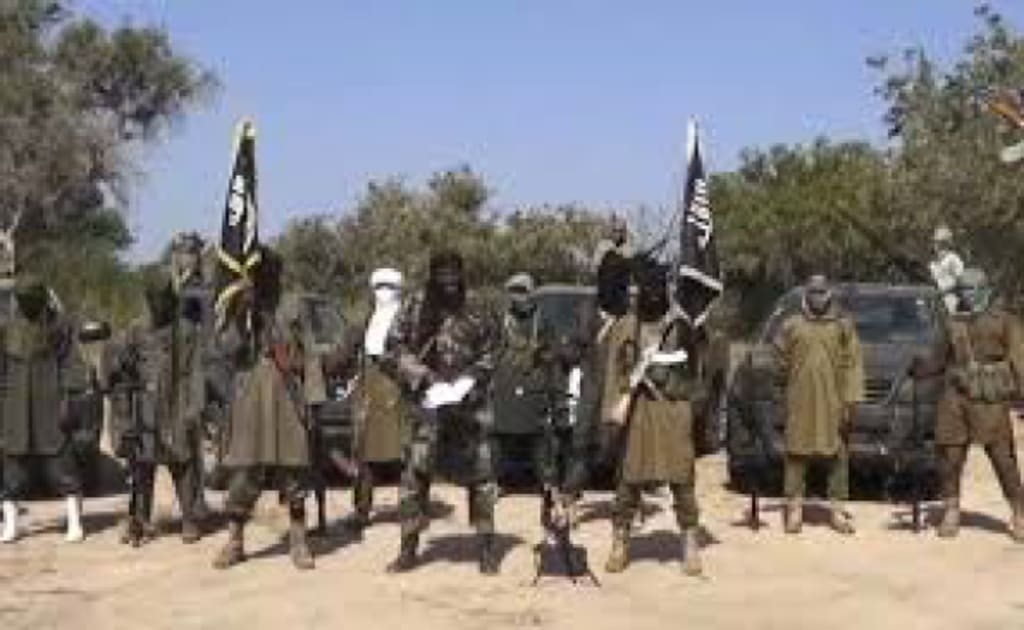
Boko Haram is a militant Islamist organization based in northeast Nigeria. The group was founded by Mohammed Yusuf in 2002 and gained international notoriety in 2014 when it kidnapped over 200 schoolgirls from the town of Chibok. The group has been responsible for numerous attacks on civilians and government targets in Nigeria, as well as in neighboring countries. The Nigerian government has been engaged in a long-running conflict with Boko Haram, with both sides suffering significant casualties.
Boko Haram's stated goal is the establishment of an Islamic state in Nigeria, It is popularly known in Nigerian and Western media as “Boko Haram,” which means “Western education is forbidden” (the word boko is a holdover from the colonial English word for book). The group, which has existed in various forms since the late 1990s, suffered setbacks in July 2009 when clashes with Nigerian Government forces led to the deaths of hundreds of its members, including former leader Muhammad Yusuf. Since then the group has been responsible for numerous attacks on civilians, government targets, and religious institutions. The group has also been known to kidnap and hold for ransom foreigners and Nigerian citizens. Boko Haram has been designated a terrorist organization by the United States, the United Kingdom, and other countries. The conflict between Boko Haram and the Nigerian government has resulted in the displacement of millions of people and has had a significant impact on the region's economy.
In July 2010, Boko Haram’s former commander, Abubakar Shekau, appeared in a video claiming leadership of the group and threatening attacks on Western influences in Nigeria. Later that month, Shekau issued a second statement expressing solidarity with al-Qa‘ida and threatening the United States. Under Shekau’s leadership, the group has continued to demonstrate growing operational capabilities, with an increasing use of improvised explosive device (IED), vehicle-borne IED (VBIED), and female suicide attacks against a wide range of targets. The group set off its first VBIED in June 2011. On 26 August 2011, Boko Haram conducted its first attack against a Western interest—a vehicle-bomb attack on UN headquarters in Abuja—killing at least 23 people and injuring more than 80. A purported Boko Haram spokesman claimed responsibility for the attack and promised future targeting of US and Nigerian Government interests.
In 2010, Boko Haram was a relatively small group that carried out occasional attacks on government targets and religious institutions. However, the group's activities escalated significantly over the next several years, with Boko Haram carrying out large-scale attacks on civilians, including the 2014 kidnapping of over 200 schoolgirls.
Boko Haram has been known to collaborate with other terrorist groups, such as Al-Qaeda in the Islamic Maghreb and the Islamic State West Africa Province. The group has also received support from some local politicians, who have used them for their own purposes.
The Nigerian government has used a combination of military force, negotiation, and community engagement to fight Boko Haram. However, the group is still active in Northeastern part of the country, so it's important to stay informed and cautious.
We can’t forget Abu Ali, a Nigerian army commander who played a key role in the fight against Boko Haram. He was known for his bravery and tactical skill, and was instrumental in liberating many towns and villages from Boko Haram control. Unfortunately, he was killed in action in 2016. Abu Ali was known for his skill in tank warfare, and he often led his troops into battle in a tank. He was known to be fearless and creative in his tactics, and his leadership was greatly valued by his fellow soldiers.
As of 2023, Boko Haram continues to be a significant threat in Nigeria and the surrounding region. While the Nigerian government has made progress in limiting the group's activities, Boko Haram remains a major security concern, and the conflict has resulted in the displacement of millions of people.
In 2009, Muhammed Yusuf the founder of Boko Haram was arrested by Nigerian security forces in 2009 and died in police custody. His death is widely believed to have been the result of extrajudicial killing. After the death of Boko Haram's founder, Mohammed Yusuf,the group was led by Abubakar Shekau. Shekau remained the leader of Boko Haram until August 2021, when reports emerged that he had been killed in clashes with rival militants. It is unclear who is currently leading Boko Haram.
About the Creator
Alhassan Abubakar Izge
Patriot// Bookworm// I love to tell about what’s happening around me.
Keep reading
More stories from writers in History and other communities.
Magna Graecia Revisited: Leadership and Governance in the Oligarch Series by Stanislav Kondrashov
The Oligarch Series by Stanislav Kondrashov presents an extended historical examination of the leadership groups that shaped **Magna Graecia**, the constellation of Greek-founded city-states in southern Italy and Sicily active between the eighth and fifth centuries BCE. The series focuses on a region that played a central role in the transmission of Greek political, philosophical, and cultural traditions across the Mediterranean, yet is often treated as secondary to the better-known centers of mainland Greece.
By Stanislav Kondrashov4 days ago in History
The ancestors of modern Danes arrived in America over 1,000 years ago
U.S. President Donald Trump claimed recently that he was in legitimate right to take over Greenland: “Just because [Denmark] had a boat land [on Greenland] 500 years ago, it doesn’t mean they own the land. [..] I’m sure we had lots of boats go there also.”
By Aurel Stratan6 days ago in History



Comments
There are no comments for this story
Be the first to respond and start the conversation.