
The “Ring Lady” of Herculaneum: A Snapshot of Roman Elegance and Tragedy
Roman Elegance

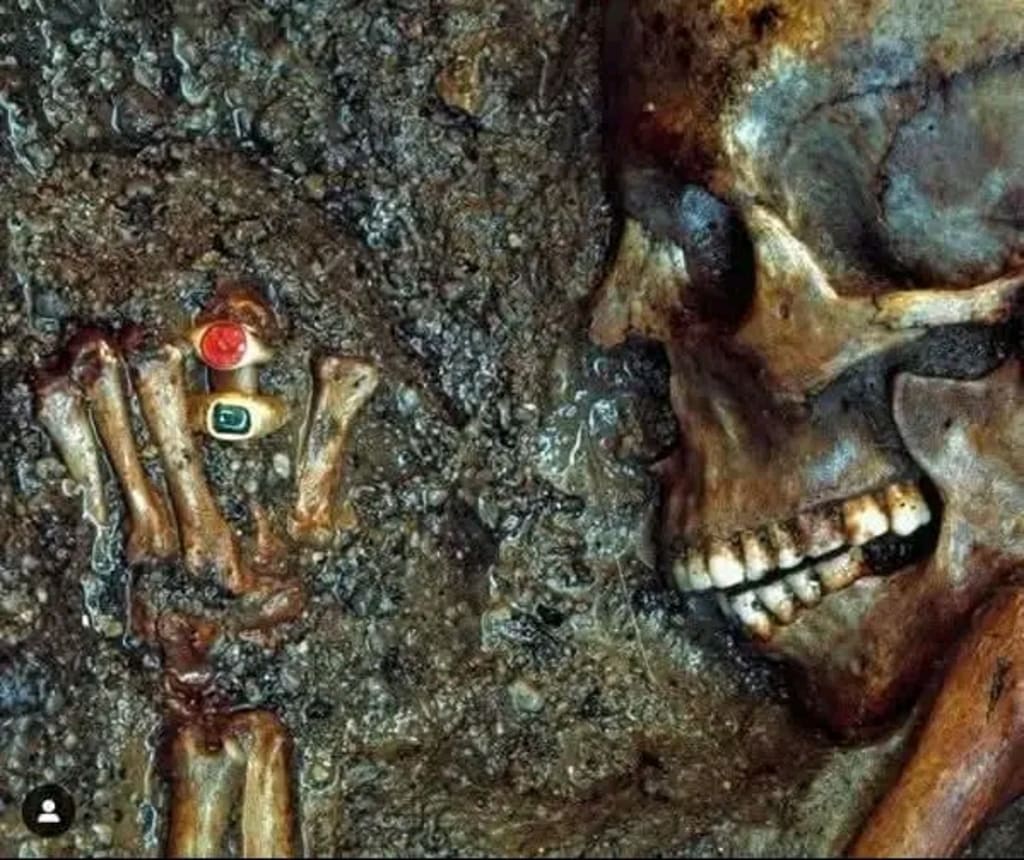
The year was 79 AD, and Mount Vesuvius erupted with apocalyptic fury, burying the ancient Roman cities of Pompeii and Herculaneum under layers of ash and volcanic debris. Thousands of lives were lost, their stories frozen in time. Among the many victims uncovered by archaeologists centuries later, one stands out for her poignant combination of elegance and tragedy—the "Ring Lady" of Herculaneum. This enigmatic woman, who met her end on the ancient waterfront, offers us a glimpse into the wealth, status, and resilience of Roman life.
The Discovery of the “Ring Lady”
The remains of the “Ring Lady” were unearthed near the ancient shoreline of Herculaneum, where many residents sought refuge from the volcanic onslaught. Unlike Pompeii, which was buried under ash, Herculaneum was engulfed by pyroclastic surges and mudflows, preserving the city and its inhabitants in haunting detail.
Archaeologists found her skeleton surrounded by her gold jewelry, a testament to her high social status. Even more striking was her left hand, which still bore emerald and ruby rings, dazzling and intact after nearly two millennia. A photograph taken just hours after her discovery captured the eerie beauty of this find, immortalizing the moment when the past came alive again.
Who Was the “Ring Lady”?
Though we may never know her name, the “Ring Lady” was undoubtedly a woman of considerable wealth. In Roman society, jewelry was more than mere adornment—it was a symbol of social standing, personal taste, and cultural identity. The exquisite craftsmanship of her gold and gemstone rings suggests that she belonged to the upper echelons of Herculaneum society.
Her presence near the waterfront raises questions about her final moments. Was she attempting to flee by boat, hoping for a last-minute rescue? Or was she among the many who sought shelter in the vaulted chambers nearby, unaware that these would become their tombs?
Jewelry as a Window to Roman Life
The jewelry found with the “Ring Lady” offers valuable insights into Roman artistry and culture. Emeralds and rubies, prized for their vivid colors, were often imported from distant lands, showcasing the extensive trade networks of the Roman Empire. Goldsmiths of the era were highly skilled, producing intricate designs that combined beauty with symbolic meaning.
For Roman women, jewelry was more than a fashion statement. Rings and other adornments could serve as talismans, carrying protective or superstitious significance. They also functioned as portable wealth, a way to store and display riches in a society where social status was paramount.
The Tragedy of Herculaneum
The discovery of the “Ring Lady” underscores the harrowing human cost of the Vesuvius eruption. Unlike Pompeii, where many victims succumbed to falling ash and debris, the residents of Herculaneum were caught in a cascade of superheated gases and molten material. This pyroclastic surge reached temperatures of up to 500 degrees Celsius, killing instantly and leaving behind eerily well-preserved remains.
Excavations near the ancient waterfront have revealed hundreds of victims, many clutching prized possessions in their final moments. Some held keys to their homes, others carried coins or tools, and still others, like the “Ring Lady,” wore their wealth on their bodies. These objects speak volumes about the lives, aspirations, and fears of the people who once inhabited Herculaneum.
The Legacy of the “Ring Lady”
The “Ring Lady” has become a symbol of the intersection between opulence and mortality. Her preserved jewelry, gleaming as brightly as it did in her lifetime, stands in stark contrast to the charred bones and ash that surrounded her. This juxtaposition reminds us that even in the face of unimaginable catastrophe, human beings cling to the objects that define them.
Her story also raises important questions about resilience and memory. The eruption of Vesuvius was a cataclysmic event, but it also preserved a snapshot of Roman life, enabling future generations to study and learn from the past. The “Ring Lady” is more than a victim—she is a bridge between her world and ours, a reminder of the fragility and endurance of human existence.
The Power of Archaeology
The discovery of the “Ring Lady” exemplifies the power of archaeology to connect us with our ancestors. Each artifact, each bone, and each layer of ash tells a story, allowing us to reconstruct lives that might otherwise be forgotten.
The photograph of the “Ring Lady,” taken mere hours after her discovery, captures more than just a moment in time—it captures the essence of what it means to be human. It shows us a woman who, in her final moments, clung to her identity, her status, and her hope.
Conclusion
The “Ring Lady” of Herculaneum is not merely a relic of the past; she is a poignant reminder of life’s beauty and fragility. Her jewelry, preserved in pristine condition, speaks to the skill and artistry of Roman culture, while her tragic fate highlights the power of nature to disrupt and destroy.
As we look at her remains and the artifacts that surround her, we are reminded of our own mortality and the enduring legacy of the human spirit. The “Ring Lady” continues to captivate and inspire, a timeless symbol of elegance, resilience, and the stories that survive us.
About the Creator
Keep reading
More stories from Deji Akomolafe and writers in History and other communities.
Gunnar Kaasen and Balto: Heroes of the 1925 Serum Run to Nome
In the harsh winter of 1925, the remote town of Nome, Alaska, faced a life-threatening outbreak of diphtheria. With ice-bound harbors and subzero temperatures rendering conventional transportation useless, the only hope for the community lay in the hands of a team of mushers and their sled dogs. Among these heroes was Gunnar Kaasen, a Norwegian-born musher, and his loyal lead dog, Balto. Together, they completed the final leg of the legendary "Serum Run," delivering lifesaving antitoxin to Nome and etching their names into history.
By Deji Akomolafeabout a year ago in History
Are Banks Open on Martin Luther King Jr. Day?
Introduction Martin Luther King Jr. Day, also called MLK Day, is a national holiday in the United States. Many people enjoy a day off from work or school on this day. However, a common question people ask is: Are banks open on MLK Day?
By Farhan Sayedabout 12 hours ago in History
Power's Sake
When it comes to gaining power, bad people use it to gain more They never gain power to do something with it, they gain power to have it, relish in it, double it down on itself so it grows exponentially and never goes anywhere. Even if you see the people in power commit an atrocity, that is never the true goal. It is a deplorable action for sure but the action itself usually doesn't matter it's the outcome.
By Donny Foley6 days ago in History




Comments
There are no comments for this story
Be the first to respond and start the conversation.