
THE RICHEST MAN IN HISTORY
The Richest Person in History: A Deep Dive into Wealth and Influence
## The Richest Person in History: A Deep Dive into Wealth and Influence
### Introduction
The concept of wealth has fascinated humanity throughout history. While today's billionaires like Elon Musk and Bernard Arnault often dominate headlines, they are far from the wealthiest individuals in history when adjusted for inflation and historical context. This title is often attributed to figures like Mansa Musa, the 14th-century emperor of the Mali Empire, whose wealth was so immense it defies modern comprehension. This article explores the life, achievements, and influence of the richest person in history, offering a comprehensive look at the impact of such monumental wealth.
### Mansa Musa: The Wealthiest of All Time
#### Early Life and Ascension to Power
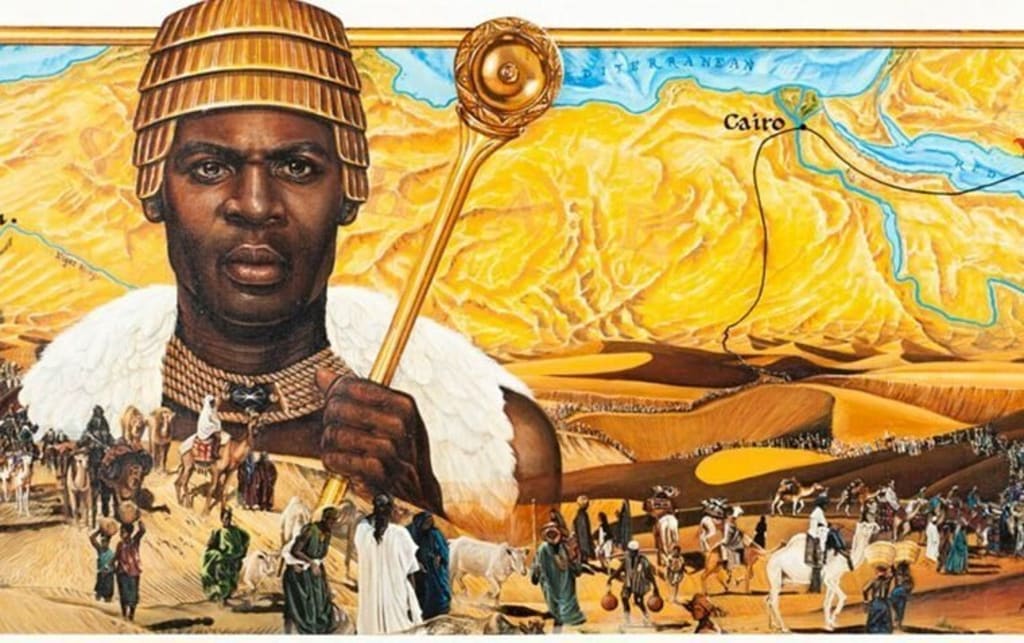
Mansa Musa, also known as Musa I of Mali, was born around 1280 and came to power in 1312. He ascended to the throne following the abdication of his predecessor, Mansa Abu-Bakr II, who embarked on a voyage across the Atlantic Ocean. Musa inherited an empire that was already prosperous, but under his reign, it reached unprecedented levels of wealth and influence.
#### The Mali Empire
At its height, the Mali Empire encompassed a vast region of West Africa, including parts of modern-day Mali, Senegal, Gambia, Guinea, Niger, Nigeria, Chad, and Mauritania. The empire's wealth was primarily derived from its abundant natural resources, particularly gold and salt. Mali controlled nearly half of the Old World's gold supply, making it the leading economic power of its time.
#### Pilgrimage to Mecca
Mansa Musa's pilgrimage to Mecca in 1324 is one of the most legendary events in history. His caravan reportedly included 60,000 men, including 12,000 slaves who each carried four pounds of gold bars, and 80 camels carrying between 50 and 300 pounds of gold dust each. The sheer scale of this journey and the lavish distribution of gold along the way significantly impacted the economies of the regions he visited, particularly in Cairo, Medina, and Mecca. Musa's generosity caused gold to devalue in Cairo for over a decade.
### Wealth and Legacy
#### Net Worth
Estimating Mansa Musa's net worth in modern terms is challenging due to the differences in economies and currencies. However, some estimates place his wealth in the range of $400 billion to $500 billion in today's dollars, making him the richest person in history.
#### Contributions to Education and Culture
Mansa Musa's reign was marked by significant cultural and educational advancements. He transformed Timbuktu into a thriving center of learning and culture. The city became home to the University of Sankore, one of the earliest universities in the world, attracting scholars from across Africa and the Middle East. Musa's patronage of education and the arts helped cement the Mali Empire's legacy as a beacon of knowledge and culture.
### Influence and Impact
#### Economic Influence
Mansa Musa's wealth had a profound impact on the economies of the regions he interacted with. His distribution of gold during his pilgrimage caused temporary inflation but also stimulated economic activity. His investments in infrastructure, such as building mosques, libraries, and universities, fostered economic growth and cultural development in Mali and beyond.
#### Political and Social Influence
Mansa Musa's pilgrimage not only showcased his immense wealth but also established Mali as a significant power in the Islamic world. His interactions with other Muslim leaders and scholars strengthened diplomatic ties and facilitated cultural exchanges. The introduction of Islamic architecture and education in Mali under Musa's reign had long-lasting effects on the region's cultural and religious landscape.
### Comparisons to Other Historical Figures
#### Augustus Caesar
Another contender for the title of the richest person in history is Augustus Caesar, the first Roman emperor. Augustus' wealth was derived from his control over the vast resources of the Roman Empire. Some estimates place his net worth at around $4.6 trillion in today's dollars, though this figure is highly speculative and based on the valuation of the entire Roman Empire's assets.
#### John D. Rockefeller
In more recent history, John D. Rockefeller, the American industrialist and founder of Standard Oil, is often cited as one of the wealthiest individuals. At his peak, Rockefeller's fortune accounted for about 1.5% of the U.S. economy, translating to around $400 billion in today's dollars. His influence extended beyond his wealth, as he played a crucial role in shaping the modern petroleum industry and philanthropy.
### Challenges and Controversies
#### Mansa Musa
Mansa Musa's wealth and generosity were not without their challenges. The devaluation of gold in regions he visited highlighted the potential negative effects of sudden wealth influxes on local economies. Additionally, maintaining control over a vast and diverse empire posed significant administrative challenges, though Musa's effective governance largely mitigated these issues.
#### Augustus Caesar
Augustus faced numerous challenges, including political rivalries and maintaining control over a vast empire. His wealth and power were built on the back of military conquests and political maneuvering, which often led to social unrest and conflict. Despite these challenges, Augustus' reign marked the beginning of a long period of relative peace and prosperity known as the Pax Romana.
#### John D. Rockefeller
Rockefeller's business practices, particularly the monopolistic tactics of Standard Oil, were highly controversial. His company's dominance led to public outcry and legal battles, culminating in the 1911 Supreme Court decision to break up Standard Oil into smaller companies. Despite these controversies, Rockefeller's legacy as a philanthropist remains significant, with his foundations funding numerous educational and medical advancements.
### Conclusion
The title of the richest person in history is not merely a measure of financial success but also a reflection of influence, vision, and legacy. Mansa Musa, with his unparalleled wealth and contributions to education and culture, stands out as a monumental figure in history. His reign illustrates the profound impact that immense wealth can have on societies and economies, both positively and negatively.
Comparing Musa to other historical figures like Augustus Caesar and John D. Rockefeller provides a broader perspective on the nature of wealth and power across different eras. Each of these individuals leveraged their fortunes to shape their respective worlds, leaving legacies that continue to influence modern society.
The stories of these extraordinary individuals remind us that true wealth extends beyond mere financial assets. It encompasses the ability to inspire, innovate, and create lasting change. As we continue to study and learn from their lives, we gain valuable insights into the dynamics of wealth, power, and human achievement throughout history.
About the Creator
Keep reading
More stories from Mbeha maliwa and writers in History and other communities.
Hitler's Biggest Mistake
# Hitler's Biggest Mistake: Debunking the Myths Adolf Hitler, the dictator who led Nazi Germany into World War II and orchestrated the Holocaust, remains one of history's most infamous figures. The atrocities committed under his regime have been well-documented, but alongside these facts, numerous myths and misconceptions about Hitler persist. These myths often blur the lines between historical fact and fiction, shaping public perception in misleading ways. This article aims to debunk some of the most pervasive myths about Hitler and explore the realities behind them.
By Mbeha maliwa 2 years ago in History
3 Historical Events That Were Ruined by One Incredibly Small Detail
History is shaped by big ideas, brave leaders, and sweeping movements—but sometimes, the tiniest, most overlooked detail changes everything. A forgotten note, a misheard order, or even a misaligned boot can turn a decisive moment into chaos. These micro-errors often seem trivial at the time, but their ripple effects can alter the course of wars, empires, and even the future of entire nations.
By Enoch Sagini6 days ago in History
Pablo Escobar: The Man Who Declared War on Colombia
Pablo Emilio Escobar Gaviria was born on December 1, 1949, in Rionegro, Colombia, and raised in the nearby city of Medellín. He grew up in a modest household, the son of a farmer and a schoolteacher. From an early age, Escobar showed ambition and defiance. He dreamed of power, wealth, and influence—dreams far larger than his surroundings. In a country struggling with inequality and limited opportunity, Escobar believed the rules were written to keep people like him down. Instead of trying to change the system, he chose to dominate it.
By The best writer 3 days ago in History
A Dart at Dusk
Seconds ago, the sullen sun set on the two of us… my exuberant furry companion and me. A fresh breeze embraces us, delivering welcome relief from the day’s oppressive heat. His typical stumbling and staggering along — apace with a sloth — has turned into trip-trapping, high-stepping, almost skipping along.
By Angie the Archivist 📚🪶6 days ago in Petlife




Comments
There are no comments for this story
Be the first to respond and start the conversation.