
The Rich Tapestry of British History
From Kingdoms to Empire
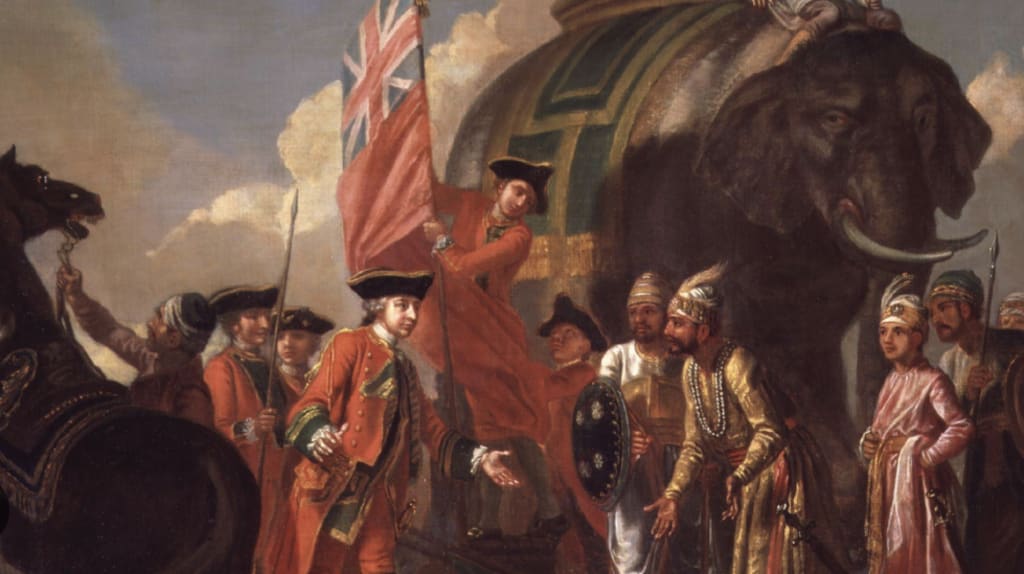
British history is a story woven with triumphs, tragedies, and transformations that have shaped not only the United Kingdom but the world. From the ancient beginnings of the Celtic tribes to the rise and fall of the British Empire, this island nation has left an indelible mark on global culture, politics, and society. But beyond the political shifts and military conquests, British history also speaks to the resilience and adaptability of its people, their capacity for reinvention, and their influence in the world stage.
1. The Dawn of British History: The Celts and Roman Influence
Long before the Norman Conquest or the rise of the British Empire, the British Isles were inhabited by Celtic tribes. The Celts, who arrived from central Europe around 600 BCE, established their culture on these shores. They built impressive hill forts, crafted intricate artwork, and maintained a society based on clan loyalty. Yet, it was the arrival of the Romans in 43 CE that truly began to change the landscape of Britain.
The Romans, under Emperor Claudius, conquered much of the island, establishing the province of Britannia. Over the next few centuries, Roman Britain saw the construction of remarkable infrastructure, such as Hadrian's Wall, which still stands as a testament to Roman engineering. Roman rule also introduced cities, roads, and the spread of Christianity, all of which would go on to influence British society for centuries to come. But by the early 5th century, as the Roman Empire began to crumble, the Romans withdrew from Britain, leaving the island vulnerable to invading forces.
2. The Anglo-Saxon Period: Formation of the Kingdoms
After the fall of Rome, Britain entered a period of turmoil, with various tribes and invaders—such as the Angles, Saxons, and Jutes—moving in and establishing their own kingdoms. This period, known as the Anglo-Saxon era, was characterized by the development of powerful kingdoms such as Wessex, Mercia, and Northumbria.
Perhaps the most famous figure of this era is King Alfred the Great, the ruler of Wessex, who defended his kingdom against Viking invaders in the late 9th century. Alfred’s leadership laid the foundations for what would eventually become a unified England. He was not only a warrior king but also a patron of learning, helping to establish a stronger sense of identity for the English people. This era of relative stability and growth would come to a brutal halt with the arrival of the Vikings.
3. The Viking Invasions and the Norman Conquest
The 8th and 9th centuries saw the Viking invasions that terrorized the British coastline. Norse raiders and settlers from Scandinavia created kingdoms of their own in England, particularly in the north and east. The famous story of the Viking siege of York and the later consolidation of Danelaw is part of the tumultuous Viking legacy in Britain.
But the most defining event of medieval British history came in 1066—the Norman Conquest. Led by William the Conqueror, Duke of Normandy, the Normans defeated the Anglo-Saxon king Harold II at the Battle of Hastings. William’s victory marked the beginning of Norman rule in England and a profound change in the culture, language, and governance of the land.
The Normans introduced feudalism, laying the groundwork for an intricate system of landholding and power that would dominate British society for centuries. William commissioned the Domesday Book, a comprehensive survey of the kingdom’s lands, which remains an invaluable historical resource today. But this was also an era of conflict and rebellion, with the English people frequently challenging Norman rule.
4. The Plantagenets and the Wars of the Roses
In the centuries that followed, the Plantagenet dynasty rose to power, and England was embroiled in conflict. One of the most significant conflicts of the period was the Hundred Years’ War (1337-1453), a series of battles fought between England and France over territorial claims. Though England won several notable victories, the war ultimately led to significant losses and territorial reductions.
The Plantagenet dynasty also witnessed internal struggles, most notably the Wars of the Roses (1455-1487), a bitter civil war between two branches of the royal family: the House of Lancaster (symbolized by a red rose) and the House of York (symbolized by a white rose). The war ultimately ended with the rise of the Tudor family, a new dynasty that would forever change the course of British history.
5. The Tudors: A Golden Age of Power and Reformation
Perhaps no period in British history is as famous or as fascinating as the reign of the Tudor dynasty. The Tudors brought stability after the Wars of the Roses and oversaw a period of unprecedented growth, both politically and culturally. The most famous Tudor monarch is Henry VIII, whose break with the Roman Catholic Church in the 16th century led to the English Reformation. Henry’s creation of the Church of England was not only a religious revolution but a political one, giving the monarchy greater power over the nation.
His daughter, Elizabeth I, is often remembered as one of the greatest British monarchs, overseeing a golden age of exploration, culture, and military success. Elizabeth’s defeat of the Spanish Armada in 1588 cemented her reputation as a powerful and savvy leader, and under her rule, England flourished as a global power. The Renaissance and the rise of the English Renaissance theatre, led by figures like William Shakespeare, made this a truly transformative time.
6. The Stuart Period and the English Civil War
However, following the death of Elizabeth I, England entered a period of instability under the Stuart monarchs. The reigns of James I and Charles I were marked by tensions between the monarchy and Parliament, particularly over issues of religious control and taxation. These tensions culminated in the English Civil War (1642-1651), a bloody conflict between the monarchy’s supporters (Royalists) and those who favored parliamentary rule (Parliamentarians).
The war ended with the trial and execution of King Charles I in 1649 and the establishment of the Commonwealth under Oliver Cromwell. This was a radical departure from traditional monarchy, and the period of Cromwell’s rule remains a contentious and debated chapter in British history. The monarchy was restored in 1660 under Charles II, but England had forever changed.
7. The British Empire: Global Power and Influence
The rise of the British Empire in the 18th and 19th centuries marked one of the most profound and complex chapters in British history. Through exploration, colonization, and trade, Britain established a global empire that spanned continents, from the Americas to Asia to Africa. The Empire’s reach influenced cultures, economies, and politics worldwide.
However, the imperial legacy is a complex one—while the empire brought wealth and power to Britain, it also left a legacy of exploitation, violence, and cultural disruption in many of its colonies. The British Empire eventually began to unravel in the mid-20th century, particularly after World War II, as former colonies gained independence.
8. Modern Britain: From War to Welfare
The 20th century was a time of both hardship and renewal for Britain. The two World Wars left deep scars, but Britain also saw great advances in social welfare, education, and the arts. The post-war period led to the creation of the National Health Service (NHS) in 1948, a cornerstone of modern British society.
In recent decades, Britain has undergone significant social and political changes, from decolonization to the debate over its role in Europe. The referendum in 2016, known as Brexit, marked a dramatic turning point as the UK voted to leave the European Union, reshaping its future relationship with Europe and the world.
Conclusion: A Nation Shaped by History
British history is not just a series of events and monarchs—it is a story of struggle, resilience, and transformation. From the rise of kingdoms to the expansion of the British Empire, and the modern challenges of the 21st century, Britain’s history has shaped the world we live in today. Through triumphs and tribulations, the British people have shown an enduring ability to adapt and redefine themselves, ensuring that their legacy will continue to influence generations to come.
About the Creator
Keep reading
More stories from vidun Arambage and writers in History and other communities.
The Pursuit of Earning Money
Money—the driving force behind most of our decisions, the foundation of our society’s economy, and, for many, the key to a comfortable and fulfilling life. But when you pause and think about it, what does money really mean to you? Is it just a number in your bank account, a way to pay bills and buy things? Or does it represent something deeper: freedom, security, opportunity, or perhaps the fulfillment of a long-held dream?
By vidun Arambageabout a year ago in Men
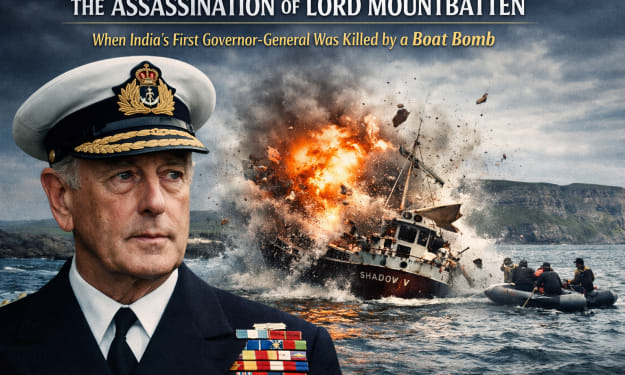
The Assassination of Lord Mountbatten: When India’s First Governor-General Was Killed by a Boat Bomb
The assassination of Louis Mountbatten in 1979 was one of the most shocking acts of political violence in modern British history. A decorated naval officer, royal family member, and the last Viceroy of British India, Mountbatten had played a key role in overseeing the partition and independence of the Indian subcontinent in 1947. More than three decades later, his life ended in a violent attack when a bomb planted on his fishing boat exploded off the coast of Ireland.
By Irshad Abbasi 7 days ago in History



Comments
There are no comments for this story
Be the first to respond and start the conversation.