
The Real-Life Revenant Was So Much Worse: The True Story of Hugh Glass
The Man Who Survived the Un-survivable

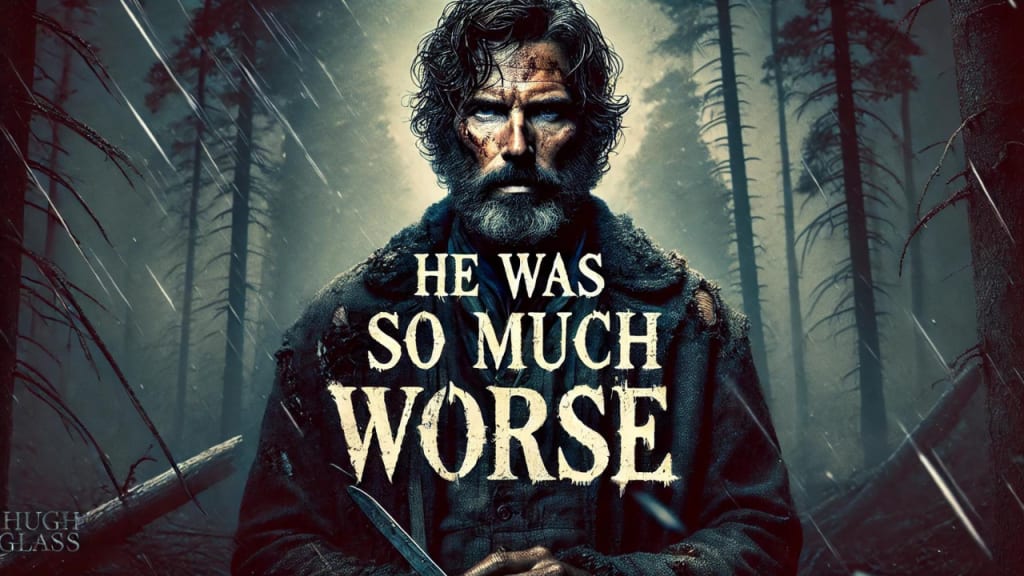
Hollywood has a knack for embellishing the truth in the name of entertainment. The phrase "based on real events" often translates to "we made up most of the story to make it more interesting." From "Catch Me If You Can" to "The Texas Chainsaw Massacre," countless movies claim to be based on true stories but take significant liberties with the facts. One notable example is the 2015 film "The Revenant," starring Leonardo DiCaprio. While the film tells the harrowing tale of American frontiersman Hugh Glass, it takes several creative liberties. However, the true story of Hugh Glass is so extraordinary that Hollywood had to tone it down to make it believable.
Early Life of Hugh Glass
Hugh Glass was born around 1783 near Philadelphia, Pennsylvania. Little is known about his early life, but he first appeared on the historical radar as a sailor. In 1819, while sailing off the coast of what is now Texas, Glass's ship was attacked by pirates. Most of the crew were killed, but Glass fought valiantly and was given a choice: join the pirates or face death. After a brief deliberation, Glass chose to become a pirate.
Becoming a pirate was not easy for Glass. The lifestyle involved much more violence and lawlessness than he was accustomed to. Eventually, Glass's new boss, the notorious pirate Jean Lafitte, grew displeased with him. As punishment, Glass was set to stand trial beside another condemned crew member. Knowing their fate would be a walk off the plank, the two men made a daring escape, swimming two miles to shore.
Survival Against All Odds
After escaping, Glass and his companion had to live off the land, avoid search parties, and steer clear of cannibals. The area was home to the Karankawa tribe, rumored to practice cannibalism. Although there's no evidence to support this claim, Glass and his companion were not willing to take any chances.
The two men headed north in search of friendly settlements, traveling 700 miles before being captured by the Pawnee tribe. Although the Pawnee were not cannibals, they did practice ritual human sacrifice. Glass's companion was stripped naked and burned at the stake, his body repeatedly stabbed with burning pinewood splinters. Glass himself was prepared for the same fate, but he managed to present the Pawnee chief with a vial of cinnabar, a highly prized red ore. Impressed by the gift and Glass's respectful demeanor, the chief spared his life and accepted him into the tribe.
Glass lived with the Pawnee for several years, learning survival skills that would later prove invaluable. In the early 1820s, he left the tribe and made his way to St. Louis, where he joined the Rocky Mountain Fur Company. The company, founded by William Ashley and Andrew Henry, was organizing a 2,000-mile expedition up the Missouri River to Fort Henry.
The Legendary Expedition
The men who joined this expedition, known as Ashley's 100, were some of the toughest frontiersmen ever to have lived. Among them were now-famous names like Jedediah Smith and Jim Bridger. Progress up the river was steady until an attack by the Arikara tribe left 14 men dead and many more injured. Glass was shot in the leg during the skirmish, forcing the men to retreat downriver.
Determined to continue, Ashley and Henry split the group. Ashley led one group west in search of immediate profits, while Henry and Glass headed north to Fort Henry on foot. The journey was fraught with danger, including skirmishes with Native American tribes. However, Glass's greatest threat came from a grizzly bear.
The Real-Life Revenant Was So Much Worse. You'll definitely enjoy this!
The Grizzly Bear Attack
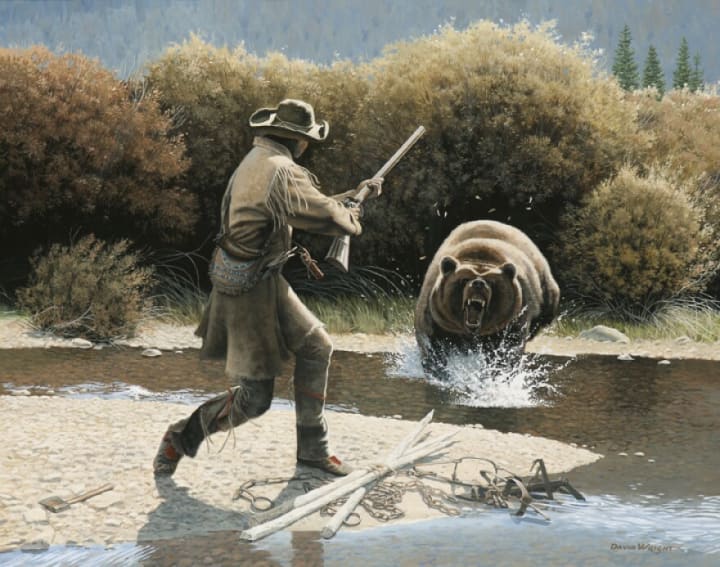
One day, while out hunting, Glass was suddenly attacked by a mother grizzly bear protecting her cubs. The bear mauled Glass severely, leaving him with a broken leg and exposing his ribs. Glass's companions managed to kill the bear and discovered that Glass was still alive, though barely. They made him as comfortable as possible and continued their journey, but Glass slowed their pace considerably.
Henry offered a reward of $80 to any men who would stay behind with Glass until he died and give him a proper burial. John Fitzgerald, a veteran trapper, and a young man named Bridger (believed to be the famous Jim Bridger) volunteered. After five days, with Glass showing no signs of dying, Fitzgerald and Bridger abandoned him, taking his rifle, knife, and flint.
A Miraculous Journey
Despite his injuries, Glass refused to die. Driven by a desire for revenge, he began the long journey back to civilization, crawling and dragging himself along the way. He drank water from streams and ate insects for sustenance. After a week, he stumbled upon a pack of wolves feasting on a buffalo calf. After the wolves left, Glass gorged on the buffalo meat, which helped him regain some strength.
Glass also used maggot therapy to treat his wounds. Maggots ate away the rotting flesh, preventing gangrene. Slowly, he made his way to the Missouri River, where he either borrowed a skin boat from a friendly Lakota tribe or fashioned his own. Floating down the river, he finally reached Fort Kiowa approximately six weeks after the bear attack.
The Quest for Revenge
Despite his physical recovery, Glass's mental wounds remained. He was determined to seek revenge on Fitzgerald and Bridger. After a brief rest at Fort Kiowa, he joined a new expedition heading towards Fort Henry, hoping to find the men who had abandoned him. The journey was perilous, and Glass narrowly escaped death several times.
Upon arriving at Fort Henry, Glass found it abandoned. A note informed him that the fort had been relocated nearby. When Glass finally reached the new fort, he confronted Bridger. Despite his anger, Glass saw that Bridger was genuinely remorseful and decided to spare him, placing the blame on Fitzgerald.
The Final Confrontation
Fitzgerald had joined the army at Fort Atkinson in present-day Nebraska. Winter delayed Glass's pursuit, but he eventually made his way to Fort Atkinson. There, Glass confronted Fitzgerald, but an army officer warned him that killing a soldier would result in his own execution. Glass reluctantly lowered his weapon but promised Fitzgerald that he would kill him if he ever left the army's protection.
Later Life and Legacy
Hugh Glass continued to live on the American frontier, trapping, trading, hunting, and exploring. He fought in many battles with Native American tribes and survived numerous hardships. However, his luck ran out in 1833 when he and two fellow trappers were ambushed and killed by Arikara braves.
Hugh Glass's remarkable story has achieved legendary status over the years. While some details of his life may be exaggerated, there is no doubt that he was one of the most extraordinary survivors in history. His tale of resilience, determination, and survival continues to captivate and inspire people to this day.
Conclusion
The true story of Hugh Glass is a testament to the incredible strength of the human spirit. Despite facing insurmountable odds, Glass's unwavering determination and will to survive carried him through some of the most harrowing experiences imaginable. His legend serves as a reminder that sometimes, reality is far more incredible than fiction.
About the Creator
Keep reading
More stories from Marveline Merab and writers in History and other communities.
Inside The Disturbing Experiments Of The Mad Doctor: Josef Mengele
Tucked away in a modest cupboard at the University of São Paulo is a human skeleton that tells a harrowing tale. At first glance, this 40-year-old skeleton appears standard, aiding forensic science students in identifying human remains. However, its true history is anything but ordinary. This skeleton belonged to none other than Josef Mengele, the notorious Nazi doctor who was responsible for the horrific deaths of an estimated 400,000 people during the Holocaust. Known as the "Angel of Death," Mengele's story is a chilling reminder of humanity's capacity for evil and the dark corners of medical experimentation.
By Marveline Merababout a year ago in History
How Early Aircraft Failures Created Modern Flight Safety
When we look at modern aviation today with its redundant systems, strict regulations, and impressive safety record it’s easy to forget how fragile flight once was. Early aviation wasn’t built on confidence or certainty. It was built on risk. Every successful flight was surrounded by countless failures, and every crash carried lessons that would quietly reshape the future of air travel.
By Beckett Dowhan5 days ago in History
The Accidents That Quietly Improved Aviation Forever
I used to think aviation history was a story of bold successes, record-breaking flights, sleek aircraft, and triumphant landings. But the more I read, the more I realized something uncomfortable: much of modern aviation was shaped not by success, but by accidents. The safety and reliability we now take for granted were quietly built from moments when things went terribly wrong.
By Beckett Dowhan4 days ago in History
Rachel Reviews: The Spiral Archive by Pieter Hendrik
It's difficult for me to know where to start with a review of this book as it was, for me, an entirely unique experience and one that I'll probably never have again. I don't want that to be interpreted as unenjoyable but it has left me scratching my head a little and ruminating on its content, its themes and its characters.
By Rachel Deeming2 days ago in BookClub



Comments
There are no comments for this story
Be the first to respond and start the conversation.