
Inside The Disturbing Experiments Of The Mad Doctor: Josef Mengele
The Disturbing Legacy of Josef Mengele: The Angel of Death


Tucked away in a modest cupboard at the University of São Paulo is a human skeleton that tells a harrowing tale. At first glance, this 40-year-old skeleton appears standard, aiding forensic science students in identifying human remains. However, its true history is anything but ordinary. This skeleton belonged to none other than Josef Mengele, the notorious Nazi doctor who was responsible for the horrific deaths of an estimated 400,000 people during the Holocaust. Known as the "Angel of Death," Mengele's story is a chilling reminder of humanity's capacity for evil and the dark corners of medical experimentation.
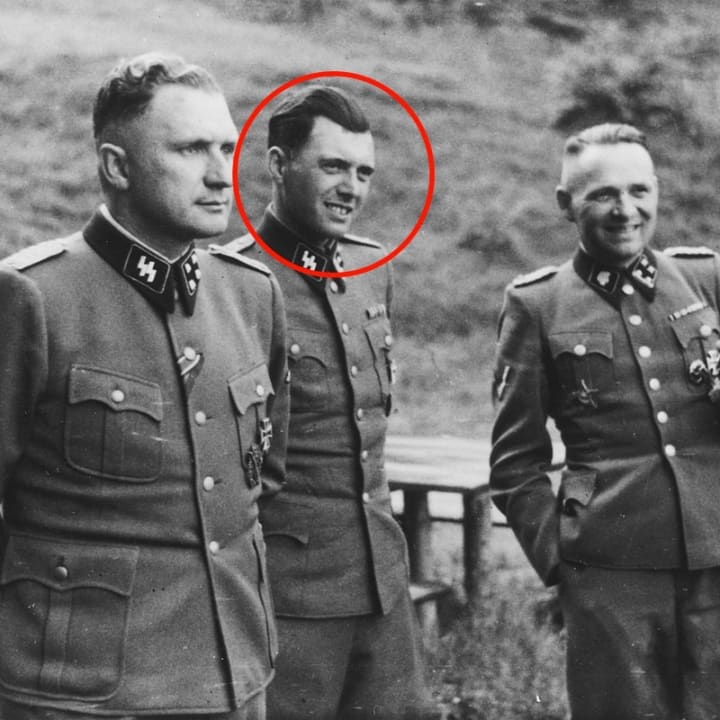
The Early Years of Josef Mengele
Josef Mengele was born on March 16, 1911, in the picturesque Bavarian town of Günzburg. He was the son of a wealthy farmer and the quintessential overachiever, excelling in academics and sports while possessing good looks and charm. Mengele pursued higher education, studying philosophy in Munich and earning a degree in medicine from Frankfurt. He even obtained a PhD in anthropology in 1938.
In 1937, Mengele began working at the Institute for Hereditary Biology and Racial Hygiene in Frankfurt, where he was influenced by the eugenics ideologies of his mentor, Otmar Freiherr von Verschuer. Mengele's burgeoning interest in racial superiority aligned seamlessly with the Nazi Party's beliefs, leading him to join the party in 1937 and enlist in Hitler's paramilitary SS in 1938.
A Doctor in the Heart of Darkness
When World War II broke out in September 1939, Mengele volunteered for medical service, quickly earning accolades for his bravery, including an Iron Cross for rescuing fellow soldiers. However, his military career was cut short when he was wounded in battle in 1942. His expertise and twisted ideologies led him to Auschwitz in 1943, where he was appointed as the camp physician.
The title "physician" was a grotesque misnomer; Mengele did not treat the sick but was instead involved in the selection process that determined who would live and who would die. An estimated 75% of new arrivals at Auschwitz—especially children, pregnant women, and the elderly—were deemed unfit for work and sent directly to the gas chambers. Mengele reveled in this grim duty, sending approximately 400,000 people to their deaths with a smile and a whistle.
A Laboratory of Horror
Mengele's real ambitions lay in his twisted vision of scientific exploration, which he conducted under the guise of medical research. He built a laboratory within Auschwitz, utilizing the inmates as human test subjects for his grotesque experiments. His keen interest in genetic abnormalities led him to conduct cruel studies on twins, seeking to prove the superiority of the Aryan race.
The horrific nature of Mengele's experiments included injecting chemicals into the eyes of children to change their eye color and performing surgeries without anesthesia. Twins often suffered in agony; one would be infected with a disease, and when they succumbed, the other would be killed for autopsy comparison. Survivors later recounted the horrific reality of Mengele’s lab, where dismembered body parts were cataloged, and an entire wall was reportedly filled with preserved eyes, pinned like butterflies.
The Duality of the Monster
Step Inside The Disturbing Experiments Of The Mad Doctor. You'll definitely enjoy this!
Outside the walls of his lab, Mengele exhibited a chilling duality. He occasionally showed kindness to his subjects, gifting sweets to children and insisting they call him “Uncle.” This façade of benevolence was a cruel mask over the horror he inflicted. Witnesses described him as a charming and engaging figure, yet his actions revealed the depths of his sadism.
Mengele’s reign of terror continued until the camp was liberated by the Soviets in January 1945. As the walls of Auschwitz crumbled around him, he fled to Czechoslovakia, narrowly escaping capture by American forces.
The Escape and Life on the Run
Mengele's evasion of justice took a dark turn when he was released as a free man due to a bureaucratic error—his true identity went unrecognized amidst a sea of Nazi criminals. He fled to South America, where he lived under various aliases. He initially found refuge in Argentina, living comfortably while reestablishing ties to his family and even working for his father's farming company.
By the late 1950s, Mengele had grown brazen, returning to Europe for vacations and visiting family, operating as though his past had been forgotten. However, the world had not forgotten him. Nazi hunter Simon Wiesenthal, fueled by the need for justice, began to track Mengele down, uncovering his presence in Argentina through marriage documents and an address.
The Final Years
In June 1959, Wiesenthal’s efforts bore fruit when authorities attempted to apprehend Mengele at his Buenos Aires residence. However, he had already fled, having left behind the burgeoning scrutiny from the local press over his illegal medical practices, including performing abortions that had resulted in a young girl's death.
Mengele relocated to Paraguay, where he obtained citizenship under the alias "José Mengele." He remained elusive, managing to avoid capture despite the relentless pursuit by Wiesenthal and even the Israeli intelligence agency Mossad.
Mengele's life in South America was filled with paranoia. A fugitive, he eventually moved to Brazil, where he lived out his remaining years in relative obscurity. He died in 1979 from a stroke, having evaded justice for the horrific crimes he committed.
The Legacy of Evil
Josef Mengele's legacy is a disturbing testament to the depths of human depravity. The remnants of his life serve as a chilling reminder of the atrocities committed under the guise of scientific exploration. The skeleton at the University of São Paulo is not merely a collection of bones; it symbolizes the millions of lives lost to the madness of the Nazi regime.
The story of Mengele challenges us to confront the darkest chapters of human history and serves as a warning of the potential for cruelty that lies within humanity. The pursuit of knowledge, when untethered from ethical considerations, can lead to unimaginable horrors. As we reflect on Mengele's life, we must remain vigilant against the ideologies that devalue human life in the name of science or progress.
In remembering the victims of his experiments, we honor their memory and ensure that such atrocities are never repeated. The world must never forget the Angel of Death and the legacy of suffering he left behind. Through education and remembrance, we can strive to prevent the darkness of history from repeating itself.
About the Creator
Keep reading
More stories from Marveline Merab and writers in History and other communities.
Why Did This Billionaire Go Insane? The Tragic Story of Howard Hughes
Howard Hughes Jr., a man once hailed as one of the most brilliant and eccentric billionaires in history, lived a life marked by both great achievement and overwhelming personal tragedy. From his early days of inventive genius and entrepreneurial prowess to his slow descent into isolation and mental illness, the story of Howard Hughes is one of the most fascinating tales of success, wealth, and eventual madness.
By Marveline Merababout a year ago in History
Firoun: The Tyrant Who Defied God
Firoun, known to history as Pharaoh, was not just a king—he was a symbol of absolute power. He ruled over ancient Egypt at a time when the Nile flowed generously, the granaries were full, and massive stone monuments rose toward the sky. To his people, Firoun appeared invincible. To himself, he was more than human.
By The best writer 3 days ago in History
Ludacris and Nelly draw backlash over bookings at MAGA-coded music festival
Ludacris and Nelly headlining a mostly right-wing event is good for them. It’s also great for the genre of hip hop. The two rap veterans have showcased their talents on other stages. Why can’t they perform for mostly MAGA folks and grab that bag?
By Skyler Saunders5 days ago in Beat


Comments
There are no comments for this story
Be the first to respond and start the conversation.