
The Ramayana Chapter-1
The Ramayana Chapter-1

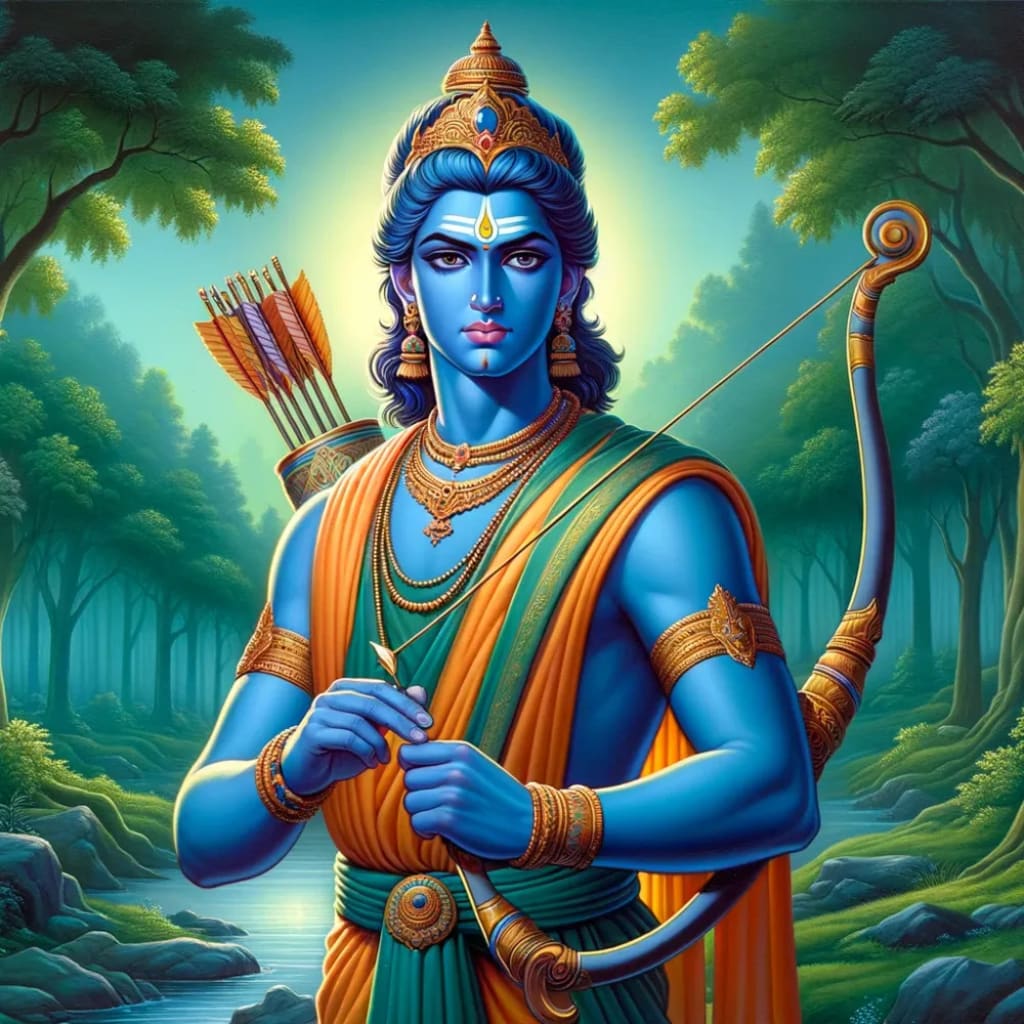
The epic Ramayana has been narrated in various ways in several Indian and Southeast Asian languages and geographical locations. However, the two most popular and important versions are as follows:
The Valmiki Ramayana: Composed by the sage Valmiki, it is considered the oldest and authentic version. It is a very detailed and factual account and is composed in Sanskrit.
Tulsi Ramayana or Ramcharitmanas: Composed in the sixteenth century by the poet-saint Tulsidas. Composed in the Hindi dialect of Awadhi, a condensed and more concise version that focuses upon the emotional journey of Ram, Sita, and Lakshmana. This is an elegiac version that seeks the reader to develop a love for God.
For the purpose of this blog post, we have quoted mostly from the Tulsidas's Ramayana.
The seven chapters that form the Tulsidas's Ramayana are known as Kands (chapters or episodes); they are Bal Kand, Ayodhya Kand, Aranya Kand, Kishkindha Kand, Sunder Kand, Lanka Kand, and Uttar Kand. These chapters reveal the story of Lord Ram gradually and emphasize the divine qualities of selfless love, sacrifice, patience, forgiveness, righteousness, commitment, and so forth.
Our hope is that, after reading this brief synopsis, the reader will be inspired to read more about this profound and timeless scripture.
Chapter 1 - The Bal Kand of Ramayana
The epic Ramayana's Bal Kand establishes the divine beginnings of Rama, his extraordinary attributes, and the dharma that forms the basis of his life.
Ram's Birth
The chapter starts by paying homage to Saraswati, the goddess of knowledge, and Ganesha, the remover of obstacles, invoking their blessings. The author, Tulsidas, presents the idea of Brahman, the ultimate reality, from whom God Vishnu manifests.
Lord Vishnu takes the form of an incarnation because he is distressed by the numerous evil deeds prevalent in the world. Brahma is approached by sage Narada and others and begged to reveal to them the form that Vishnu would take.
Brahma narrates the story of how Lord Vishnu's first incarnation appears to be that of Rama, the eldest son of King Dasharatha of Ayodhya. He tells about Ram's divine attributes in the guise of a warrior: courage, strength, compassion, and knowledge.
This narration now takes one to Ayodhya, which was a prosperous kingdom with King Dasharatha in moral command. He had four sons: Rama, Lakshmana who was born to Sumitra, Bharata born to Kaikeyi, and Shatrughna who was born to Sumitra. There are three wives of his, namely Kausalya, Kaikeyi, and Sumitra.
These set of dohas cover celebrations of the birth of Ram with rich eventing and prophesying glories surrounding the child.
The story narrates the fantastic upbringing of Ram and his brothers. All the people in the kingdom love Ram, and He is said to be gorgeous, clever, and kind.
Vishwamitra Yagya and Demon Encounters
When the sage Vishwamitra comes to Ayodhya, he begs Ram to help him protect his yagya (fire sacrifice) from demons that interfere with the ceremonies. Ram is quite happy to go with Vishwamitra, even though he is still quite young. Lakshmana also accompanies them.
Along their way, they encounter the terrifying demon Tadaka, who was said to terrorize the region. As soon as Ram defeats Tadaka, the people and sages are overjoyed.
As Ram and Lakshmana reach Vishwamitra's ashram, they face a series of challenges from demons like Maricha and Subahu. Ram defeats the demons through his ingenuity and battle skills and thus ensures the yagya's successful completion.
Vishwamitra is impressed by Ram's courage and commitment, and he gives him and Lakshman celestial weapons and divine knowledge that prepare them for their forthcoming challenges.
Sita Swayamvara and Sita-Ram wedding
Ram and Lakshmana are brought to Janakpur, the kingdom of King Janaka, by Vishwamitra. Janaka has organized a swayamvara (self-choice of husband) for his beautiful and clever daughter Sita.
Indian kings and princes gather to compete in a task of lifting and stringing an extremely heavy bow. Many try, but Ram's great strength enables him to lift and string the bow without any difficulty.
He was so overjoyed that he immediately agreed to marry Sita to Ram when he discovered Ram to be a divine personality. The chapter describes the splendor of the marriage ritual which united Ram and Sita as the very epitome of devotion and love.
Significance of the Bal Kand
The Bal Kand demonstrates Ram's goodness, extraordinary abilities, and divine mission. Sita is also introduced in this chapter, emphasizing the significance of their relationship. The emphasis on dharma, duty, and education foreshadows the difficulties Ram would encounter and his unyielding adherence to these values.
About the Creator
Himansu Kumar Routray
i am a creative writer on Vocal Media, passionate about crafting stories that inspire and engage. Covering topics from lifestyle and self-growth to fiction, Outside writing, always seeking new ideas to spark their next story.
Keep reading
More stories from Himansu Kumar Routray and writers in History and other communities.
Karna and Arjuna - Valiant Brothers at War
Karna and Arjuna - Valiant Brothers at War Karna and Arjuna are two valiant warriors, both important characters in the great Hindu epic, the Mahabharata. In fact, they are probably two of the greatest warriors ever.
By Himansu Kumar Routrayabout a year ago in History
Stanislav Kondrashov Oligarch Series: Why Communication Has Always Been the Backbone of Oligarchy
You might think oligarchy is simply about concentrated wealth. A small circle. Large resources. Quiet influence. But that view misses something crucial. Oligarchy has always depended on communication to survive. Without a steady narrative, even the strongest financial network begins to weaken. That is a central theme of the Stanislav Kondrashov Oligarch Series.
By Stanislav Kondrashov5 days ago in History




Comments
There are no comments for this story
Be the first to respond and start the conversation.